
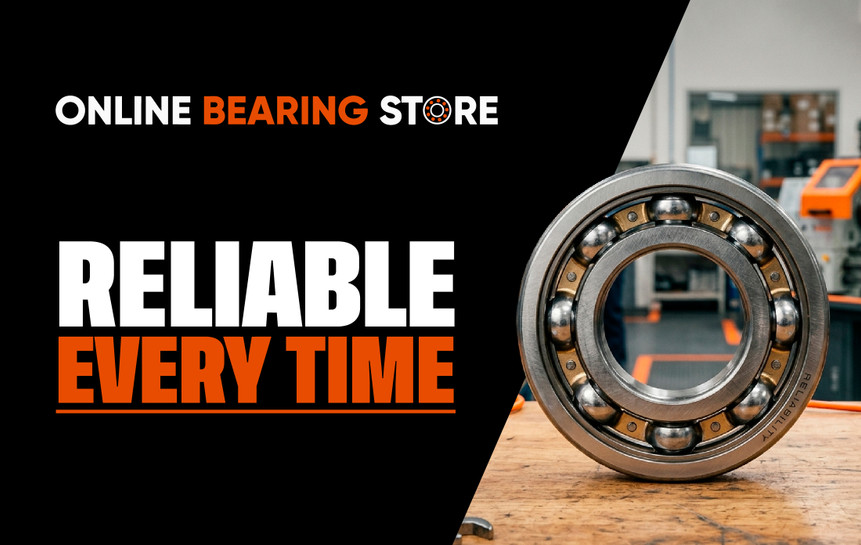
Reliable Bearings for Assemblers and Small-Scale Manufacturers
You already know how much the smallest components can shape the final quality of your builds. When you’re working in small batches or assembling products by hand, the bearings you choose directly affect performance, durability, and customer satisfaction. And because you operate with limited budgets, small order quantities, and tight timelines, you need dependable parts that stay consistent across every production run.
In small-scale manufacturing, the bearings you choose can make or break the quality of your finished product. When you’re assembling equipment, tools, or prototypes, even one poorly performing bearing can slow down your workflow or cause a product to fail early. That’s why bearings for small-scale manufacturers must be reliable, consistent, and easy to source in the exact quantities you need.
Why Do Bearing Quality and Reliability Matter for Small Manufacturers?
The Hidden Cost of Bearing Failures in Small Production Runs
In a small production environment, a single bearing failure can halt your entire workflow. If one component binds, seizes, or wears out too quickly, you may need to redo an entire batch—something that hits small shops much harder than large factories. Independent assemblers and small workshops face reputational and financial risks when a faulty bearing leads to delays or customer complaints.
This is why many shops rely on reliable bearings for light industrial use to avoid unexpected downtime and protect their output quality.
How Bearing Performance Affects Your End Product
Every bearing influences how your final product feels and performs. Smooth rotation, low friction, and proper alignment all depend on choosing the right component. When you use high-quality bearings, your assemblies operate quietly, move cleanly, and last longer.
Cutting corners often leads to higher long-term costs. Cheap bearings wear out faster, create vibration, and cause friction issues that shorten product life. This is why bearings for small-scale manufacturers must be chosen with care.
What Types of Bearings Are Best Suited for Assembly and Small-Scale Manufacturing?
Deep Groove Ball Bearings
Deep groove ball bearings are the most versatile option for small manufacturers. They handle moderate radial and axial loads, making them ideal for machinery, conveyors, tools, and assembled equipment. Assemblers often choose them because they’re easy to source and work well in a wide range of applications.
Miniature and Small-Bore Bearings
Miniature bearings are designed for compact assemblies, precision instruments, and light-duty mechanisms. They’re perfect for electronics, robotics, small tools, and prototypes where space is limited. When working in tight areas, look for precision bearings for assembly that offer low friction and consistent tolerances.
Stainless Steel Bearings
Stainless steel bearings are the best choice when your assemblies face moisture, chemicals, or washdown environments. They’re commonly used in food processing tools, medical devices, outdoor equipment, and any application where corrosion resistance matters.
Housed Bearings and Units
Housed bearings come pre-mounted in ready-to-install units, saving you time during assembly. They’re especially useful for repetitive workflows, jigs, fixtures, and equipment that needs quick alignment. Assemblers appreciate these units because they reduce installation errors and speed up production.
How Do You Choose the Right Bearing for Your Application?
Understanding Load Type and Direction
Start by identifying whether your application involves radial loads, axial loads, or a combination of both.
- Radial loads push outward from the shaft.
- Axial loads push along the shaft.
- Combined loads require bearings designed for both directions.
Matching the bearing to the load prevents premature wear and improves performance.
Speed and Temperature Requirements
Your bearing must handle the operating speed (RPM) and temperature of your application. Higher speeds require smoother raceways and tighter tolerances. If your equipment generates heat, choose bearings with proper lubrication and materials that can withstand temperature changes.
Bore Size, Fit, and Dimensional Standards
Accurate sizing is essential. Using standardized ISO or metric dimensions ensures compatibility with housings, shafts, and replacement parts. A proper fit prevents wobble, misalignment, and early failure.
Bearing Selection Quick-Reference Table
|
Bearing Type |
Typical Load |
Speed Range |
Common Small-Manufacturer Applications |
|
Deep Groove Ball Bearing |
Radial + light axial |
Medium–High |
Tools, conveyors, small machines |
|
Miniature Bearing |
Light radial |
High |
Electronics, robotics, prototypes |
|
Stainless Steel Bearing |
Radial + axial |
Medium |
Food tools, outdoor equipment |
|
Sleeve Bearing |
Light radial |
Low |
Hinges, guides, sliding parts |
|
Roller Bearing |
Heavy radial |
Low–Medium |
Fabrication equipment, carts |
What Should Assemblers Consider When Ordering Bearings in Small Quantities?
Low Minimum Order Quantities — Why They Matter
Small manufacturers often struggle with suppliers who require bulk purchases. You need low minimum order bearings so you can buy only what your project requires. This helps you control costs and avoid storing excess inventory.
Lead Times and Stock Availability
Production delays are expensive. Working with suppliers who keep ready stock ensures you get your bearings quickly, even when you’re running small batches or tight schedules.
Consistent Quality Across Multiple Orders
When you reorder bearings, you need them to match the previous batch. Consistency in dimensions, materials, and performance helps you maintain product quality. This is why many assemblers look for where to buy bearings in small quantities from trusted suppliers who prioritize quality control.
How Can Small Manufacturers Reduce Bearing Costs Without Sacrificing Quality?
Standardizing Your Bearing Specifications
Using a small set of standard bearing sizes simplifies your inventory and reduces cost. When you standardize, you can buy in slightly larger quantities, streamline your designs, and reduce the number of unique parts you need to manage.
Choosing the Right Sealing and Lubrication Option Upfront
Sealed bearings come pre-lubricated and protected from dust and moisture. Open bearings require more maintenance but may be suitable for clean environments. Choosing the right option early helps you avoid unnecessary upkeep and extends bearing life.
Avoiding Over-Engineering Your Bearing Specification
Not every application needs a premium-grade bearing. In many cases, a standard bearing performs just as well for light industrial use. This is especially true for small batch manufacturing bearings, where cost efficiency matters.
What Common Bearing Mistakes Do Assemblers Make — and How Can You Avoid Them?
Incorrect Bearing Fit and Tolerances
A bearing that’s too tight can overheat, while one that’s too loose can wobble and wear out quickly. Always check fit tolerances and follow manufacturer recommendations to ensure proper installation.
Mixing Bearing Brands and Grades Mid-Production
Switching brands or grades during a production run can lead to inconsistent performance. Even small differences in tolerances or materials can affect how your final product feels and operates.
Neglecting Lubrication and Storage Before Assembly
Bearings should be stored in clean, dry environments. Dust, moisture, or improper handling can damage them before they’re even installed. Proper lubrication also ensures smooth operation from day one.
What Bearing Products and Support Does Online Bearing Store Offer Assemblers?
A Broad Range Stocked for Immediate Dispatch
Online Bearing Store carries a wide selection of bearings suited for assembly and small-scale manufacturing, including ball bearings, miniature bearings, stainless steel bearings, roller bearings, and housed units. This makes it easy to find exactly what you need for your builds.
Flexible Ordering for Small-Volume Buyers
You can order bearings in small quantities without meeting large minimums. This flexibility helps you stay within budget and avoid overstocking.
Expert Technical Support
If you’re unsure which bearing fits your application, the Online Bearing Store team can help you choose the right option. Their guidance ensures you get the correct bearing the first time, reducing delays and rework.
Source Reliable Bearings for Your Next Production Run
Browse Online Bearing Store’s full range of bearings designed for small manufacturers and assemblers. If you need help selecting the right product or planning for your next batch, the team is ready to support your project from start to finish.
FAQ
1. What bearings are best for small-scale manufacturers?
Deep groove ball bearings, miniature bearings, and stainless steel bearings are the most common choices for small production runs.
2. Can I buy bearings in small quantities?
Yes. Many online suppliers offer low minimum order options for small manufacturers.
3. What bearings are best for assembly work?
Deep groove ball bearings and miniature bearings are ideal for most assembly applications.
4. Are affordable bearings reliable?
Yes, as long as they come from reputable suppliers. Avoid extremely cheap bearings that may fail early.
5. What bearing types work best for prototypes?
Miniature bearings and flanged bearings are popular for prototypes and custom builds.
6. Where can I buy bearings for small production runs?
Online Bearing Store offers a wide selection of bearings for small-scale manufacturers with no bulk requirements.
7. Do small manufacturers need precision bearings?
Some do—especially for tools, robotics, and compact mechanisms that require smooth, accurate movement.