
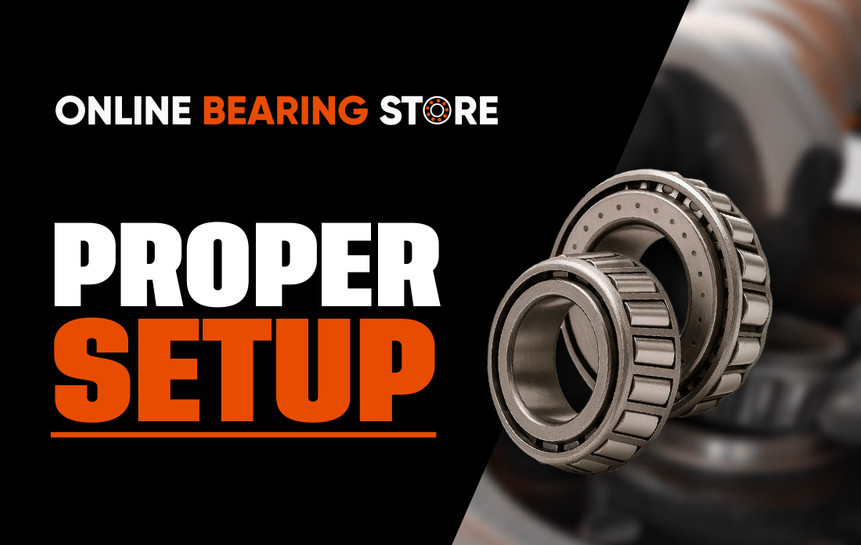
Preload vs. Clearance: How to Set Up Bearings for Peak Performance
Selecting the correct bearing is important, but how you install and configure it often determines whether it performs well or fails early. Understanding bearing preload vs clearance is a key part of any practical bearing setup guide, because both directly influence vibration, heat, accuracy, and overall bearing performance optimization.
What Is Bearing Clearance and Why Does It Matter?
Understanding Internal Bearing Clearance
Bearing clearance is the total amount of internal space between rolling elements and raceways before installation. This space, known as bearing internal clearance, allows controlled movement inside the bearing so it can accommodate load, alignment variation, and thermal expansion.
There are two main types of clearance you need to consider. Radial clearance refers to movement perpendicular to the shaft, while axial clearance refers to movement along the shaft axis. Both affect how the bearing behaves once mounted and under operating conditions.
Internal clearance does not remain constant. Shaft interference fits, housing fits, and heat all reduce clearance during operation. Ignoring these factors is one of the most common bearing installation mistakes seen in industrial equipment.
How Clearance Impacts Bearing Performance
Clearance plays a major role in vibration, noise, and load handling. When clearance is too tight, friction increases and heat builds up quickly. When clearance is too loose, rolling elements may skid, leading to instability and uneven wear.
Thermal expansion is another critical factor. As the shaft heats up faster than the housing, clearance shrinks. Without enough initial bearing internal clearance, the bearing may operate as if it has preload, even when none was intended. This condition directly affects bearing performance optimization and reliability.
When Bearing Clearance Is Necessary
Clearance-based setups are essential in applications where temperature changes, shaft growth, or heavy loads are expected. High-temperature environments, long shafts, and large industrial machines rely on clearance to avoid excessive stress.
Common applications include industrial motors, fans, conveyors, and processing equipment. In these cases, bearing clearance allows the bearing to adapt to real-world operating conditions without sacrificing service life.
What Is Bearing Preload and How Does It Work?
What Preload Does to a Bearing
Bearing preload is the intentional application of load to remove internal clearance from the bearing. Once preload is applied, rolling elements remain in constant contact with the raceways, increasing stiffness and positional accuracy.
Preload can be applied axially or radially depending on bearing design. Unlike clearance, preload is a controlled condition that must be calculated and verified carefully during installation to avoid common bearing installation mistakes.
Benefits of Bearing Preload
Correct bearing preload offers several advantages. It improves accuracy, reduces vibration, and provides more consistent load distribution across rolling elements.
Preload is especially valuable in precision systems where even small amounts of movement affect performance. When done correctly, it supports smoother operation and better long-term bearing performance optimization.
Risks of Excessive Preload
Too much preload is one of the fastest ways to damage a bearing. Excessive preload increases friction, which raises operating temperature and accelerates lubricant breakdown.
As lubrication fails, wear increases rapidly and fatigue damage occurs. This is why proper bearing preload adjustment is critical to maintaining reliability and avoiding premature failure.
How Do You Know When to Use Preload vs Clearance?
Applications Best Suited for Clearance
Clearance-based operation is best for equipment exposed to heat, load variation, or shaft deflection. Industrial motors, conveyors, and high-temperature machinery typically rely on bearing clearance rather than preload.
In these environments, clearance prevents unintended preload from developing during operation. This approach reduces vibration, stress, and long-term damage in many preload vs clearance bearings decisions.
Applications That Require Preload
Preload is commonly used in precision-driven equipment where stiffness and accuracy are critical. Machine tools, spindles, robotics, and precision reducers often require controlled bearing preload to meet performance demands.
These applications benefit from reduced deflection, improved repeatability, and lower vibration when preload is applied correctly.
Load, Speed, and Temperature Considerations
Choosing between preload and clearance depends on operating conditions. High speed increases sensitivity to friction; heavy loads affect contact stress, and temperature changes alter internal geometry.
Evaluating load, speed, and temperature together is essential when comparing bearing preload vs clearance for any application. Skipping this step often leads to vibration, heat, or reduced service life.
What Problems Can Incorrect Preload or Clearance Cause?
Excessive Vibration and Noise
Improper bearing setup often reveals itself through vibration and noise. Excess clearance allows instability, while uneven preload creates raceway stress and rolling element skidding.
These conditions are among the most common bearing vibration causes found during condition monitoring and troubleshooting.
Overheating and Lubrication Breakdown
Incorrect preload is a leading cause of overheating. As friction rises, lubricant loses viscosity and protective properties.
Once lubrication breaks down, metal-to-metal contact increases. Heat-related damage is a clear sign that preload or clearance selection was incorrect and that bearing performance optimization was not achieved.
Premature Bearing Failure
Many premature failures are caused by setup errors rather than bearing defects. Incorrect preload or clearance leads to fatigue, surface distress, and cracking.
Recognizing these failure modes early helps prevent repeat bearing installation mistakes and supports better bearing lifespan optimization.
How Do You Properly Set Bearing Preload or Clearance?
Measuring Internal Clearance
Internal clearance is measured before installation using feeler gauges, dial indicators, or manufacturer specifications. These measurements establish how much bearing internal clearance exists before mounting.
Because clearance changes after installation, you must also account for shaft fits, housing fits, and operating temperature when selecting the clearance class.
Setting Preload During Installation
Preload can be set using axial displacement, torque-based methods, or precision spacers. The correct approach depends on bearing type and application requirements.
Consistent bearing preload adjustment is essential. Small changes can cause large differences in temperature, vibration, and bearing life.
Verifying Proper Setup After Installation
Verification is just as important as installation. Temperature checks, vibration monitoring, and controlled break-in testing confirm whether preload or clearance is correct.
Early verification helps protect against unexpected failures and supports long-term bearing lifespan optimization.
What Role Do Bearings and Components Play in Proper Setup?
Bearing Types Designed for Preload Applications
Certain bearings are designed to handle preload effectively. Angular contact bearings, tapered roller bearings, and precision ball bearings are commonly used in preload applications.
These designs support controlled bearing preload and provide predictable performance when installed correctly.
Bearings Designed for Clearance-Based Operation
Deep groove ball bearings and many standard industrial bearings are intended to operate with clearance. These bearings accommodate thermal expansion and variable loads more easily.
Using clearance-based bearings in preload applications is a frequent source of bearing installation mistakes.
Importance of Quality Components
High-quality, precision-machined bearings deliver more consistent results. Tight tolerances ensure preload and clearance behave as expected.
Quality components are essential for reliable bearing performance optimization and repeatable installation outcomes.
How Can Online Bearing Store Help Optimize Bearing Performance?
Precision Bearings for Preload and Clearance Applications
Online Bearing Store offers ball bearings, roller bearings, and specialty bearings suited for both preload and clearance-based setups.
This broad selection supports a wide range of preload vs clearance bearings across industrial and precision applications.
Expert Guidance for Bearing Selection
Selecting the right bearing and setup method can be challenging. Expert guidance helps match bearing type, clearance class, and preload strategy to your application.
This support reduces errors and improves overall bearing lifespan optimization.
Reliable Supply for Industrial Applications
Maintenance teams depend on consistent quality and availability. Online Bearing Store provides reliable bearing solutions to support uptime and long-term equipment health.
Set Up Your Bearings for Peak Performance
Explore the Online Bearing Store catalog or contact the technical team for help selecting bearings optimized for preload or clearance-based applications. The right setup improves reliability, reduces downtime, and supports lasting bearing performance optimization.
FAQ: Bearing Preload vs Clearance
1. What is the main difference between bearing preload and bearing clearance?
Bearing preloadremoves internal movement, while bearing clearance allows controlled movement inside the bearing.
2. Can bearing clearance change during operation?
Yes, heat and interference fits reduce clearance as the bearing reaches operating temperature.
3. Is preload always better for performance?
No, preload improves accuracy but increases heat if misapplied, making correctbearing preload adjustment essential.
4. What happens if a bearing has too much clearance?
Excess clearance can lead to vibration, noise, and uneven load distribution.
5. How do I know if my bearing is overheating due to preload?
Rising temperatures, lubricant breakdown, and increased noise are common warning signs.
6. Are all bearings designed to handle preload?
No, only specific designs like angular contact and tapered roller bearings are suitable for preload.
7. Why do electric motors often use extra clearance bearings?
Electric motors generate heat that reduces clearance, so additionalbearing internal clearance is needed.
8. Can improper clearance cause vibration issues?
Yes, excessive clearance is one of the most commonbearing vibration causes.
9. Should preload be checked after installation?
Yes, temperature and vibration monitoring help confirm correct setup.
10. Where can I get help choosing preload or clearance?
Online Bearing Storeprovides resources and expert support to guide your bearing setup guide decisions.