
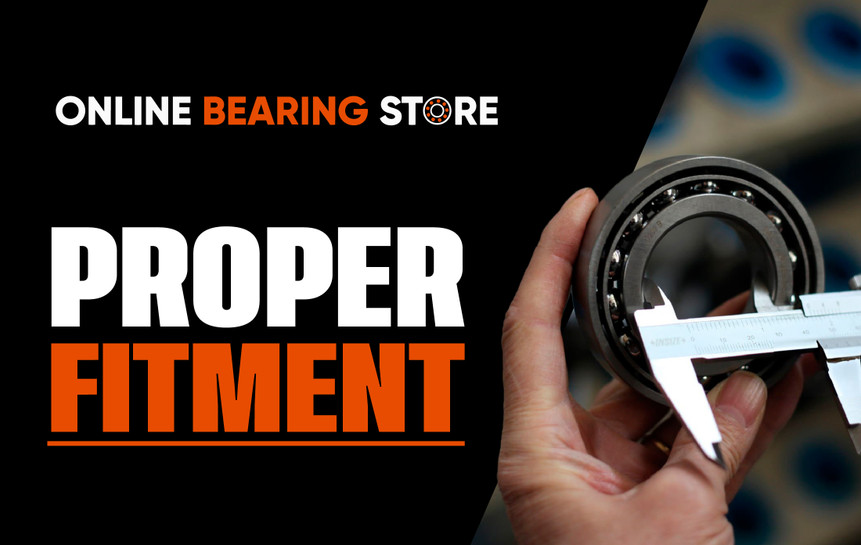
Installing Bearings Without Fail: A Guide to Proper Fitment, Preload and Mounting
Incorrect bearing installation is one of the most common causes of premature bearing failure in industrial equipment. When fitment, preload, or mounting is even slightly off, you face vibration, heat, and costly downtime that could have been avoided with proper technique.
Why Does Proper Bearing Installation Matter?
Correct installation affects everything from load distribution to temperature control. When you follow the right steps, you prevent early wear, reduce vibration, and keep your equipment running longer with fewer failures.
Impact on Bearing Lifespan
Improper mounting is one of the leading bearing failure causes. When a bearing is installed with the wrong fit, misaligned, or pressed incorrectly, the rolling elements carry uneven loads. This shortens service life dramatically and leads to early fatigue, spalling, and overheating. Even small errors in proper bearing fitment can cut lifespan in half.
Effects on Vibration and Noise
Misalignment, incorrect bearing preload, and uneven seating all create bearing performance issues such as noise and vibration. These symptoms are early signs that the bearing is not running in its natural load path. If ignored, vibration accelerates wear on both the bearing and surrounding components, increasing the risk of failure.
Downtime and Maintenance Costs
Installation-related failures often lead to unplanned downtime. A single bearing failure can shut down a motor, conveyor, or gearbox, costing far more in lost production than the bearing itself. Avoiding bearing installation mistakes reduces emergency repairs, replacement costs, and labor hours.
How Do You Choose the Correct Bearing Fitment?
Choosing the right fitment is one of the most important steps in bearing mounting. Fitment determines how tightly the bearing seats on the shaft and inside the housing, and it directly affects stability, heat generation, and load distribution.
Shaft Fits vs Housing Fits
Fit classes fall into three main categories:
- Interference fit: The bearing ring is slightly smaller than the shaft or housing. This prevents movement under load and is common for rotating inner rings.
- Transition fit: A balanced fit that may require light pressing. Used when you need stability but also easier removal.
- Clearance fit: A looser fit that allows slight movement. Used when the load direction rotates relative to the bearing.
Understanding these differences helps you achieve proper bearing fitment for your application.
Press Fit vs Slip Fit Bearings
Bold press fit vs slip fit bearings determine how the bearing is mounted and how it behaves under load.
- Press fits are used when the ring rotates with the shaft or carries heavy loads. They require controlled force or thermal expansion to install.
- Slip fits slide into place by hand and are used when the ring does not rotate relative to the load or when thermal expansion must be accommodated.
Choosing the wrong fit can lead to ring creep, overheating, or premature failure.
Common Fitment Mistakes to Avoid
Some of the most common errors include:
- Oversized shafts that overstress the inner ring
- Damaged or out-of-round housings
- Ignoring tolerance charts
- Pressing the bearing in crooked
- Mixing metric and inch components
Avoiding these mistakes ensures your slip fit bearings and press-fit bearings perform as intended.
What Is Bearing Preload and Why Is It Critical?
Preload is the internal force applied to remove clearance between rolling elements. It improves stiffness, accuracy, and load distribution, especially in high-speed or precision applications.
What Preload Does to Bearing Performance
Correct bearing preload improves:
- Shaft rigidity
- Rotational accuracy
- Vibration control
- Load sharing between paired bearings
Preload ensures the rolling elements stay in constant contact with the raceways, preventing skidding and noise.
Under-Preload vs Over-Preload Risks
Too little preload causes:
- Skidding
- Noise
- Excessive vibration
- Poor accuracy
Too much preload causes:
- Heat buildup
- Rapid wear
- Increased torque
- Early failure
Balancing preload is essential for long-term reliability.
How to Set Bearing Preload Correctly
Manufacturers provide preload values for each bearing type. You can set preload using:
- Shims or spacers
- Spring preload systems
- Torque-controlled locknuts
- Axial displacement measurements
Correct preload adjustment also depends on proper bearing alignment, ensuring the bearing is not twisted or cocked during mounting.
Which Bearing Mounting Methods Should You Use?
Different applications require different bearing mounting methods. Choosing the right one prevents damage and ensures the bearing seats correctly.
Cold Mounting and Mechanical Pressing
Cold mounting is the most common method for small and medium bearings.
Best practices include:
- Clean the shaft and housing
- Apply a thin film of oil
- Use a bearing driver or press sleeve
- Apply force only to the ring being mounted
Never press through the rolling elements, as this causes internal damage.
Thermal Mounting and Induction Heating
Thermal mounting uses heat to expand the bearing or housing.
Key guidelines:
- Heat bearings to 80–100°C
- Use an induction heater for uniform expansion
- Never use open flames
- Install quickly before the bearing cools
Thermal mounting reduces force and prevents installation damage.
Hydraulic Mounting for Large Bearings
Hydraulic nuts and pumps provide controlled force for large or tapered bearings.
Benefits include:
- Even seating
- Reduced risk of misalignment
- Precise control of axial drive-up
- Safer installation
This method is ideal for heavy-duty industrial applications and is commonly recommended in an industrial bearing installation guide.
How Can You Avoid Bearing Damage During Installation?
Most installation damage happens before the bearing even touches the shaft. Proper handling and preparation prevent contamination and deformation.
Handling and Storage Best Practices
To prevent corrosion and contamination:
- Keep bearings in original packaging until installation
- Store in a clean, dry environment
- Wear clean gloves
- Avoid dropping or striking bearings
Even small particles can cause early failure.
Using the Right Installation Tools
Using the wrong tools is one of the most common bearing installation mistakes. Hammers, punches, and makeshift tools cause dents, brinelling, and misalignment.
Use proper bearing installation tools such as:
- Bearing driver kits
- Arbor presses
- Induction heaters
- Alignment tools
- Torque wrenches
These tools ensure safe, accurate mounting.
Alignment and Seating Checks
Before startup, verify:
- The bearing is fully seated
- The shaft rotates smoothly
- There is no binding or uneven resistance
- The bearing is aligned with the shaft centerline
Correct bearing alignment prevents vibration and heat buildup.
What Are the Most Common Bearing Installation Mistakes?
Even experienced technicians make installation errors that lead to early failure.
Applying Force Through Rolling Elements
Pressing or hammering on the outer ring while installing the inner ring (or vice versa) forces load through the rolling elements. This causes dents, cracks, and internal deformation.
Ignoring Cleanliness and Lubrication
Contamination is one of the top causes of bearing failure due to installation. Dirt, dust, and metal chips create wear particles that destroy raceways.
Always:
- Clean all surfaces
- Use the correct grease or oil
- Avoid touching raceways with bare hands
Skipping Post-Installation Inspections
A quick inspection prevents major failures. Skipping this step allows misalignment, loose fits, or incorrect preload to go unnoticed until the bearing fails.
How Do You Verify a Successful Bearing Installation?
Verification ensures the bearing is ready for operation and prevents early breakdowns.
Visual and Mechanical Checks
Inspect:
- Seating depth
- Shaft engagement
- Locknut torque
- Housing alignment
- Smooth rotation
These checks confirm proper fitment and seating.
Monitoring Temperature and Vibration After Startup
During the first hour of operation, monitor:
- Temperature rise
- Vibration levels
- Noise
- Lubricant leakage
Abnormal bearing vibration is a sign of misalignment or preload issues.
Break-In Procedures
A controlled break-in helps distribute lubricant and stabilize preload.
Typical steps include:
- Running at low speed
- Gradually increasing load
- Monitoring temperature
- Allowing the bearing to settle
This improves long-term performance and reduces the risk of early failure.
What Bearing Solutions and Tools Does Online Bearing Store Offer?
Online Bearing Store provides everything you need for reliable installation and long service life.
Bearings Designed for Easy Installation
Choose from:
These quality bearings are engineered for smooth mounting and long-term reliability.
Installation and Maintenance Accessories
You can also find:
- Induction heaters
- Mounting tools
- Lubrication products
- Pullers and separators
These solutions support proper bearing mounting methods and long-term maintenance.
Expert Support for Proper Fitment and Preload
Online Bearing Store offers technical guidance to help you choose:
- Correct fitment
- Proper preload
- Suitable mounting methods
- The right industrial bearings for your application
Expert support reduces installation errors and improves equipment uptime.
Install Bearings the Right Way from the Start
Explore Online Bearing Store’s full catalog of bearings, installation tools, and maintenance accessories. If you need help choosing the right fitment, preload, or mounting method, their experts are ready to guide you and help prevent costly installation failures.
FAQs
1. What is the mostimportant stepin bearing installation?
Correct fitment and alignment are the most important steps because they prevent heat, vibration, and early failure.
2. How tight should a bearing fit on a shaft?
Most inner rings require an interference fit, but the exact tolerance depends on load direction and speed.
3. What isbearingpreload?
Preload removes internal clearance to improve stiffness and reduce vibration.
4. Can I install a bearing with a hammer?
No. Impact tools can crack or deform the bearing and cause early failure.
5. What causes misalignment during installation?
Dirty bores, bent shafts, and uneven pressing are the most common causes.
6. When should I use thermal mounting?
Use thermal mounting for large bearings or tight interference fits.
7. What happens ifpreloadis too high?
Too much preload causes heat, noise, and early failure.
8. Why do bearings fail after installation?
Most failures come from contamination, misalignment, wrong fitment, or incorrect preload.
9. What tools do I need for proper installation?
A press, induction heater, alignment tools, and torque wrench are essential.
10. How do I know if a bearing was installed incorrectly?
Watch for noise, heat, vibration, or grease leakage during the first test run.
11. Where can I get installation support?
Online Bearing Store offers expert guidance and professional-grade tools for all installation needs.