
How to Use a Bearing Size Chart Without Getting Lost in the Specs
Choosing the correct bearing depends heavily on understanding sizing standards and specification charts; without this knowledge, you risk the machine downtime and costly replacements caused by incorrect sizing. This complete guide helps maintenance engineers, machinists, and purchasing professionals master the technical details, ensuring you can confidently select the exact part you need every single time.
Why Do Bearing Size Charts Matter When Choosing the Right Bearing?
Imagine you’ve spent hours diagnosing a machine failure, only to have the replacement part show up and not fit. The truth is, mastering how to read a bearing size chart is the first, most crucial step in machinery maintenance and design. It’s not just about getting a part—it’s about preventing future headaches and failures. When you know your way around a bearing dimensions guide, you control the machine’s reliability.
Cost of ordering the wrong part
Ordering the wrong bearing is incredibly expensive. First, you lose time waiting for the delivery of the incorrect part. Then, you lose more time managing the return and waiting for the correct one to arrive. This downtime often costs far more than the bearing itself. By confidently selecting the right bearing size the first time, you cut down on shipping fees, labor costs, and, most importantly, lost production time.
Compatibility with equipment and housings
A bearing’s job is to act as a crucial interface between a rotating shaft and a stationary housing. If the bearing size chart shows an outer diameter (OD ID width bearing sizing) that is 1 mm too large, it won't press into the housing. If the inner diameter (ID) is slightly too small, it won't slide onto the shaft. The chart is your absolute reference point for mechanical compatibility, ensuring a proper press fit and alignment.
Performance and safety considerations
If you accidentally install a bearing that is too small for the load or too slow for the speed, it will fail early. This isn't just inefficient; it can be dangerous. An unexpected bearing failure can lead to catastrophic damage to the machine, posing a safety risk. A proper reading of the chart, understanding the bearing measurements explained, ensures you choose a bearing that meets or exceeds the necessary load ratings for reliable and safe operation.
What Do the Key Bearing Dimensions Mean?
Every single bearing size chart, regardless of the manufacturer, is based on three fundamental physical measurements. These are the core data points you must match to the dimensions of the machine you are repairing or designing. Getting these three right is 90% of the battle in bearing size identification.
Inner Diameter (ID)
The Inner Diameter, or d, is the size of the hole at the very center of the bearing. This measurement defines where the bearing fits on the machine.
Where it fits and how it determines shaft size.
The ID must precisely match the diameter of the rotating shaft you are mounting the bearing onto. If the ID is slightly smaller than the shaft (an interference fit), the bearing is press-fitted to ensure no slip. If the ID is slightly larger (a clearance fit), the shaft is free to move slightly. Consulting the chart confirms the nominal size, making sure you have the foundation for a good fit. This detailed approach to bearing size identification is vital.
Outer Diameter (OD)
The Outer Diameter, or D, is the overall size of the bearing from edge to edge.
Why housing requirements matter.
The OD must match the size of the housing bore—the hole the bearing sits inside. Just like the ID dictates the shaft size, the OD dictates the housing size. Precision is critical here; the difference between a correct fit and a loose fit often comes down to just a few thousandths of a millimeter. When looking at your OD ID width bearing sizing measurements, the OD determines the bearing’s overall space requirement.
Width (W)
The Width, often marked as B (for ball bearing sizes) or T (for tapered roller bearing dimensions), is the thickness of the bearing.
How width affects load and fit.
The Width is important because it determines the bearing’s axial space—how much room it takes up along the shaft. A wider bearing generally has more room for larger or more rolling elements, which often translates to a higher load capacity for the same bore size. You must ensure the bearing width fits the shoulder-to-shoulder space in your equipment. If the width is off, the lock nut or snap ring will not sit correctly, leading to binding or incorrect pre-load. This understanding of bearing measurements explained helps ensure proper installation.
How Do You Read Bearing Part Numbers and Codes Correctly?
The string of numbers and letters stamped on a bearing is not random; it’s a universal technical language. Learning to break down this code is the ultimate form of bearing size identification and the key to interpreting the bearing size chart. This is where the magic happens—where the physical dimensions meet performance characteristics.
Decoding Number Series
The basic part number—usually four or five digits—tells you the type of bearing and its load-carrying potential. The first digit identifies the bearing type (e.g., '6' for Deep Groove Ball), but the second digit is crucial for sizing. This second digit defines the dimensional series, which dictates the OD and Width relative to the bore.
- 6000 Series: Extra Light. A small cross-section for high speed and low loads.
- 6200 Series: Light. Standard, general-purpose thickness and load capacity.
- 6300 Series: Medium. Thicker rings, higher load capacity, but slower speed limit.
For bore sizes 20 mm and up, the last two digits are the Bore Code. Simply multiply that number by 5 to get the ID in millimeters. For example, in a 6205, the ID is 5 x 5 = 25 mm. This rule makes the core of the bearing codes and numbers simple to understand and is essential for how to read a bearing size chart.
Understanding Prefixes and Suffixes
Once you have the physical size figured out, the letters—the prefixes (rare) and suffixes (common)—explain the bearing’s inner workings. These tell you about the sealing, cage, and internal fit. Understanding these bearing codes and numbers is key.
- Seals and Shields: ZZ means metal shields on both sides (non-contact), good for dust. 2RS means rubber seals on both sides (contact), great for moisture and grime.
- Cage Type: Codes like J (stamped steel) or M (machined brass) tell you what holds the balls in place.
- Clearance: The C-codes are essential. C3 means "Greater than Normal Clearance," which is necessary for most industrial machines where heat or interference fits will reduce the internal space. Knowing the full bearing part numbers meaning includes these suffixes.
Common Marking Examples
Let’s put it all together using a common example to explain the bearing part numbers meaning: 6203-2RS-C3.
- 6: Deep Groove Ball Bearing (Type).
- 2: Light Series (Thickness/Load).
- 03: Bore Code (Special code for 17 mm ID).
- -2RS: Double Rubber Seals (Protection Feature).
- -C3: Greater than Normal Clearance (Internal Fit).
You now know that this ball bearing sizes example is a 17 mm ID x 40 mm OD (found on the bearing dimensions guide for 6203) x 12 mm Width bearing that is sealed for dirty conditions and built with extra internal space to handle heat and press fits.
How Can You Match a Bearing Using an Existing Part?
Sometimes, the old bearing is so damaged or worn that the part number is simply gone. In this case, you become a detective. Bearing identification relies on accurate measurement and cross-referencing. Don’t just guess the size; use a systematic approach to ensure your replacement is 100% accurate. This process is crucial when you need to select the right bearing size without the original code.
Measuring ID, OD, and Width with Tools
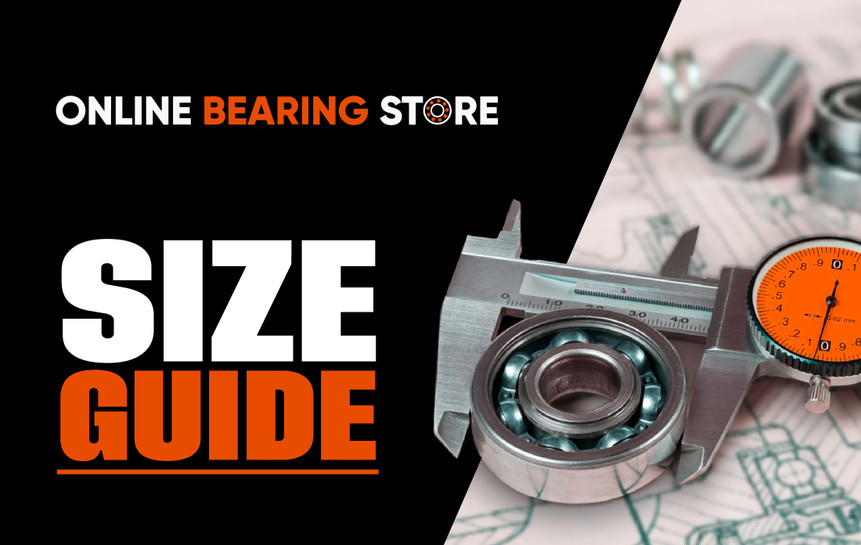
If the numbers are unreadable, you must rely on physical measurement. You need a reliable tool, like a digital caliper or a micrometer, because precision is key.
- Measure the Inner Diameter (ID): Use the outside jaws of your caliper to measure the ID of the inner ring (or the shaft diameter).
- Measure the Outer Diameter (OD): Use the inside jaws of the caliper to measure the OD of the outer ring.
- Measure the Width (W): Use the depth rod or caliper jaws to measure the width across the rings.
Always measure in multiple spots to check for wear or out-of-roundness. Once you have these three numbers in millimeters, you can search the chart using the OD ID width bearing sizing format.
Using Manufacturer Cross-Reference Data
Different bearing manufacturers (like SKF, FAG, NTN, Koyo, etc.) often use proprietary suffix codes for their seals, cages, and special features. For instance, one brand's "2RS" might be another brand's "DDU." This highlights why understanding the full bearing part numbers meaning is complicated.
If you have a competitor's part number but want to order from a different brand, you need a cross-reference chart. These guides are essential tools that match one manufacturer's specific features (like material or seal type) to another's, allowing you to find a perfect, interchangeable equivalent and ultimately select the right bearing size.
Checking Load and Speed Requirements
Finding a bearing with the right physical size (ID x OD x W) is just the first step. You must also check the application requirements.
- Static and Dynamic Load Ratings: Does the replacement bearing have sufficient capacity to handle the weight and forces placed upon it? Check the load ratings listed on the bearing dimensions guide.
- Limiting Speed: Does the replacement bearing have a maximum operating speed (RPM) that is higher than the machine’s operational speed? Seals, cage material, and lubrication type all influence the speed limit.
Never assume that two physically identical bearings have the same performance limits. Always verify the load and speed against the technical data, using the bearing measurements explained to confirm the dimensional series.
What Mistakes Should You Avoid When Reading Bearing Size Charts?
Even experienced maintenance staff can slip up when reading a busy bearing dimensions guide. By being aware of the most common pitfalls, you can streamline your ordering process and greatly reduce the chance of receiving an incorrect part. These simple checks prevent the most common bearing selection mistakes.
Ignoring Tolerances and Clearance Codes
Many people focus only on the nominal size (e.g., 25mm ID) and completely skip the codes that indicate internal fit. C3 clearance is a perfect example. A 6205 bearing without C3 is technically a different part than a 6205-C3. If you install the one without C3 in a high-speed motor that requires it, the bearing will overheat and seize up quickly. Ignoring tolerances and clearance codes is a fast track to premature failure.
Confusing Metric and Imperial Sizes
This is a classic trap. You measure a shaft as exactly 1 inch (25.4 mm) and mistakenly search for a metric 25 mm ID bearing. It’s an easy mistake to make, but a 25 mm ID bearing will not fit a 25.4 mm (1-inch) shaft. Always confirm whether the component you are measuring is designed for a metric or imperial part. Imperial R-series bearings have different ball bearing sizes than metric ones and trying to convert them directly often leads to frustrating bearing fit issues.
Overlooking Seal Type Requirements
A bearing's seal or shield is what protects its internal grease and rolling elements from the surrounding environment. This detail is part of the complete bearing part numbers meaning.
- If you replace a 2RS (sealed) bearing in a wet wash-down area with a ZZ (shielded) bearing, water will quickly wash out the grease, causing failure.
- If you replace a ZZ with a 2RS in a high-RPM application, the rubber seals will create too much friction and heat, lowering the machine’s efficiency and potentially damaging the seals.
Always check the suffix to ensure the replacement seal or shield matches the required environmental protection level.
Which Bearing Types Should You Consider Based on Size and Application?
While deep groove ball bearing sizes (6-series) are the most common, your chart will show many types, each designed for a specific kind of load: radial (perpendicular to the shaft) or thrust (parallel to the shaft). Choosing bearings correctly means matching the geometry to the force.
Ball vs Roller Bearings
- Ball Bearings: Use spherical rolling elements. They are excellent for high speeds and are great at handling moderate radial loads and some thrust loads. Their contact point is very small, minimizing friction.
- Roller Bearings: Use cylindrical, tapered, or spherical rollers. They have a larger line-contact area, making them perfect for carrying extremely heavy radial loads at moderate speeds. If size is constrained but load is high, a roller bearing is often the answer. You must understand the differences in roller bearing dimensions when performing bearing size identification.
The general size of the rolling element cross-section (the second digit in the code) often increases with the required load capacity.
Thrust, Tapered, and Pillow Block Examples
Different applications require specialized housing and sizing rules:
- Thrust Bearings: These handle pure axial loads (like a spinning stool). They are primarily sized by ID and OD, but their width is very narrow. They cannot handle radial loads.
- Tapered Roller Bearings: Excellent for combined heavy radial and heavy thrust loads, like in automotive wheel hubs. Their specific roller bearing dimensions mean they usually come in two separable pieces (cup and cone) which are sized together.
- Pillow Block/Flanged Bearings: These are housing units that contain a radial bearing. When sizing these, you only need the shaft size (ID). The housing size (OD) is already defined by the block unit itself. Using a bearing dimensions guide for the internal bearing is essential for replacement.
How Can Online Bearing Store Help You Choose the Right Bearing Size?
Finding the exact bearing you need doesn’t have to be a struggle that requires multiple phone calls and crossed fingers. At Online Bearing Store, we recognize that your time is valuable, and accuracy is non-negotiable. We make the selection process fast, simple, and reliable, establishing us as your trusted partner in precision parts. We help you select the right bearing size quickly.
Easy-to-Use Bearing Size Charts and Filters
Our website is built around the way you work. You don't have to scroll through pages of specs. Our product filters allow you to search directly by the three key dimensions: ID, OD, and Width. Enter the OD ID width bearing sizing measurements you found using your caliper, and our system instantly filters our vast inventory to show you only the compatible options. This takes the confusion out of the bearing size chart and puts control back in your hands.
Expert Support for Sizing Questions
Sometimes, an old bearing is non-standard, or you need to find an upgrade for a high-demand application. The Online Bearing Store’s team of experienced bearing specialists is ready to help. We can provide technical guidance on complex suffixes, cross-reference hard-to-find part numbers, and advise on optimal clearance and lubrication for your specific operating conditions, ensuring complete bearing size identification.
Large Inventory and Fast Delivery
We know that a failed bearing means a stopped machine. At the Online Bearing Store, we promise is to minimize your downtime. We maintain a large, diverse inventory of both common and specialized bearing types, from miniature deep groove ball bearing sizes to heavy-duty roller bearing dimensions. This means we can process and ship your order quickly, getting the right part—at the right size—to your maintenance team fast.
FAQ: Sizing and Selecting Bearings
1. How does temperature affect my bearing size choice?
High operating temperatures cause the shaft and housing materials to expand. This thermal expansion can reduce the bearing's internal clearance. If you expect high heat, you must select a bearing with a higher clearance code, like C3 or C4, to ensure the bearing doesn't bind when running hot. This detail is not obvious on the bearing dimensions guide.
2. What is the difference between a bearing series (e.g., 6200 vs 6300)?
The series number (the second digit) indicates the bearing's cross-sectional thickness. A 6300 series bearing is "Medium" and has a thicker cross-section (larger OD and width) than a 6200 ("Light") series bearing with the same bore size. The 6300 series can handle higher loads because the rings are tougher. This difference is key to selecting the right bearing size.
3. Do I need to measure the rolling elements (balls or rollers)?
No, you generally do not need to measure the rolling elements. Their size is a function of the ring dimensions and the series type. Measuring the ID, OD, and Width is enough to define the external space and find the correct part number on a bearing size chart for accurate bearing size identification.
4. What does the bore code '00' on a bearing part number mean?
The bore code '00' is one of the four special codes for small bore sizes. It means the Inner Diameter (ID) of the bearing is 10 mm. The other special codes are '01' (12 mm), '02' (15 mm), and '03' (17 mm). Understanding this is critical when learning how to read a bearing size chart.
5. Why is my new bearing difficult to push onto the shaft?
This is likely due to an interference fit, which is intentional in many applications to prevent the inner ring from spinning on the shaft. When the ID is slightly smaller than the shaft, the bearing must be heated or pressed on. If the difference is too large, you may have ordered the wrong OD ID width bearing sizing, or you may need to use a special tapered bore bearing with an adapter sleeve.
6. Can I use the metric part number to find an imperial equivalent?
It is highly discouraged to convert metric part numbers directly to imperial. The boundary dimensions are simply too different. If you need an imperial part, you should measure the shaft and housing in inches and then search for an imperial R-series bearing. This helps avoid common bearing selection mistakes.
7. What is 'axialfloat,'and how does the bearing size chart relate to it?
Axial float is the amount of side-to-side play the shaft has. The bearing’s width and the presence of features like a snap ring groove (suffix NR) or a specialized fit (like in a cylindrical roller bearing) determine this float. You need to consult the width specifications on the bearing measurements explained guide to control this movement.
8. What does the suffix 'E' mean on a bearing code?
The suffix 'E' generally means that the bearing has an Enhanced or High Capacity design. The manufacturer has optimized the internal geometry—often by using a larger number of slightly larger rolling elements—to increase the bearing’s basic load rating without changing its external OD ID width bearing sizing. This is a part of the specialized bearing codes and numbers.
9. Should I order a bearing with a seal (2RS) or a shield (ZZ)?
If the environment is dirty or wet, and the bearing is exposed to splashed liquids or fine dust, order the 2RS sealed version. If the environment is clean and the bearing needs to operate at very high speeds, choose the ZZ shielded version, as the shields create less friction. This decision affects the performance of your ball bearing sizes selection.
10. How do I know if I need a 'separable' bearing?
Separable bearings, such as certain cylindrical or tapered roller bearing dimensions, have rings that can be mounted independently. You would choose these if mounting access is difficult, or if you need to set the internal clearance (pre-load) during assembly. The type code (e.g., the 'N' prefix for cylindrical rollers) will indicate if the bearing is separable.
Find the Exact Bearing Size You Need With Confidence
Stop losing production time to mismatched parts. You now have the knowledge to interpret the full bearing size chart, from the fundamental ID/OD/Width to the critical clearance and seal codes.
Ready to put your expertise to work? Browse the Online Bearing Store’s comprehensive product catalog using our ID, OD, and Width filters. If you encounter a rare code or need specialized advice on load and speed requirements, don't hesitate to request technical support from our expert team. Get the right bearing, the first time, every time.