
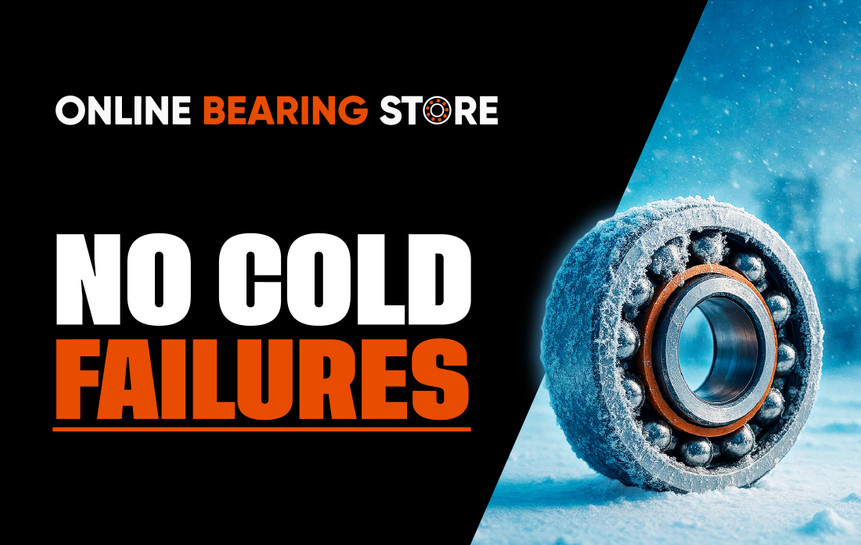
Cold-Weather Bearings That Don’t Crack, Stall or Fail
Cold climates place unique stress on rotating equipment, especially when temperatures drop suddenly or stay below freezing for long periods. Metal contraction, lubricant thickening, and moisture exposure all challenge cold-weather bearings in ways that standard designs are not built to handle. When bearings are not selected for winter operation, startup failures and seized equipment become common. These issues lead to expensive downtime, emergency maintenance, and lost productivity, making low-temperature bearing performance a critical concern for anyone operating equipment in cold regions.
Why Do Bearings Fail in Cold Weather?
Bearings fail in winter because low temperatures affect materials, lubrication, and internal clearances at the same time. Without the right design choices, even well-maintained systems can experience early breakdowns and reliability issues.
Material Brittleness at Low Temperatures
As temperatures fall, many standard bearing steels lose toughness and become brittle. Instead of absorbing shock loads, the material is more likely to crack under stress.
This brittleness is a major contributor to bearing failure in cold weather, especially during startup when loads spike. Bearings engineered with tougher alloys or stainless materials are better suited as bearings that resist cracking in winter conditions.
Lubricant Thickening and Starvation
Cold temperatures cause grease and oil to thicken, reducing their ability to flow into contact areas. When lubrication cannot reach rolling elements, friction increases rapidly.
Lubrication starvation is one of the most common problems seen in bearings for freezing environments, particularly in outdoor or unheated facilities. This is why selecting low-temperature lubrication bearings is essential for winter operation.
Tightened Tolerances and Startup Stress
Metal components contract as temperatures drop, reducing internal bearing clearance. Reduced clearance increases contact pressure between rolling elements and raceways.
During cold starts, this combination of tight clearances and thick lubricant creates high stress. Over time, this stress accelerates wear and contributes to premature failure in bearings for cold temperatures.
What Happens When Bearings Stall or Seize in Freezing Conditions?
Stalling and seizure are common symptoms of bearings not designed for cold climates. These issues often appear during startup, when resistance is highest.
Increased Friction and Drag
Cold grease, stiff seals, and reduced clearances increase rolling resistance inside the bearing. This added drag raises startup torque requirements.
When torque demand exceeds system capacity, shafts may fail to rotate. These problems are frequently seen in bearings for sub-zero environments that are not properly specified.
Motor Overload and Equipment Damage
When bearings stall, motors draw higher current to overcome resistance. This can cause overheating, breaker trips, or permanent motor damage.
Over time, repeated overloads affect couplings, belts, and gearboxes. In winter, a single stalled bearing can cascade into system-wide failures, particularly in industrial bearings for winter conditions.
Accelerated Wear After Cold Starts
The most damaging period for bearings is often the first few minutes of operation. Before components warm slightly and lubrication redistributes, metal surfaces experience high stress.
Repeated cold starts without proper bearing selection accelerate wear. This is why winter-related damage often appears early in the season rather than after months of operation.
What Bearing Materials Perform Best in Cold Environments?
Material choice plays a major role in winter reliability. Some materials maintain strength and toughness far better than others in freezing temperatures.
Stainless Steel Bearings
Stainless steel bearings offer improved corrosion resistance and retain toughness in cold environments. They are less likely to crack under shock loads and handle moisture exposure well.
These characteristics make them popular bearings for freezing environments, especially in food processing, outdoor equipment, and washdown applications.
Chrome Steel vs Specialty Alloys
Standard chrome steel bearings are widely used but may not perform well in extreme cold. Specialty low-temperature alloys are designed to remain tough and resist fracture.
While specialty alloys may cost more, they often perform better as extreme temperature bearings, reducing downtime and long-term maintenance costs.
Hybrid and Ceramic Bearing Options
Hybrid bearings use ceramic rolling elements with steel races. Ceramic materials are lightweight, hard, and less affected by temperature changes.
In demanding applications, hybrids can serve as reliable bearings for sub-zero environments, particularly where speed, precision, or thermal stability is critical.
How Does Lubrication Change in Cold-Weather Bearing Applications?
Lubrication strategy must change in winter. Using the wrong lubricant is one of the fastest ways to damage bearings in cold climates.
Low-Temperature Greases and Oils
Standard greases often become too thick to flow at low temperatures. Synthetic greases and oils formulated for cold use remain fluid and protective.
These formulations are essential for low-temperature lubrication bearings, ensuring that rolling elements receive proper film protection during startup.
Grease Fill Levels for Cold Starts
Overfilling bearings with grease increases drag and churning losses in cold conditions. Excess grease resists movement and raises energy consumption.
Optimized fill levels help maintain smooth startup and improve overall low-temperature bearing performance.
Sealed vs Re-Lubricated Bearings
Sealed bearings are often preferred in winter because they retain factory-selected lubricant and block contamination. This is especially important in snowy or icy environments.
In some industrial applications, re-lubricated bearings may still be used, but only with careful lubricant control and maintenance planning.
How Do Seals and Shields Protect Bearings in Cold Climates?
Sealing systems are critical for winter reliability, particularly where moisture exposure is unavoidable.
Moisture and Ice Ingress Prevention
Water intrusion is a serious threat in winter. Moisture that enters the bearing can freeze, expand, and damage raceways and rolling elements.
High-quality seals help protect industrial bearings for winter conditions by preventing water entry before freezing occurs.
Seal Materials That Stay Flexible in the Cold
Some seal materials harden in low temperatures, losing their ability to maintain contact. This creates gaps where moisture and debris can enter.
Cold-rated elastomers remain flexible, preserving sealing effectiveness even in bearings for cold temperatures.
Shielded vs Fully Sealed Bearings
Shielded bearings offer limited protection and are best suited for clean, dry environments. Fully sealed bearings provide superior protection against moisture and ice.
In harsh winter settings, sealed designs are often the better choice for reliable winter equipment bearing solutions.
Where Are Cold-Weather Bearings Commonly Used?
Cold-weather-rated bearings are essential across many industries where winter conditions are unavoidable.
Outdoor Industrial Equipment
Conveyors, fans, crushers, and processing equipment often operate outdoors year-round. These systems depend on industrial bearings for winter conditions to maintain uptime.
Cold-rated bearings support reliable startup and reduce winter-related failures.
Agriculture and Forestry Machinery
Agricultural and forestry equipment often sits idle in freezing conditions before being put back into service. Bearings must perform immediately during cold starts.
Proper bearing selection prevents costly delays during harvest, logging, and seasonal operations.
Transportation and Infrastructure Systems
Rail systems, loading docks, bridges, and cold storage facilities all operate in freezing environments. Bearing failures in these systems can disrupt logistics and safety.
Using properly specified bearings for freezing environments reduces risk and improves reliability.
How Can Online Bearing Store Help You Choose the Right Cold-Weather Bearings?
The right supplier makes cold-weather bearing selection easier and more reliable.
Cold-Weather Ready Bearing Categories
Online Bearing Store offers ball bearings, roller bearings, stainless steel bearings, and sealed options designed for cold environments.
These products support dependable operation as bearings for sub-zero environments across many applications.
Application-Specific Selection Support
Load, speed, exposure, and temperature range all affect bearing choice. Expert guidance helps match products to real-world conditions.
This support improves performance and reduces the risk of winter-related failures.
Reliable Supply for Critical Environments
Many cold-weather applications support essential operations. Consistent product availability and quality are critical.
Online Bearing Store delivers dependable winter equipment bearing solutions backed by expert service and reliable inventory.
Frequently Asked Questions
1. What temperatures are considered cold for bearing applications?
Temperatures below 0°C (32°F) can affect standard bearings, while sub-zero conditions require specialized designs.
2. Can standard bearings survive winter conditions?
Standard bearings may work briefly but often struggle with lubrication and material issues in cold climates.
3. Why do bearings crack more easily in cold weather?
Low temperatures reduce material toughness, increasing the risk of fracture under load or shock.
4. What lubricant works best for cold-weather bearings?
Synthetic greases and oils with low pour points perform best in winter environments.
5. Do sealed bearings perform better in winter?
Yes, sealed bearings help block moisture and retain cold-rated lubricant.
6. How can you prevent bearing stalling during winter startup?
Use bearings with proper clearance and cold-rated lubrication to reduce startup torque.
7. Are stainless steel bearings suitable for freezing temperatures?
Yes, they maintain toughness and resist corrosion in cold, wet environments.
8. How low can cold-weather bearings operate?
Some bearings are rated for temperatures as low as -40°C or lower.
9. Which industries rely most on cold-weather bearings?
Agriculture, mining, transportation, cold storage, and outdoor industrial operations depend on them.
10. Where can you source reliable cold-weather bearings?
Online Bearing Store offers a wide range of cold-weather bearing options with expert selection support.
Equip Your Machinery for Cold-Weather Reliability
Prepare your equipment for winter by selecting bearings designed to handle freezing and sub-zero conditions. Explore Online Bearing Store’s cold-weather bearing solutions or contact the team for expert help choosing the right bearings for your application.