Wide-Inner-Ring Insert Bearings: When and Why They Outperform Standard Ball Bearings
Picture a conveyor tail pulley running on a standard press-fit ball bearing: the vibration loosens the fit, the inner ring starts to creep, the shaft gets scored, and the whole line grinds to a halt. Wide inner ring insert bearings address the real problem, because an extended inner ring bearing changes how the bearing grips and seats on the shaft. This guide shows you when to use insert bearings, where a standard ball bearing still makes more sense, and how to specify one the right way.
What Is a Wide-Inner-Ring Insert Bearing?
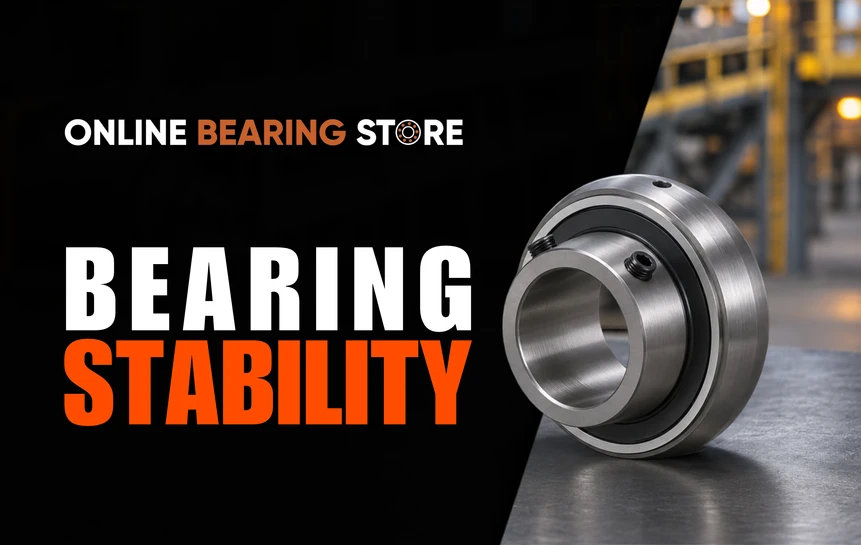
A wide-inner-ring insert bearing is a ball bearing whose inner ring sticks out past the outer ring. It locks onto your shaft with set screws or an eccentric collar, and it sits in a housing on a spherical outer ring. You'll hear it called a wide inner ring bearing, an extended inner ring bearing, or just a UC insert bearing.
Anatomy of a Wide-Inner-Ring Insert
Every part on this bearing has a job to do. Here's what you'll find on most designs:
- Extended inner ring: gives the bearing more contact with your shaft.
- Locking device: a set screw insert bearing uses screws to grip the shaft, while an eccentric locking collar bearing uses a twist-on collar.
- Spherical outer ring: a spherical outer ring bearing can tilt a bit inside the housing.
- Seals: contact or flinger seals keep dirt out and grease in.
- Lubrication point: many designs have a grease fitting or hole so you can relubricate.
How It Differs from a Standard Deep Groove Ball Bearing
A standard deep groove ball bearing usually needs a tight press fit on the shaft. That means a precise shaft size, and often a press. Its outer ring sits in a fixed bore, so it can't shift to line up.
When you weigh an insert bearing vs ball bearing, the fit is the biggest gap. An insert slides on with a slip fit, and then a mechanical lock holds it. The housing seat lets it work as a self-aligning insert bearing, so small misalignment doesn't bind it up. Many inserts start from the same basic design as a common 6200-series bearing, with extra features that make them easier to live with in the field.
Wide Inner Ring vs. Narrow-Ring Inserts
A narrow ring insert has a shorter inner ring. A wide one gives you longer shaft contact and more room for the lock. Most mounted bearing inserts come in both widths. Common series names tell you the width and the lock: UC (wide inner ring, set screw), SB (narrow, set screw), NA, UEL, or HC (wide, eccentric collar), and SA (narrow, eccentric collar). Codes can vary by brand, so check the manufacturer's chart.
Why Does a Wider Inner Ring Improve Bearing Performance?
A wider inner ring gives the bearing more grip and more support on the shaft. That extra width resists tilting, holds the lock better, and cuts down the tiny movements that wear a shaft away. In short, a wide inner ring bearing stays put when a standard one starts to walk.
Longer Shaft Contact for Stable Seating
Think about a short stool next to a long bench. The bench is much harder to rock. A wider bore surface works the same way. A longer inner ring spreads the load over more of the shaft, so the ring is less likely to tilt or wobble.
Stronger, More Secure Locking
The extended ring leaves space for set screws or an eccentric collar. A set screw insert bearing can bite into the shaft without squeezing the raceway out of shape, and an eccentric collar wedges the shaft against the inner ring with no screws over the raceway. Both keep the bearing turning smoothly.
Tolerance for Commercial-Grade Shafts
These inserts are made for slip fits on regular commercial shafting. The insert bearing shaft tolerance is often quoted in the h7 to h9 range, but check the manufacturer's data for your exact part. The payoff is simple. You don't have to grind the shaft to a fine finish, and you don't need a press or a heater to get the bearing on.
Reduced Fretting and Shaft Wear
Fretting is tiny back-and-forth movement between two parts that should be staying still. Over time, it scars the shaft. A well-supported, well-locked UC insert bearing moves less, so your shaft lasts longer.
When Do Wide-Inner-Ring Inserts Outperform Standard Ball Bearings?
They win in rough, loose-fit conditions. Think vibration, shock, frequent starts and stops, small misalignment, and repairs far from the shop. Knowing when to use insert bearings comes down to spotting those conditions early. In each case, the lock and the longer shaft contact keep the ring from creeping.
High-Vibration and Shock-Load Equipment
Crushers, screens, shakers, and farm implements really shake. A press fit can work loose under that kind of abuse. A locked, wide inner ring stays put, which is why many crews switch to a set screw insert on this kind of gear.
Start-Stop and Reversing Duty
Conveyors and indexing drives start, stop, and change direction all day. Every change tugs at the fit, and a loose fit tends to creep. For reversing duty, use set screw locking or a concentric collar. Eccentric collars are best for one-direction rotation.
Long Shafts and Minor Misalignment
Long shafts flex. Frames bend. Mounts are rarely perfect. A self-aligning insert bearing can make up for small, static misalignment from frame deflection or a mounting error, which takes stress off the balls and raceways.
Field-Serviceable and Remote Equipment
When a bearing quits far from your shop, speed counts. Mounted bearing inserts go on with hand tools. No press, no heating, no special setup. Keep a few replacement insert bearings in the truck and you can often fix the problem on the spot.
Here's a quick reference you can use to match conditions to a bearing type:
|
Operating condition |
Recommended bearing type |
Why it performs better |
|
Heavy vibration or shock |
Wide-inner-ring insert |
Locked ring and long contact resist loosening |
|
Frequent start-stop or reversing |
Wide-inner-ring insert with set screw or concentric collar |
Mechanical lock stops inner ring creep |
|
Long shaft, minor misalignment |
Self-aligning wide-inner-ring insert |
Spherical outer ring adjusts to the housing |
|
Commercial-grade shaft |
Wide-inner-ring insert |
Slip fit needs no precision grinding |
|
Remote or field repair |
Wide-inner-ring insert |
Hand-tool installation, no press |
|
High speed, tight runout |
Standard deep groove ball bearing |
Press fit supports balance and precision |
|
Very tight axial space |
Standard ball bearing or narrow-ring insert |
Needs less width |
When Is a Standard Ball Bearing Still the Better Choice?
A standard ball bearing is the better pick when you need high speed, high precision, tight axial space, or strong thrust capacity. The insert bearing vs ball bearing question isn't about which one is better overall. It's about which one fits the job.
High-Speed or Precision Applications
Locking devices and slip fits add a little runout, and at high speed that matters. A press-fit deep groove ball bearing is usually the better choice for precision spindles and fast, well-balanced shafts. A UC insert bearing is built for rugged duty, not for tight runout. Check the manufacturer's data for exact speed limits.
Tight Axial Space Envelopes
The extended inner ring adds width. If your design leaves very little room along the shaft, a standard bearing may fit where a wide inner ring bearing won't.
Significant or Sustained Axial Loads
Set screws and collars hold well under normal loads. Heavy, steady thrust is another story, because it can push past what they can grip. A spherical outer ring bearing is made to handle radial loads and misalignment, not big thrust. For that kind of duty, look at a different mounted design or a bearing built for thrust.
How Do Wide-Inner-Ring and Standard Ball Bearings Compare Side by Side?
The table below lines up three common options. It's a quick way to see the insert bearing vs ball bearing tradeoffs, and a wide inner ring against a narrow one. Confirm the details with the manufacturer.
|
Feature |
Wide-inner-ring insert |
Standard deep groove ball bearing |
Narrow-ring insert |
|
Shaft fit |
Slip fit |
Interference (press) fit |
Slip fit |
|
Locking method |
Set screws or eccentric collar |
Press fit, often with shoulders or snap rings |
Set screws or eccentric collar |
|
Shaft tolerance required |
Commercial grade |
Tight, often ground |
Commercial grade |
|
Misalignment tolerance |
Good (spherical outer ring) |
Very low |
Good (spherical outer ring) |
|
Relative speed capability |
Moderate |
Higher |
Moderate |
|
Axial width |
Wider |
Narrower |
Medium |
|
Installation time and tools |
Fast, hand tools |
Slower, press or heat |
Fast, hand tools |
|
Shaft wear risk |
Lower when locked and sized right |
Higher if the fit loosens |
Moderate |
|
Typical applications |
Conveyors, farm machinery, fans |
Motors, gearboxes, precision drives |
Light-duty and general equipment |
So, which should you choose? Go with an extended inner ring bearing for rough duty, commercial shafts, and quick repairs. Pick a standard deep groove ball bearing when speed, precision, or space matter most.
What Should You Check Before Specifying a Wide-Inner-Ring Insert?
Before you order, look at the shaft, the housing, and the place the bearing will live. A few minutes of checking now can save you a day of downtime later, and it helps your replacement insert bearings fit the first time.
Shaft Diameter, Tolerance, and Surface Condition
Measure the shaft in a few spots, not just one. Look for rust, burrs, and wear. The insert bearing shaft tolerance only works if the shaft is round and in good shape. A shaft that's worn or undersized lets the ring creep, even with a good lock.
Housing Compatibility and Mounting Style
The insert has to match the housing. Pillow block, flange, and take-up housings all take mounted bearing inserts, but the outer ring and the housing bore must agree.
Sealing, Lubrication, and Operating Environment
Pick a relubricatable insert if you can grease it on a schedule. Pick a sealed-for-life insert if access is tough. In wet or corrosive spots, look at stainless options. A spherical outer ring bearing with good seals will last longer in dirty air.
Print this checklist and fill it in before you buy:
- Shaft size and tolerance
- Housing type (pillow block, flange, or take-up)
- Rotation (one direction or reversing)
- Locking method (set screw, concentric collar, or eccentric collar)
- Load and speed
- Expected misalignment
- Seal type
- Lubrication plan
- Material (standard steel or stainless)
How Do You Install a Wide-Inner-Ring Insert Correctly?
You slide the insert on, set the housing, and lock it last. Here are the steps:
- Clean and inspect the shaft. Remove dirt, burrs, and rust.
- Slide the insert onto the shaft. Don't hammer on the outer ring.
- Align the housing and fasten it down.
- Position the shaft where it needs to sit along its length.
- Engage the locking device last.
- Tighten the set screws to the manufacturer's torque. Don't guess.
- Turn the shaft by hand. It should rotate smoothly.
With a set screw insert, step six is the key one, so use a torque wrench. Working with an eccentric locking collar bearing? Turn the collar in the direction the shaft spins, then lock it with its own set screw. Always follow the maker's directions for your model.
What Mistakes Shorten Wide-Inner-Ring Bearing Life?
Most early failures come from three things: locking too soon, using a worn shaft, and brushing off the signs of a spinning outer ring. Each one can cut the life of even a good wide inner ring bearing.
Locking Before Final Alignment
If you lock the insert before the housing is lined up, the bearing is under load from day one. That stresses the locking device and the balls. A self-aligning insert bearing can only do its job if you let it settle first. Align first, then lock.
Undersized or Worn Shafts
A loose shaft lets the inner ring creep, and no lock can fully fix a bad fit. Repair or replace worn shafts before you fit a new UC insert bearing.
Ignoring Spin-in-Housing Symptoms
If the outer ring turns in the housing, you'll notice wear, heat, or noise. Don't wait it out. Find the cause, and check the housing seat for wear, before you fit a new insert.
Why Source Wide-Inner-Ring Insert Bearings from Online Bearing Store?
We offer insert bearings, housings, and mounted units, plus people who know how they fit together. Wide-Inner-Ring Inserts and Complete Mounted Units Shop insert bearings and mounted units in set screw and eccentric collar designs across standard bore sizes. Contact us for availability on specific sizes.
Matching Housings and Replacement Inserts
Find pillow block, flange, and take-up housings to match your insert. Because inserts can be replaced on their own, a failed unit doesn't always mean a new housing.
Expert Technical Support
Not sure what fits? Contact our team and we can review your application, help cross-reference part numbers, and help you decide whether an insert bearing suits your setup.
FAQ: Wide-Inner-Ring Insert Bearings
1. What is the difference between an insert bearing and a ball bearing?
An insert bearing is a ball bearing with a spherical outer ring and a built-in lock. It slips onto the shaft and seats in a housing. In the insert bearing vs ball bearing debate, a standard ball bearing usually needs a press fit and a fixed bore.
2. Why choose a wide inner ring over a narrow one?
A wide inner ring bearing gives you more shaft contact and more room for the lock. That adds stability and grip, especially under vibration and shock.
3. Do wide-inner-ring insert bearings need a precision shaft?
No. They're made for commercial-grade shafts with a slip fit. Still, the shaft should be clean, round, and not worn. Confirm the insert bearing shaft tolerance with the manufacturer.
4. What is the difference between set screw and eccentric collar locking?
A set screw insert bearing presses screws straight onto the shaft. An eccentric collar twists to wedge the shaft against the inner ring and then locks with its own set screw. For reversing duty, use set screw locking or a concentric collar; eccentric collars are best for one-direction rotation.
5. Can insert bearings handle misalignment?
Yes, small amounts. A self-aligning insert bearing tilts inside the housing thanks to its spherical outer ring bearing design. Check the manufacturer's data for the exact angle.
6. When should you not use an insert bearing?
Skip it for high speed, high precision, very tight axial space, or heavy, steady thrust loads. Knowing when to use insert bearings also means knowing when not to. A standard ball bearing may serve you better.
7. Can you replace just the insert and keep the housing?
Often, yes. If the housing is in good shape and the new insert matches its outer ring and bore, replacement insert bearings let you swap only the insert. Check the housing for cracks and wear first.
8. How tight should you make the set screws?
Tighten them to the torque the manufacturer lists for your size. Too loose and the ring can creep. Too tight and you risk damaging the shaft or the locking device on your mounted bearing inserts.
9. Do wide-inner-ring inserts need grease?
Many designs include a lube point, so you can add grease on a schedule. Others are sealed for life. Check the data sheet for your extended inner ring bearing and follow the maker's guidance.
10. What do letters like UC mean on an insert bearing?
The letters usually point to the series and the locking style. A UC insert bearing, for example, is a common wide-inner-ring set screw series, while SB is narrow with set screws and SA is narrow with an eccentric collar. Match your part number to the manufacturer's chart before you order.
Ready to Upgrade to Wide-Inner-Ring Insert Bearings?
If loose fits, scored shafts, and surprise downtime keep costing you, wide inner ring insert bearings may be the fix. Shop wide-inner-ring inserts and mounted units at Online Bearing Store, or contact our technical team for availability and help matching the right insert to your shaft, housing, and operating conditions.