
Plastic vs. Stainless Food Grade Bearings: Which Holds Up to Daily Washdown?
When a busy poultry plant swaps its standard line bearings for high-strength metal only to discover surface pitting after a few months of daily chlorinated caustic washdowns, while a neighboring line running food grade plastic bearings shows zero corrosion, it becomes clear that selecting the right hardware requires understanding how different materials handle aggressive sanitation schedules.
What Does Daily Washdown Actually Do to a Bearing?
High-Pressure Water and Spray Intrusion
High-pressure washdown hoses operating at high PSI pack enough mechanical force to push past standard contact seals. Once water penetrates the internal cavity, it mixes with grease, creates an emulsion, and sits directly against raceways and rolling elements. This moisture trapped inside accelerates internal wear and sets off rapid oxidation across steel surfaces, making the choice of washdown bearings critical for plant reliability.
Cleaning and Sanitizing Chemicals
Sanitation chemical formulations attack metallic and non-metallic materials through entirely different mechanisms. Caustic cleaners dissolve stubborn organic fats and proteins, but they cause caustic washdown bearing corrosion on soft metals while leaving most polymers unharmed. Chlorinated alkaline cleaners are highly effective on protein soils, but the free chlorine ions aggressively attack passivated metal layers, triggering pitting corrosion. Acid sanitizers strip hard water scale and mineral deposits, yet they eat away at martensitic steel formulations. Quaternary ammonium and peracetic acid neutralize microbial growth, but prolonged exposure can lead to stress cracking in lower-grade plastics if internal stresses are present when utilizing polymer bearings for food processing.
Thermal Cycling from Hot Water Washdown
Sanitation crews routinely use water heated between 140 degrees and 180 degrees Fahrenheit to sanitize equipment lines. When hot water hits a cold bearing, the air inside expands and vents out through seal lips. As the line cools down after washdown, the internal pressure drops, drawing moisture and chemical vapors back into the bearing cavity, which threatens bearings for washdown environments.
Grease Washout
High-pressure streams combined with lipid-dissolving alkaline detergents quickly strip away standard grease from raceways. Once stripped of grease, unprotected bearings experience metal-to-metal contact, friction spikes, and immediate failure under normal operational loads unless protected by proper corrosion resistant bearings.
What Are Plastic Food Grade Bearings Made Of?
Common Polymer Race Materials
Engineered polymer bearings for food processing replace traditional steel rings with high-performance polymers. Acetal is widely used for its low friction coefficient, dimensional stability, and resistance to alkaline detergents. Polypropylene is lightweight with high resistance to moisture absorption and aggressive acids. PVDF is exceptionally resistant to strong acids, active chlorine, and elevated washdown temperatures. PEEK is a premium polymer capable of handling heavy continuous loads, continuous temperatures up to 480 degrees Fahrenheit, and severe chemical exposure.
Rolling Element Options
Because polymer races do not rust, the selection of the internal rolling elements determines overall chemical immunity and load handling. Glass balls offer complete immunity to chemical attack, zero magnetic signature, and light-duty performance. Stainless steel balls combine excellent corrosion resistance with higher load-carrying capacity than glass options. Ceramic balls are extremely hard, smooth, and impervious to washdown chemicals while delivering long operational life when pairing with food grade plastic bearings.
Thermoplastic Housings with Stainless Inserts
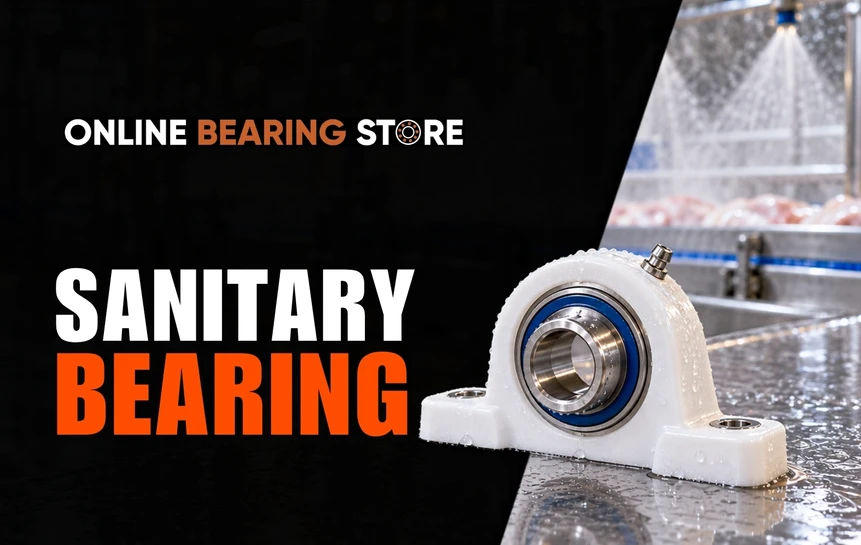
For conveyor lines requiring more support than all-polymer units provide, thermoplastic bearing housings offer a practical hybrid solution. These units feature solid, smooth PBT housing paired with a stainless steel insert bearing and multi-lip contact seals, giving you an outer shell that never peels or rusts alongside high mechanical support inside.
Are All Stainless Steel Bearings Equally Corrosion Resistant?
440C Martensitic Stainless
440C stainless steel bearings feature high carbon content, allowing them to be heat-treated for maximum hardness and heavy load support. The tradeoff is lower corrosion resistance. Under daily exposure to chlorinated cleaners or acid sanitizers, 440C raceways develop severe surface pitting and red rust stains.
316 Austenitic Stainless
316 stainless steel food grade bearings include molybdenum, which builds strong resistance against chlorides, salt spray, and acidic sanitizers. It will not pit or rust under typical sanitation routines. However, because these components cannot be hardened to the same degree as alternative alloys, their maximum load capacity and speed ratings are reduced by roughly 20 to 25 percent.
Stainless Housings and Surface Finish
Cast 304 or 316 stainless housings deliver high impact strength for heavy washdown zones. Smooth, passivated surface finishes prevent bacteria from taking root and allow water to shed cleanly during washdown. Solid-base housing designs eliminate hollow cavities where water, debris, and bacteria collect, safeguarding stainless steel food grade bearings in wet facilities.
How Do Plastic and Stainless Bearings Compare Under Washdown?
Corrosion and Chemical Resistance
Plastic bearings remain virtually immune to rust and water-based corrosion. However, specific polymers do have chemical vulnerabilities; for instance, acetal degrades when exposed to concentrated acids or prolonged high chlorine concentrations. When evaluating plastic vs stainless steel bearings, 316 stainless resists nearly all washdown chemicals, whereas 440C stainless requires careful monitoring to prevent pitting under harsh sanitizers.
Washdown Chemical Compatibility Guide
|
Chemical Type |
Common Example |
Acetal (POM) |
Polypropylene |
PEEK |
440C Stainless |
316 Stainless |
|
Caustic Cleaners |
Sodium Hydroxide |
Excellent |
Excellent |
Excellent |
Good |
Excellent |
|
Chlorinated Alkaline |
Chlor-Foam |
Good |
Excellent |
Excellent |
Poor (Pitting) |
Excellent |
|
Acid Sanitizers |
Phosphoric Acid |
Fair / Poor |
Excellent |
Excellent |
Poor |
Excellent |
|
Quaternary Ammonium |
Quat Sanitizers |
Excellent |
Excellent |
Excellent |
Good |
Excellent |
|
Peracetic Acid (PAA) |
PAA 15% |
Good |
Good |
Excellent |
Fair |
Excellent |
Temperature Limits
Standard polymers like acetal and polypropylene perform continuously up to 180 to 200 degrees Fahrenheit, but steam cleaning can cause thermal softening. PEEK handles continuous temperatures up to 480 degrees Fahrenheit. Stainless steel bearings operate well beyond 500 degrees Fahrenheit when packed with high-temperature food-grade synthetic grease.
Load Capacity and Speed
Plastic bearings carry a fraction of the mechanical load supported by steel bearings and perform best under 1,000 RPM. Excessive speeds generate heat that softens polymer raceways, whereas stainless bearings easily handle high speeds and heavy radial loads.
Dimensional Stability
Certain polymers absorb small amounts of water, causing minor swelling that can tighten tolerances on shafts. Acetal and PEEK maintain good dimensional stability, while stainless steel exhibits no moisture absorption or dimensional change.
Side-by-Side Material Comparison
|
Feature / Metric |
All-Plastic Bearing |
440C Stainless Bearing |
316 Stainless Bearing |
Thermoplastic Housed Unit |
|
Corrosion Resistance |
Total Immunity |
Moderate (Pitting Risk) |
Superior |
Excellent |
|
Chemical Resistance |
High (Polymer Dependent) |
Moderate |
High |
Very High |
|
Max Continuous Temp |
180°F–200°F (480°F PEEK) |
300°F–500°F |
500°F+ |
180°F–220°F |
|
Relative Load Capacity |
Low (10%–20% of steel) |
High (100%) |
Moderate (75%–80%) |
High (Metal Insert) |
|
Speed Rating |
Low to Moderate |
Very High |
Moderate to High |
High |
|
Weight |
Very Light |
Heavy |
Heavy |
Light to Medium |
|
Relative Initial Cost |
Low to Moderate |
Moderate |
High |
Moderate |
Which Material Costs Less Over the Bearing’s Lifetime?
Upfront Price vs. Replacement Frequency
Evaluating hardware solely on initial purchase price can lead to high long-term maintenance costs. Installing a cheaper bearing that corrodes every two months requires buying six replacements per year, plus labor for every swap. Investing in a properly specified corrosion resistant bearings unit that lasts two years cuts your real operational costs dramatically.
Downtime and Sanitation Labor
Unplanned line stoppages on wet production lines cost hundreds to thousands of dollars per hour in lost production. Pulling maintenance technicians away from routine preventive maintenance to execute emergency bearing changeouts drains valuable plant labor across food processing conveyor bearings.
Relubrication Requirements
Many food grade plastic bearings run dry without any added grease. Eliminating grease purges cuts maintenance labor and keeps grease off equipment lines. Stainless bearings require regular purges using NSF H1 food-grade grease to flush out trapped moisture, adding labor hours across every sanitation cycle.
Which Bearing Should You Choose for Each Application Zone?
Direct Spray and Product Contact Zones
In direct spray zones subjected to aggressive cleaning chemicals and high-pressure water, choose all-plastic bearings or units utilizing 440C vs 316 stainless steel bearings comparisons to guide your choice. Lube-free polymer bearings prevent grease from leaking into food contact areas.
Splash Zones with Moderate Loads
In areas receiving chemical splash, condensation, and secondary washdown, thermoplastic bearing housings deliver an effective balance. They provide physical strength, clean easily, and prevent outer shell corrosion while protecting internal mechanisms.
High-Load, High-Speed, or High-Heat Positions
Heavy conveyor drives, cookers, and high-speed equipment demand metal components. Specify stainless steel bearings mounted in solid stainless housings, protected by multi-lip contact seals and end caps to guard against moisture intrusion.
Application Zone Decision Matrix
|
Application Zone |
Typical Equipment |
Primary Hazard |
Recommended Housing Material |
Recommended Bearing Insert / Inner Material |
|
Direct Contact / High Washdown |
Inspection lines, light conveyors, bottle washers |
Direct chemical spray, rust, grease leaks |
Solid PBT Thermoplastic |
All-Polymer (Acetal/PEEK) or 316 Stainless |
|
Splash Zone / Moderate Load |
Packaging conveyors, case packers, sorting belts |
Chemical splash, moisture, light impacts |
Thermoplastic or Cast Stainless |
316 Stainless or Sealed 440C |
|
High Load / High Speed |
Main drives, incline heavy conveyors, mixers |
Mechanical load, vibration |
Cast 304/316 Stainless Steel |
440C Stainless with Multi-Lip Seals |
|
High Heat / Oven / Steam |
Steam tunnels, baking ovens, fryers |
Extreme heat, thermal expansion |
Cast 316 Stainless Steel |
316 Stainless or PEEK Polymer |
How Can You Extend Bearing Life in Washdown Areas?
Seals, Shields, and End Caps
Triple-lip rubber seals provide positive protection against spray intrusion. Snap-on thermoplastic end caps cover exposed shaft ends, while back-of-housing seals prevent washdown fluids and organic matter from collecting behind mounted units.
Relubrication After Washdown
When maintaining lubricated stainless steel components, purge fresh NSF H1 food-grade grease into the bearing immediately after washdown while the shaft is slowly rotating. Fresh grease pushes out any water drops that penetrated the seals during cleaning.
Washdown Technique
Encourage sanitation workers to direct spray nozzles away from bearing seal lips whenever possible. Blasting seals head-on at close range forces water past the seal lips, regardless of the housing design.
Post-Washdown Inspection Checklist
- Visual Staining and Rust: Inspect raceways and housings for red rust spots, surface pitting, or brown streaks.
- Housing Integrity: Check thermoplastic housings for cracks, chips, or structural stress marks around mounting bolt holes.
- Polymer Swelling: Rotate shafts manually during maintenance to verify plastic bearings spin freely without binding.
- Seal Seating: Check that rubber multi-lip seals remain seated and haven't blown out from high pressure.
- Grease Purge Inspection: Look for milky or thin grease leaking around seals, which indicates water emulsification inside.
- Smooth Rotation: Turn shafts by hand during routine maintenance to check for grinding, rough spots, or internal wear.
Where Can You Find Washdown-Ready Bearings and Housings?
Plastic and Polymer Bearings
Online Bearing Store carries corrosion-proof polymer bearings in acetal, polypropylene, and PEEK, fitted with glass or 316 stainless balls for light-duty wet zones.
440C and 316 Stainless Bearings
Find corrosion resistant bearings in both 440C and 316 stainless alloys, designed specifically for wet environments requiring heavy load support and high rotational speeds.
Thermoplastic and Stainless Housed Units
Explore solid-base thermoplastic housings and cast stainless mounted units engineered for strict sanitation schedules and direct washdown exposure.
Food-Grade Lubricants and Technical Support
Get NSF H1 food-grade synthetic greases engineered to withstand water washout, along with direct assistance from material specialists who understand washdown environments.
Ready to Spec Bearings That Survive Your Sanitation Schedule?
Stop replacing corroded bearings on your wet processing lines. Browse the complete line of plastic bearings, stainless steel bearings, and thermoplastic housed units at Online Bearing Store, or contact our technical support team today for help choosing the right material for your operating loads, speeds, and washdown chemicals.
Frequently Asked Questions (FAQ)
1. Can food grade plastic bearings handle high pressure washdown spray?
Yes, high-performance polymer bearings resist direct washdown spray and sanitation chemicals without rusting or peeling. However, you must verify that line loads, shaft speeds, and operating temperatures stay within polymer performance limits.
2. Do polymer bearings require grease lubrication?
Most polymer bearings are designed to run completely dry, using self-lubricating materials like acetal or PEEK. Running dry eliminates grease washout problems, reduces maintenance work, and removes the risk of lubricant dripping onto food conveyor lines.
3. Why did my 440C stainless steel bearings develop rust stains so quickly?
440C stainless steel contains higher carbon levels to achieve mechanical hardness, making it susceptible to pitting corrosion when exposed to chlorinated alkaline cleaners, bleach, or acid sanitizers. For aggressive chemical areas, 316 stainless steel or polymer bearings provide far better corrosion resistance.
4. When should I choose 316 stainless steel bearings over 440C stainless steel bearings?
Choose 316 stainless steel bearings whenever your line experiences daily chemical washdowns, acid exposure, or chlorinated sanitizers, provided the operating loads fall within acceptable capacity limits. If your application involves high mechanical loads, 440C stainless with multi-lip seals and protective end caps may be required.
5. What is the main advantage of thermoplastic bearing housing over traditional cast iron housings?
Thermoplastic housings feature solid-base construction that eliminates hollow pockets underneath where bacteria and washdown water collect. They will not rust, chip, or peel like painted cast iron housings, making them ideal for strict sanitation zones.
6. Are all plastic bearings food-safe and FDA-compliant?
Not all plastics meet food contact requirements. Food-grade plastic bearings are manufactured using specific FDA-compliant polymers, such as unfilled acetal, polypropylene, or PEEK, paired with glass, ceramic, or 316 stainless steel balls.
7. How does thermal cycling affect bearings during hot washdown routines?
When hot water hits a cool bearing, the trapped air expands and escapes past the seal lips. As the equipment cools after sanitation, a vacuum effect draws moist air and chemical vapor back inside, leading to condensation, internal rust, and grease breakdown.
8. What rolling element material is best for plastic bearings in chemical zones?
Glass balls provide total chemical immunity and non-magnetic operation for light loads. Stainless steel balls offer higher mechanical load capacity while maintaining strong corrosion resistance, and ceramic balls deliver exceptional hardness, low friction, and full chemical immunity under moderate loads.
9. Can I replace a standard metal mounted unit with a thermoplastic housed unit without altering my shaft setup?
Yes, thermoplastic housed units are manufactured to standard industry mounting dimensions, allowing you to upgrade existing metal units without altering your shafts or mounting frames.
10. How do I prevent water from washing grease out of my stainless steel bearings during daily sanitation?
Install multi-lip contact seals, add snap-on thermoplastic end caps over exposed shaft ends, and use rear housing gaskets. Additionally, purging fresh NSF H1 food-grade grease into the bearing directly after washdown while the shaft is slowly rotating flushes out any trapped moisture and keeps raceways protected.