
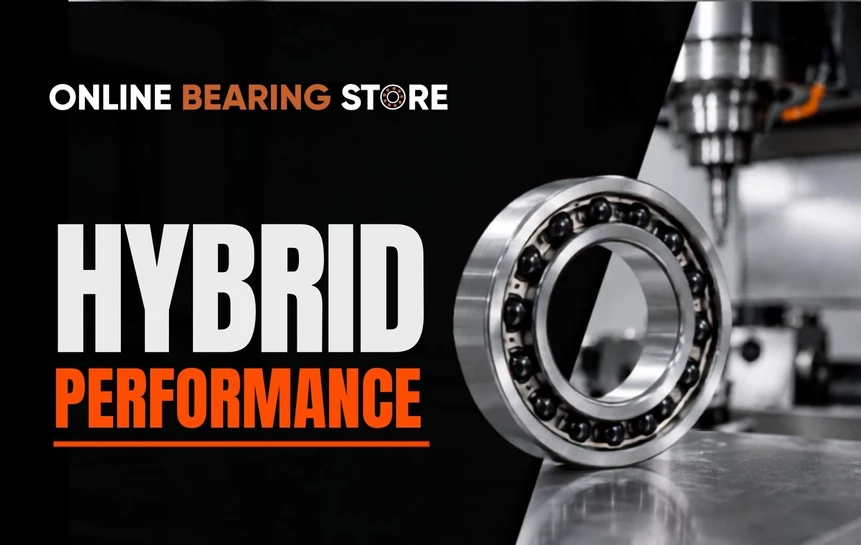
Hybrid Ceramic Ball Bearings: Real Performance Gains or Marketing Hype?
If you spend any time browsing industrial component catalogs or mechanical design forums, you have likely noticed a massive surge in marketing for hybrid ceramic ball bearings. Vendors promise extreme speeds, endless service life, lower operating temperatures, and superior reliability. However, these components often carry price tags three to ten times higher than standard precision steel options. This stark cost difference forces design engineers, plant maintenance teams, and procurement managers to ask a vital question: do hybrid ceramic ball bearings offer a true, measurable engineering advantage, or are you simply paying a premium for a marketing buzzword?
What Are Hybrid Ceramic Ball Bearings, Exactly?
Before evaluating performance claims, it helps to clear up what a hybrid bearing actually is. The term ceramic bearing gets tossed around loosely in conversation, but full ceramic units and hybrid ceramic designs operate very differently in real world machinery. Knowing how to weigh ceramic bearing pros and cons starts with understanding these basic physical differences.
Silicon Nitride Balls with Steel Rings: The Hybrid Design
A hybrid ceramic ball bearing combines two distinct materials into a single rolling element assembly.
The outer and inner rings are made from traditional high carbon chromium bearing steel (such as 52100 chrome steel) or stainless steel. The rolling elements themselves are precision ground balls made from silicon nitride bearings material. Silicon nitride is an advanced engineering ceramic known for its high strength, extreme hardness, and low weight.
By placing silicon nitride bearings elements inside proven steel raceways, hybrid bearings aim to deliver the surface advantages of advanced ceramics without the high price and brittle mounting challenges of full ceramic ring assemblies. When comparing ceramic vs steel bearings, this combined layout provides a unique balance of toughness and speed.
How Hybrid Bearings Differ from Full Ceramic Bearings
Full ceramic bearings construct both the rings and the rolling elements out of ceramic materials like silicon nitride or zirconia. While full ceramic units handle severe chemical exposure and extreme heat, they are expensive, difficult to mount safely, and susceptible to fracturing under sharp impact loads.
Hybrid bearings serve as a practical, high performance middle ground. They fit standard steel housing tolerances, install using traditional press fits, and cost far less than full ceramic assemblies while offering major material upgrades over standard all steel units. Understanding these structural traits is essential when analyzing ceramic bearing applications in modern production environments.
What Performance Claims Are Manufacturers Actually Making?
If you read vendor spec sheets, ceramic bearing benefits sound almost magical. Manufacturers routinely highlight three major performance improvements across various operating environments:
- 30% to 50% Higher Speed Limits: Claims that machinery can run much faster without overheating.
- 4x to 10x Longer Service Life: Claims that equipment will operate for years without requiring replacement.
- Reduced Friction and Energy Use: Claims that lower rolling resistance will instantly trim motor power draw.
Common Claims: Speed, Weight Savings, and Extended Lifespan
These marketing claims center around physical material properties. Silicon nitride is lighter than steel, much harder, and non conductive. Vendors lean heavily on these properties to pitch hybrid bearings as a universal upgrade for almost any spinning shaft. They promise dramatic ceramic bearing benefits regardless of the specific equipment or industry involved.
Lab Conditions vs Field Conditions: Where the Numbers Come From
To evaluate these claims fairly, you must understand where vendor data originates. Most marketing statistics come from controlled laboratory test benches. In a clean lab test, a bearing runs under ideal lubrication, constant temperatures, perfect shaft alignment, and smooth loads.
In factory environments, bearings face shaft misalignment, dynamic vibration, dirt contamination, moisture, and variable operational speeds. A performance boost that looks massive on a clean lab test bench may yield far smaller improvements in a dirty, high-vibration production facility. Evaluating true hybrid bearing performance means looking at operational data from the field rather than idealized sales sheets.
Do Hybrid Ceramic Bearings Really Run Faster?
One of the most popular reasons engineers consider an upgrade is the promised increase in ceramic ball bearing speed rating. The short answer is yes: hybrid bearings consistently outrun all steel bearings. The reasons come down to fundamental physics rather than sales spin.
Lower Ball Density and Reduced Centrifugal Loading
Silicon nitride is roughly 40% less dense than bearing steel (3.2 grams per cubic centimeter for silicon nitride versus 7.8 grams per cubic centimeter for steel).
When a bearing spins at high RPMs, the rolling elements generate heavy centrifugal force. This force pushes the balls outward against the outer ring raceway.
Because silicon nitride balls are much lighter:
- Centrifugal force on the outer race drops significantly.
- Internal ball skidding during rapid acceleration declines.
- Operating friction drops, keeping running temperatures much cooler.
- Grease and oil last longer because thermal degradation slows down.
This density advantage directly boosts the ceramic ball bearing speed rating in demanding motor and spindle installations.
Comparing Real World Speed Ratings, Not Just Spec Sheets
When directly evaluating ceramic vs steel bearings, high speed machine tool spindles show that replacing standard steel bearings with hybrid ceramic units typically increases speed capability by 20% to 40%. The lower mass of ceramic balls prevents internal skidding during quick starts and stops. If your equipment operates at very high RPMs, the speed advantage of hybrid bearings is real, proven, and repeatable.
Do Hybrid Ceramic Bearings Actually Last Longer?
When asking do ceramic bearings last longer, the answer depends entirely on why your standard bearings fail in the first place.
Surface Hardness and Wear Resistance Advantages
Silicon nitride is exceptionally hard, rating roughly 75 to 80 on the Rockwell C scale (HRC), compared to 60 to 64 HRC for hardened bearing steel. It also features an ultra smooth surface finish and will not cold weld to steel raceways even if lubrication fails briefly.
This extreme hardness provides two key advantages:
- Contamination Resistance: If a hard dirt particle gets inside the bearing, the ceramic ball crushes the particle or smoothes over the dented steel raceway rather than tearing the metal.
- Adhesive Wear Prevention: Because ceramic and steel are dissimilar materials, they cannot micro-weld together under sudden loads or fluid film breakdown.
These structural qualities help explain why engineers frequently ask do ceramic bearings last longer when dealing with harsh manufacturing conditions.
Fatigue Life: Independent Test Data vs Vendor Claims
While vendor claims of ten times longer life are overblown for normal operating conditions, independent testing confirms real gains under specific mechanical stresses:
- In Clean, Well Lubricated Applications: Hybrid bearings offer roughly 1.5 to 2 times the fatigue life of high grade steel bearings. The higher elastic modulus of ceramics concentrates stress on the steel raceway slightly more, balancing out part of the material advantage.
- In Poorly Lubricated or Contaminated Applications: Hybrid bearings can last 3 to 8 times longer than steel units because they resist microfretting, surface galling, and abrasive wear.
Reviewing ceramic bearing pros and cons shows that if your bearings fail due to lubrication breakdown, fine debris wear, or micro weld fretting, hybrid ceramic bearings deliver genuine lifespan extensions. If your bearings fail due to heavy shock loads or misaligned housings, ceramic balls will not fix the underlying mechanical flaw. Analyzing overall hybrid bearing performance under your exact load conditions will clarify whether an extended lifespan is achievable.
Are Hybrid Ceramic Bearings Worth the Extra Cost?
To determine whether the high hybrid bearing cost is justified, look beyond the upfront purchase price and evaluate your total operating expenses.
Price Comparison: Hybrid Ceramic vs Standard Steel Bearings
A standard precision steel deep groove ball bearing might cost $25, while an equivalent hybrid ceramic bearing could cost $120 to $200. In large industrial sizes or high precision spindle classes, that price gap can stretch from hundreds to thousands of dollars per bearing set.
|
Performance Metric / Feature |
Standard Steel Bearing (52100 Chrome Steel) |
Hybrid Ceramic Bearing (Silicon Nitride / Steel) |
|
Ball Density |
7.8 g/cm³ (Heavy) |
3.2 g/cm³ (40% Lighter) |
|
Ball Hardness |
60 to 64 HRC |
75 to 80 HRC (Extremely Hard) |
|
Elastic Modulus (Stiffness) |
210 GPa |
310 GPa (1.5x Stiffer) |
|
Electrical Conductivity |
Fully Conductive (Vulnerable to Arcing) |
Non Conductive Rolling Elements (Insulates Raceway) |
|
Relative Speed Limits |
1.0x (Baseline Standard) |
1.3x to 1.5x Higher RPM Limits |
|
Thermal Expansion |
12.5 x 10⁻⁶ / K |
3.0 x 10⁻⁶ / K (Low Expansion) |
|
Relative Purchase Price |
1.0x (Standard Base Cost) |
3.0x to 8.0x Higher Purchase Price |
Comparing this table makes it clear that while the initial hybrid bearing cost is high, the physical properties differ substantially from standard steel components.
Total Cost of Ownership in High Cycle vs Low Cycle Applications
Evaluating ceramic bearing pros and cons requires factoring in machine downtime costs:
- High Cycle / Mission Critical Equipment: If a bearing failure shuts down a production line costing $5,000 per hour in lost output, spending an extra $300 on a hybrid ceramic bearing is a smart investment. If the ceramic unit extends service intervals from 6 months to 18 months, it pays for itself easily.
- Low Cycle / Easy to Service Equipment: If a bearing operates at low speeds (under 1,000 RPM) in a non critical conveyor belt that is easy to access, a premium bearing will rarely justify its price. A standard steel bearing will perform reliably for a fraction of the cost.
Understanding these maintenance realities reveals that a higher hybrid bearing cost can often be offset by preventing unexpected machinery shutdowns.
Which Applications Actually Benefit from Hybrid Ceramic Bearings?
Understanding ceramic bearing applications helps you deploy these specialized components where they deliver maximum return on investment.
HighnSpeed Spindles and Precision Machine Tools
CNC milling spindles, woodworking routers, and precision grinding heads require high speeds, tight tolerances, and thermal stability. The lower density of silicon nitride bearings material reduces centrifugal expansion at high RPMs, keeping friction low and limiting spindle heat growth during long machining runs. These tools represent prime ceramic bearing applications where precision is paramount.
Electrically Non-Conductive Applications in Motors and Pumps
Variable Frequency Drives (VFDs) control modern AC motors efficiently, but they introduce a destructive side effect: stray shaft currents. These electrical currents travel through standard steel bearings, jumping across the thin oil film. This creates microscopic electrical arcs that pit the steel races, a failure mode known as electrical fluting.
Because silicon nitride is an electrical insulator, hybrid ceramic bearings completely block stray currents. Placing a hybrid bearing on the non-drive end of a VFD controlled motor permanently eliminates electrical fluting damage, offering one of the most reliable ceramic bearing benefits in plant maintenance.
Where Standard Steel Bearings Remain the Better Choice
Despite their impressive advantages, hybrid ceramic ball bearings are not the right choice for every job. When comparing ceramic vs steel bearings, standard steel bearings remain the better option for:
- Heavy Shock Loads: Sudden impacts can dent steel raceways because ceramic balls are stiffer than steel ones.
- Low Speeds and Moderate Temps: Applications running at modest speeds with good lubrication gain minimal benefit from ceramic properties.
- Tight Procurement Budgets: Applications where upfront capital is limited, and machine downtime carries minimal financial risk.
Recognizing these limitations ensures you do not waste money on components where standard steel perform equally well.
How Do You Separate Real Gains from Marketing Hype?
To get the full ceramic bearing benefits without overspending, follow a clear, logical evaluation process before buying.
Key Questions to Ask Before Upgrading
Ask these five practical questions before placing an order:
- What is causing our current steel bearings to fail?
- Is our machinery operating near or above standard steel speed limits?
- Is electrical arcing present in our VFD driven electric motors?
- How much does one hour of unplanned machine downtime cost our business?
- Will a 2x lifespan extension generate enough labor savings to cover the initial purchase price gap?
Evaluating hybrid bearing performance through these targeted questions helps separate genuine engineering value from aggressive vendor claims.
Reading Independent Test Data Instead of Vendor Spec Sheets
When reviewing ceramic vs steel bearings performance data:
- Look for standardized ISO fatigue life calculations (L10h ratings) that account for material factors.
- Check test speeds and lubricant types listed in manufacturer test charts.
- Request real world case studies from ceramic bearing applications operating under conditions similar to yours.
Hybrid Ceramic Bearings from Online Bearing Store
When you need clear performance data without sales spin, Online Bearing Store provides the inventory, verified technical specifications, and engineering support required to make informed component choices.
Verified Specifications by Application
We stock a comprehensive selection of hybrid ceramic bearings sourced from trusted global manufacturers. Every bearing listing includes clear material specs, boundary dimensions, dynamic load ratings, and the maximum ceramic ball bearing speed rating for grease and oil lubrication.
Comparing Hybrid Ceramic and Steel Options Side by Side
Our online catalog allows you to compare hybrid ceramic units side by side with standard 52100 chrome steel and stainless steel options. You can evaluate price differences, speed rating increases, and load capacity trade offs directly on the product page before making a purchasing decision, ensuring the hybrid bearing cost aligns with your budget.
Technical Support for Upgrade Decisions
Not sure if a hybrid ceramic bearing is right for your equipment? Our technical support specialists are ready to help you analyze hybrid bearing performance in your specific setup. We review your operating speeds, radial and axial loads, lubrication methods, and environmental conditions to provide clear, unbiased guidance on whether an upgrade makes economic sense for your facility.
Frequently Asked Questions (FAQ)
1. Are hybrid ceramic bearings better than standard steel bearings?
When comparing ceramic vs steel bearings, hybrids are far superior in high speed, high temperature, or electrically active environments. However, for low speed, general duty applications with steady loads, standard steel bearings deliver equal reliability at a much lower cost.
2. What are the balls in a hybrid ceramic bearing made of?
The rolling elements in industrial hybrid ceramic bearings are made of silicon nitride bearings material (Si3N4). This engineering ceramic is 40% lighter than steel, significantly harder, and completely non conductive.
3. Do hybrid ceramic bearings require special grease?
Hybrid bearings use standard bearing greases and synthetic oils. However, because ceramic balls run cooler and do not micro weld with steel, grease tends to last longer. For extreme high speed applications, low viscosity synthetic greases help maximize overall hybrid bearing performance.
4. Can hybrid ceramic bearings prevent VFD electrical fluting in electric motors?
Yes. Silicon nitride balls are electrical insulators. By replacing a standard bearing with a hybrid ceramic bearing, you break the electrical circuit and prevent stray shaft currents from arcing across the raceways, unlocking one of the key ceramic bearing benefits.
5. Why are hybrid ceramic bearings so expensive?
The higher hybrid bearing cost comes from manufacturing silicon nitride ceramic rolling elements. Producing raw ceramic material, hot isostatically pressing it, and grinding balls to sub micron spherical tolerances requires specialized machinery and processing time.
6. Will hybrid ceramic bearings increase machine efficiency?
In high speed applications, yes. The lower weight of ceramic balls reduces internal centrifugal friction, cutting operating temperatures, and saving energy. In low speed applications, the friction difference is too small to impact your power bill.
7. Do ceramic balls damage steel raceways?
Under normal operating conditions, no. Silicon nitride balls are ultra smooth, which polished steel raceways benefit from over time. However, if the bearing faces severe shock loads, the harder ceramic balls can dent steel raceways more easily than steel balls would. Weighing these factor helps clarify ceramic bearing pros and cons.
8. What is the difference between a hybrid ceramic and a full ceramic bearing?
A hybrid ceramic bearing uses ceramic balls with steel inner and outer rings. A full ceramic bearing uses ceramic material for both the balls and the rings. Hybrid bearings are tougher and easier to install, making them popular across many industrial ceramic bearing applications.
9. How much faster can a hybrid ceramic bearing run compared to steel?
Hybrid ceramic bearings typically feature a ceramic ball bearing speed rating 20% to 50% higher than equivalent standard steel bearings, depending on bearing size, cage design, and lubrication method.
10. How do I know if upgrading to hybrid ceramic bearings is worth it?
An upgrade is generally worth the cost if your equipment operates at ultra high speeds, suffers from VFD electrical fluting, faces frequent lubrication failure, or if downtime costs far exceed the initial price. Asking do ceramic bearings last longer in your specific operating environment will help confirm if the upgrade is justified.
Make an Informed Bearing Upgrade Decision
Upgrading to hybrid ceramic ball bearings should be based on sound engineering data rather than vendor hype. While they offer speed, insulation, and wear benefits, they are a specialized tool designed for demanding applications.
Ready to see if hybrid bearings fit your machinery budget and operational needs? Explore our full catalog on the Online Bearing Store Hybrid Ceramic Bearing Category Page to check dimensions, speed ratings, and pricing.
Need expert guidance verifying your application requirements? Contact Online Bearing Store's Technical Support Team today to consult directly with a bearing specialist before making your purchase.