
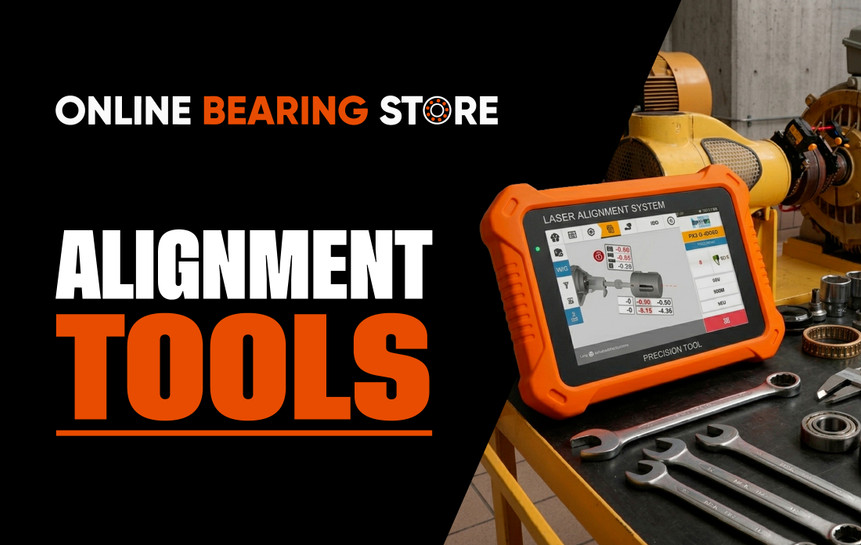
Best Tools for Bearing Alignment (And When You Actually Need Them)
Even a tiny alignment error can quietly destroy a bearing long before its rated life. When you choose the right bearing alignment tools and understand how they fit into your industrial bearing maintenance plan, you protect your equipment, reduce vibration, and avoid expensive downtime.
Minor misalignment may seem harmless, but it quickly turns into serious bearing misalignment problems, higher energy use, and repeated repairs. When you learn how to align bearings correctly and use the right shaft alignment tools, you improve reliability and extend service life across your operation.
Why Is Proper Bearing Alignment So Important?
Proper alignment ensures that loads move evenly through the rolling elements. When you apply correct precision shaft alignment practices, you reduce stress inside the bearing and prevent common bearing misalignment problems that lead to early failure.
Ignoring alignment creates hidden damage that grows over time.
How Does Misalignment Affect Bearing Life?
When shafts are not aligned, the load shifts to one side of the raceway. This uneven distribution is one of the leading causes of bearing misalignment failures in rotating equipment.
Instead of rolling smoothly, the elements slide and press unevenly. Over time, this leads to:
- Surface fatigue
- Spalling
- Cage wear
- Reduced lubricant life
Even small errors outside recommended alignment tolerance bearings limits can reduce bearing life by half. That is why proper setup using proven shaft alignment tools is critical.
How Does Misalignment Increase Vibration and Heat?
Misalignment often creates angular or parallel offset errors. These errors force components to work harder than designed.
When you fail to use proper bearing alignment tools, shafts deflect slightly. That deflection increases friction and creates heat. Heat reduces grease life and changes internal clearances.
This chain reaction leads to vibration spikes, one of the most visible signs of bearing misalignment problems. During routine industrial bearing maintenance, rising temperature and vibration often point directly to alignment issues.
What Are the Cost Impacts of Poor Alignment?
Poor alignment affects more than the bearing itself.
You may see:
- Increased energy draw
- Seal damage
- Coupling wear
- Shaft scoring
- Unexpected downtime
Repeated failures often trace back to overlooked causes of bearing misalignment. Investing in proper precision shaft alignment prevents these expensive cycles and protects your maintenance budget.
What Are the Common Types of Bearing Misalignment?
Not all alignment issues look the same. Understanding these differences helps you choose the correct shaft alignment tools and avoid long-term damage.
What Is Angular Misalignment?
Angular misalignment occurs when two shafts meet at an angle instead of forming a straight line.
This condition places uneven stress on the rolling elements. Over time, it causes serious bearing misalignment problems, especially in high-speed systems where tight alignment tolerance bearings specifications must be maintained.
What Is Parallel (Offset) Misalignment?
Parallel misalignment happens when shafts are parallel but not centered on the same axis.
This offset forces the bearing to absorb continuous radial load. If you ignore it, vibration increases and lubrication fails prematurely.
Using the correct bearing alignment tools ensures you catch this condition early and restore proper precision shaft alignment before damage spreads.
What Is Soft Foot and Why Does It Matter?
Soft foot occurs when a machine frame does not sit flat on its base.
When you tighten mounting bolts, the frame twists. This distortion changes shaft position and creates alignment error—even if your readings looked correct at first.
Soft foot is one of the most overlooked causes of bearing misalignment. During routine industrial bearing maintenance, always correct soft foot before final alignment.
What Are the Most Common Bearing Alignment Tools?
Different applications require different tools. Choosing the correct shaft alignment tools ensures accurate results without overspending.
When Should You Use a Straightedge and Feeler Gauges?
A straightedge and feeler gauges work for basic alignment checks.
They are suitable for:
- Low-speed motors
- Light-duty applications
- Preliminary inspections
These tools provide rough alignment but cannot achieve tight alignment tolerance bearings standards required for higher RPM equipment. For critical machinery, you will need more advanced bearing alignment tools.
When Is a Dial Indicator the Right Choice?
The dial indicator alignment method is a trusted manual technique for achieving solid precision shaft alignment.
It works well for:
- Pumps
- Electric motors
- Moderate-speed systems
With proper training, you can learn how to align bearings accurately using dial indicators and brackets. This method delivers dependable results when combined with correct bearing installation tools and careful setup.
When Do Laser Alignment Tools Make Sense?
Laser alignment tools for bearings provide high accuracy and digital feedback.
They are ideal for:
- High-speed motors
- Compressors
- Turbines
- Critical production lines
When you operate equipment with tight alignment tolerance bearings requirements, laser alignment tools for bearings help reduce human error and improve repeatability. They are especially useful in advanced industrial bearing maintenance programs focused on vibration reduction.
How Do You Align Bearings Using a Dial Indicator?
If you want to master how to align bearings, start with the dial indicator alignment method. It remains one of the most reliable approaches for achieving accurate precision shaft alignment.
What Tools and Preparation Are Required?
You will need:
- Dial indicators
- Mounting brackets
- Shim stock
- Torque wrench
- Clean coupling surfaces
Before measuring, inspect the shaft for runout and verify proper seating using correct bearing installation tools. Skipping preparation often leads to repeat bearing misalignment problems.
How Do You Measure and Adjust Alignment?
- Mount dial indicators securely.
- Rotate shafts together and record readings.
- Identify angular and offset errors.
- Adjust vertically with shims.
- Adjust horizontally by repositioning the motor.
- Re-measure until readings meet alignment tolerance bearings specifications.
Take your time. Careful measurements ensure effective precision shaft alignment and long-term reliability.
What Tolerances Should You Aim For?
General industrial tolerances depend on RPM:
|
RPM |
Angular Tolerance |
Offset Tolerance |
|
1,200 |
0.003 in/in |
0.005 in |
|
1,800 |
0.002 in/in |
0.003 in |
|
3,600 |
0.001 in/in |
0.002 in |
|
7,200 |
0.0005 in/in |
0.001 in |
Higher speeds demand tighter tolerances. Staying within recommended alignment tolerance bearings ranges prevents common bearing misalignment problems.
When Do You Actually Need Advanced Alignment Tools?
Not every application requires expensive systems. However, some conditions demand higher precision.
Are You Running High-Speed or High-Load Equipment?
High-speed compressors, turbines, and precision machining centers require tight precision shaft alignment.
If you operate above 3,600 RPM, laser alignment tools for bearings often provide the accuracy needed to control vibration and prevent high-speed bearing misalignment problems.
Are You Experiencing Repeated Bearing Failures?
Repeated breakdowns often point to hidden causes of bearing misalignment.
If you have already applied the dial indicator alignment method but still see vibration spikes, upgrading your shaft alignment tools may be justified. Persistent issues often signal the need for more advanced bearing alignment tools.
Is Downtime More Expensive Than the Tool?
Consider the cost of a single shutdown.
If downtime costs exceed the price of laser alignment tools for bearings, the investment makes sense. In high-output facilities, improved industrial bearing maintenance practices quickly pay for themselves.
How Can Proper Bearing Selection Reduce Alignment Problems?
Even the best alignment process benefits from proper bearing design. Smart selection reduces stress and supports stable operation.
What Are Self-Aligning Bearings?
Self-aligning bearings can tolerate minor angular error.
Examples include:
- Self-aligning ball bearings
- Spherical roller bearings
These designs help compensate for slight alignment shifts. However, they should support—not replace—proper precision shaft alignment.
When Should You Use Mounted Bearing Units?
Mounted bearings simplify installation and reduce setup error.
Pillow block and flange units help maintain shaft position and minimize common bearing misalignment problems. Combined with proper bearing installation tools, they streamline setup during routine industrial bearing maintenance.
How Do Precision Bearings Improve System Stability?
Precision bearings are manufactured with tighter tolerances.
They reduce:
- Runout
- Vibration
- Internal stress
When paired with proper shaft alignment tools, precision components help maintain correct alignment tolerance bearings levels over long service periods.
Which Bearing Alignment Solutions Are Available at Online Bearing Store?
Reliable components are essential for successful alignment.
Precision Ball and Roller Bearings
At Online Bearing Store, you can find precision ball and roller bearings engineered for durability and smooth performance.
These products support stable operation when used alongside professional bearing alignment tools and proper precision shaft alignment procedures.
Mounted Bearing Units for Easier Installation
Mounted units available from Online Bearing Store simplify alignment tasks.
Pre-assembled options reduce installation errors and support consistent results during industrial bearing maintenance.
Maintenance and Installation Accessories
The store also supplies:
- Locknuts
- Adapters
- Housings
- Essential bearing installation tools
Using the right accessories ensures your shaft alignment tools deliver accurate, repeatable results and help prevent recurring bearing misalignment problems.
Improve Equipment Reliability with Proper Alignment
If you want fewer breakdowns, lower vibration, and longer service life, focus on proper alignment and quality components. Explore precision bearings, mounted units, and installation-ready solutions at Online Bearing Store, and strengthen your industrial bearing maintenance strategy with expert guidance and dependable products.
Frequently Asked Questions
- What are bearing alignment tools used for?
Bearing alignment tools ensure shafts and bearings are positioned correctly. They help prevent vibration, uneven load, and premature wear.
- What are the main causes of bearing misalignment?
Common causes of bearing misalignment include soft foot, improper installation, shaft runout, thermal growth, and incorrect fits.
- How do I know if I havebearingmisalignment problems?
Signs include rising vibration, overheating, unusual noise, and repeated failures. These are classic bearing misalignment problems detected during industrial bearing maintenance checks.
- Is the dial indicator alignment method still reliable?
Yes. The dial indicator alignment method remains a dependable way to achieve solid precision shaft alignment when performed correctly.
- When should I use laser alignment tools for bearings?
Use laser alignment tools for bearings when operating high-speed equipment, critical machinery, or when repeated failures justify tighter control.
- How tight should alignment tolerance bearings be?
Alignment tolerance bearings depend on speed and load. Higher RPM equipment requires tighter limits to prevent vibration.
- Can bearing installation tools affect alignment?
Yes. Proper bearing installation tools prevent internal stress and seating errors that can create future alignment issues.
- How often should shaft alignment be checked?
Inspect alignment after installation, after major maintenance, and whenever vibration increases. Regular checks support effective industrial bearing maintenance.
- Does misalignment increase energy use?
Yes. Misalignment increases friction and load, forcing motors to consume more energy and worsening bearing misalignment problems.
- Can precision bearings reduce alignment issues?
Precision bearings help maintain stable operation and support accurate precision shaft alignment, reducing the risk of repeat failures.