Bearing Failure in Food Processing Lines: Contamination Risks and How to Prevent Them
When a critical conveyor bearing seizes mid-shift on a high-speed poultry processing line, the resulting downtime, scrapped product, and grease residue on the belt can turn a routine afternoon into an expensive food safety nightmare.
Food processing plants run under some of the most unforgiving working conditions in modern industry. Day after day, your mechanical equipment endures relentless high-pressure water rinses, aggressive caustic sanitizers, sudden temperature shifts, and constant exposure to organic food particles. It is a harsh cycle that tests every component on your line, but standard mounted bearings usually take the hardest hit, leading to frequent washdown bearing failure.
When bearings struggle in these environments, food processing bearing contamination quickly becomes a two-way street. On one hand, external contaminants like washdown water, harsh chemicals, and raw food bits work their way past worn seals to destroy internal raceways and bearings. On the other hand, as those internal parts break down, the bearing begins leaking purged grease, metallic wear particles, and iron rust flakes directly into your product zones.
Understanding bearing contamination prevention is essential for keeping your lines running safely. In this guide, we will break down causes of bearing failure in food plants, look closely at the contamination hazards failing bearings create, examine common failure modes, cover early warning signs to watch for during food plant bearing maintenance, share step-by-step prevention strategies, and provide a comprehensive inspection checklist for your maintenance team.
Why Do Bearings Fail So Often in Food Processing Environments?
If you feel like your maintenance team is replacing bearings far too often, you are not alone. Food manufacturing facilities present a perfect storm of environmental factors that actively degrade mechanical components, leading directly to bearing failure in food processing.
High-Pressure Washdowns and Water Ingress
Sanitation crews rely on high-pressure water hoses to blast away grease, proteins, and residues every night. Unfortunately, when high-velocity spray strikes standard bearing housings, that water pressure forces liquid right past rubber contact seals. Once water enters the bearing cavity, it quickly causes bearing grease washout by removing protective oil films and turning
grease into a milky emulsion. Without a clean, continuous lubricant layer, internal steel components rub directly against each other, starting a fast track toward conveyor bearing failure.
Chemical Exposure from Sanitizers and Cleaners
Getting equipment clean enough to meet strict sanitation standards requires heavy-duty cleaning agents. Sanitizing crews routinely apply chlorinated foams, caustic soda solutions, and acidic rinses to strip away biofilms. While these chemicals keep your plant hygienic, they act aggressively on traditional chrome steel bearings and painted iron housings. Over time, chemical exposure breaks down lubricant thickeners, causes bearing seal failure, and pits smooth metal surfaces.
Temperature Extremes and Thermal Cycling
Food lines frequently pass through dramatic temperature swings, moving from hot cooking ovens and blanching vats straight into cold processing rooms or blast freezers. This constant heating and cooling causes thermal cycling. When a hot bearing housing gets sprayed down with cold sanitation water, the air trapped inside the unit contracts rapidly. This sudden vacuum effect sucks damp air and water droplets right past external seals. The resulting internal condensation is one of the more serious causes of bearing failure in food plants.
Organic Debris and Particulate Contamination
Fine organic particles, such as flour dust, sugar crystals, starches, animal fats, and raw meat juices, constantly settle onto open machinery. When these fine solids squeeze past compromised seals, they mix with internal grease to form an abrasive grinding paste. This particle buildup accelerates washdown bearing failure and makes proper food plant bearing maintenance far more difficult.
What Contamination Risks Do Failing Bearings Create?
Frame your mechanical maintenance strategy around product integrity. When a bearing starts failing inside a food plant, food processing bearing contamination operates in both directions, making equipment health directly tied to your plant's food safety performance.
Contaminants Entering the Bearing
The moment external fluids and solids breach the outer seal lips, internal mechanical decay begins:
- Lubricant Breakdown: Water dilutes base oils, triggering sudden bearing grease washout.
- Corrosion and Pitting: Acidic and caustic liquids eat directly into steel surfaces, forming microscopic pits that accelerate structural wear. • Abrasive Wear: Fine food particles increase friction, generate excessive heat, and cause unexpected conveyor bearing failure.
Bearings Contaminating the Product
As internal damage progresses, failing bearings turn into severe food processing bearing contamination hazards:
- Grease Purging: Degraded, thinned, or over-pressurized grease escapes damaged seal lips and drops onto processing belts or open packages. • Wear Debris and Flaking Metal: Microscopic metal particles and spalled flakes of chrome steel break away from failing raceways and drop into product streams. • Rust Spall: Corroded iron fragments from deteriorating housings detach, undermining your overall bearing contamination prevention efforts.
Bacterial Harborage Points
Proper sanitation demands smooth, self-draining, and easily cleanable surfaces. Standard cast iron bearing units frequently feature rough castings, open bolt cavities, and sharp recessed corners. As water, fats, and organic material settle into these gaps, they form harborage points where bacteria can hide, making food plant bearing maintenance ineffective against cross-contamination.
Business Impact
The real cost of a broken bearing goes way beyond buying a replacement part:
- Unplanned Downtime: Sudden conveyor bearing failure on a main line can freeze production, costing your facility thousands of dollars per hour. • Scrapped Product: Any food items passing through product zones exposed to leaking grease or metal dust must be thrown away immediately. • Failed Audits and Recalls: Foreign material contamination caused by bearing seal failure can force line shutdowns, prompt expensive recalls, and harm your brand reputation.
What Are the Most Common Bearing Failure Modes on Food Lines?
Recognizing how bearings fail makes it easier to pinpoint root causes and implement targeted bearing contamination prevention before an unexpected shutdown occurs.
Corrosion and Pitting
Moisture and caustic sanitizers attack standard steel components, leading to surface oxidation. You will typically notice reddish-brown rust stains, dark spots, or pitted surfaces across internal raceways, which is one of the leading causes of bearing failure in food plants.
Lubricant Washout and Emulsification
High-pressure water enters the housing and mixes with the grease matrix. Warning signs of bearing grease washout include thinned, discolored, or milky fluid leaking past seals, alongside higher operating noise and rapid heat buildup.
Seal Failure
High sanitation spray pressure distorts rubber seal lips, or sharp debris wears away rubber contact edges. Complete bearing seal failure leads to visible gaps along inner rings, uncontrolled grease purging, and severe washdown bearing failure.
Abrasive Wear from Particulates
Solid food particles enter the housing cavity and act like fine sandpaper on moving parts. Over time, raceway surfaces take on a dull, frosted appearance; internal looseness develops, and fine metal wear dust accumulates, leading to unexpected conveyor bearing failure.
Housing Cracking and Degradation
Cast-iron housings absorb moisture, rust from within, or crack under heavy shock loads. Warning signs include hairline cracks around mounting bolt holes, flaking exterior paint, and eventual structural failure. Selecting corrosion-resistant bearings and housings helps prevent them.
Failure Mode Reference Table
|
Failure Mode |
Root Cause |
Warning Signs |
Contamination Risk |
Prevention Practice |
|
Corrosion & Pitting |
Moisture ingress & caustic sanitizer exposure |
Increased noise, vibration, reddish-brown rust stains |
Flaking rust and metal oxide particles entering food |
Install stainless steel units built for food industry use & corrosion-resistant bearings |
|
Lubricant Washout |
High-pressure washdowns driving water past seals |
Milky, thinned grease leaks, rising operating temperatures |
Emulsified grease dripping onto conveyor belts |
Apply food-safe bearing lubricants & high-washout flingers |
|
Seal Failure |
High washdown pressure, thermal cycling, abrasive debris |
Visible seal distortion, grease purge around shaft, friction heat |
Uncontrolled grease release and open entry path for dirt |
Choose sealed bearings for food processing with multi-lip seals |
|
Abrasive Wear |
Ingress of sugar, flour, grit, or meat particulates |
Grooved raceways, rough rotation, excessive internal play |
Fine metal wear fragments shedding into food stream |
Implement sealed bearings for food processing or solid polymer units |
|
Housing Degradation |
Chemical attack on painted cast iron or shock loads |
Surface paint chipping, cracked bolt holes, rust bleeds |
Paint flakes and bacterial harborage in crack gaps |
Switch to smooth thermoplastic or corrosion-resistant bearings housings |
How Can You Spot Early Warning Signs of Bearing Failure?
Catching bearing damage early through routine food plant bearing maintenance lets your team schedule quick repairs during planned maintenance windows, helping you avoid sudden washdown bearing failure.
Noise, Vibration, and Rough Rotation
During your regular walk-throughs, pay attention to subtle changes in sound and feel:
- Audible Changes: A healthy bearing operates with a soft, steady hum. High-pitched squealing usually indicates bearing grease washout, while grinding points to severe raceway pitting. • Vibration: Touch machine frames near housing bases. Excessive vibration often signals internal metal spalling or impending conveyor bearing failure.
Rising Operating Temperature
When internal lubrication breaks down due to bearing seal failure, operating friction increases and bearing temperatures climb fast:
- Check baseline temperatures using an infrared thermometer or mounted sensors during normal runs.
- A sudden temperature jump of 15°F to 20°F (about 8°C to 11°C) above baseline usually warns of lubricant failure or internal mechanical binding.
Discolored, Milky, or Leaking Grease
Inspect outer seal areas regularly to catch early signs of food processing bearing contamination:
- Milky White or Gray Grease: Indicates heavy water emulsification inside the housing. • Dark Brown or Black Grease: Points to high friction heat, oxidized oil, or heavy particulate contamination. • Excessive Leakage: Shows that seal integrity has failed, increasing the risk of bearing failure in food processing.
Visible Rust, Staining, or Housing Damage
Give housings a close look right after washdown cycles finish to evaluate your bearing contamination prevention efforts:
- Check for rust bleeding out from housing bases or shaft contact points. • Inspect painted cast-iron units for chipped paint that could drop into food zones. • Check thermoplastic units for hairline stress cracks around mounting bolt holes.
How Do You Prevent Bearing Contamination and Failure?
Preventing the causes of bearing failure in food plants takes a combination of resilient materials, effective sealing systems, and smart maintenance habits.
Choose Corrosion-Resistant Materials
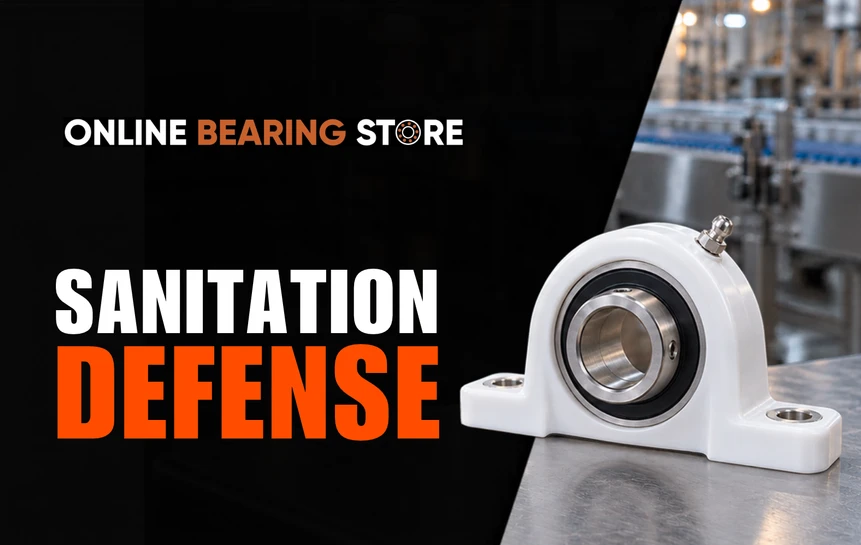
Standard painted cast-iron units struggle to hold up in high-washdown environments. Upgrading to corrosion-resistant bearings provides durable protection designed for long service life. Stainless steel bearings for food industry use resist water and chemical exposure without giving up mechanical strength. Pairing stainless inserts with smooth thermoplastic housings eliminates rust entirely while offering flat, non-porous surfaces that wipe clean easily.
Upgrade Seals and Shields for Washdown
To prevent bearing seal failure, seals must serve as your primary defense against moisture:
- Multi-Lip Contact Seals: Create multiple barrier layers that prevent bearing grease washout.
- Flingers and Rubber Shields: Stainless steel flingers rotate with the shaft, using centrifugal force to throw washdown fluids away from seal lips. • End Covers: Auxiliary end caps snap over mounted housings to enclose exposed rotating shafts, supporting total bearing contamination prevention.
Use Food-Safe, Water-Resistant Lubricants
Selecting the right grease is just as important as choosing the right steel. Using premium food-safe bearing lubricants formulated with synthetic base oils and advanced thickeners ensures your lubricant stays in place. High-performance greases maintain stable viscosity during wide temperature shifts while resisting water washout during daily washdown cycles.
Adjust Washdown Practices
Even high-quality corrosion-resistant bearings can fail under direct, close-range water pressure:
- Train sanitation technicians to avoid aiming high-pressure nozzles directly at bearing seal lips to reduce washdown bearing failure. • Use wider spray patterns (such as 45-degree fan nozzles instead of narrow streams) when cleaning near bearings. • Maintain a safe distance of at least 12 to 18 inches between washdown nozzles and mounted bearing units.
Lubricate Correctly After Sanitation
Proper post-sanitation greasing keeps bearings protected when done correctly as part of your routine food plant bearing maintenance:
- Adding a small amount of food-safe bearing lubricants after washdowns helps displace minor moisture that squeezed past seals. • Avoid over-greasing. Pushing too much grease into a unit distorts seal lips and causes food processing bearing contamination. • Apply grease slowly while turning the shaft by hand or running the line at low speeds to spread lubricant evenly.
Consider Sealed-for-Life Units
For hard-to-reach machine areas or sensitive locations right above food streams, consider switching to sealed bearings for food processing:
- These assemblies feature solid lubricant matrices that completely fill the internal housing cavity.
- Because solid lubricants leave no empty space inside the unit, washdown water cannot squeeze in, preventing bearing grease washout. They never require manual greasing, which removes a common source of grease purges and prevents unexpected conveyor bearing failure.
Bearing and Housing Material Comparison Table
|
Material Type |
Corrosion Resistance |
Washdown Suitability |
Load Capacity |
Relative Cost |
Best Application Zones |
|
Chrome Steel / Cast Iron |
Low (rusts quickly without paint) |
Poor (paint flakes, seals fail) |
Very High |
Low |
Dry zones, packaged product lines, non-washdown areas |
|
Stainless Steel |
High (resists water & mild chemicals) |
Excellent (holds up to daily cleaning) |
High |
Moderate |
Direct food zones, wet processing, and other areas that call for stainless steel bearings for food industry use |
|
Thermoplastic Housing + Stainless Insert |
Superior (rustproof housing, highly chemical resistant) |
Outstanding (smooth, no bacterial cavities) |
Moderate to High |
Moderate to High |
High-sanitation washdown, meat, poultry, dairy, using corrosion- resistant bearings |
|
Ceramic Hybrid |
High (ceramic balls don’t corrode, but the steel rings still can unless they are stainless) |
Very good (pair with stainless rings for chemical washdowns) |
High |
High |
High-speed equipment, ovens, freezers, harsh chemical zones |
What Should a Food Plant Bearing Maintenance Program Include?
Building a proactive maintenance schedule helps lower unplanned downtime, extend component life, and address the most common causes of bearing failure in food plants.
Inspection Schedules by Zone
Break your plant down into risk zones to focus your food plant bearing maintenance where it is needed most:
- High-Risk Washdown Zones (Wet/Caustic): Check daily for grease leaks, visual damage, and noise to avoid washdown bearing failure. • Medium-Risk Zones (High Humidity/Packaging): Complete weekly visual checks, alongside monthly vibration and thermal scans. • Low-Risk Dry Zones (Warehousing/Dry Storage): Conduct monthly visual checks, re-greasing on quarterly or semi-annual schedules.
Condition Monitoring
Move beyond simple visual checks by adding basic condition monitoring tools to enhance bearing contamination prevention:
- Vibration Analysis: Spot early raceway pitting or shaft misalignment before conveyor bearing failure occurs. • Thermal Imaging: Use handheld thermography cameras to scan bearing blocks and find friction hot spots caused by bearing grease washout. • Ultrasound Detection: Hear subtle friction changes and catch lubricant breakdown long before traditional methods pick it up.
Coordinating Maintenance with Sanitation Teams
Build a clear line of communication between maintenance and sanitation crews to prevent bearing seal failure:
- Align greasing schedules so maintenance technicians can apply food-safe bearing lubricants right after sanitation teams finish cleaning cycles. • Train sanitation workers to report missing end caps, damaged seals, or heavy grease leaks as soon as they see them.
Record Keeping and Failure Analysis
- Keep detailed logs of every bearing changeout, noting the date, line location, environmental conditions, and evidence of food processing bearing contamination. • Perform simple root-cause failure analysis on parts that fail early to determine if bearing failure in food processing was caused by water washdown, chemical damage, or solid particulate contamination.
Printable Daily, Weekly, and Monthly Bearing Inspection Checklist
Daily Inspection (Visual & Operational Checks)
- [ ] Listen for unusual squealing, grinding, or clicking noises on running lines. • [ ] Inspect housing covers and shafts for visible grease leakage or dark residue. • [ ] Ensure all protective end caps and covers are securely snapped in place. • [ ] Confirm no direct high-pressure washdown nozzles are aimed directly at seal lips. • [ ] Check for flaking paint or corrosion bleeding near food contact belts.
Weekly Inspection (Detailed Physical & Thermal Checks)
- [ ] Measure operating temperatures using an infrared thermometer; log any sudden spikes. • [ ] Check mounting bolts for proper torque and inspect housing bases for stress cracks. • [ ] Inspect seal lips for hardening, cracking, distortion, or wear. • [ ] Apply post-washdown re-lubrication using approved food-safe bearing lubricants (do not over-grease). • [ ] Verify smooth manual shaft rotation during scheduled maintenance downtime.
Monthly Inspection (Condition Monitoring & Program Review)
- [ ] Perform vibration analysis or ultrasound checks to prevent conveyor bearing failure. • [ ] Review bearing replacement logs to identify recurring high-failure locations. • [ ] Check grease inventory to ensure only approved food-safe bearing lubricants are used. • [ ] Inspect alignment of shafts, couplings, and mounted units across conveyor runs. • [ ] Audit sanitation washdown procedures with plant sanitation leads to prevent washdown bearing failure.
Where Can You Find Food Processing Bearings and Lubricants?
Choosing reliable replacement components is key to stopping bearing failure in food processing shift after shift.
Stainless Steel and Corrosion-Resistant Bearings
Stainless steel units help protect production lines from rust and wear during washdowns. Choose alloys, seals, and lubricants based on cleaners, moisture, and operating conditions. Confirm the bearing's suitability for the specific washdown environment.
Thermoplastic and Stainless Mounted Units for Washdown Areas
Eliminate bacterial harborages across your line with smooth thermoplastic mounted units and solid stainless pillow blocks. Featuring cavity-free bases and sealed bearings for food processing configurations, these housings prevent water ingress while simplifying daily cleanup.
Food-Safe Lubricants and Maintenance Tools
Keep your equipment running quietly with high-washout-resistant food-safe bearing lubricants. Ensure proper food plant bearing maintenance across your facility using specialized grease guns, automatic lubricators, and reliable installation tools designed for maintenance teams.
Expert Support from the Online Bearing Store Technical Team
Finding the right combination of corrosion-resistant bearings, sealing systems, and lubricants can feel overwhelming. The technical specialists at Online Bearing Store can help review your washdown applications and select components for your facility. Contact the team to discuss causes of bearing failure in food plants and possible solutions.
Ready to Protect Your Food Processing Lines from Bearing Failure?
Experiencing bearing failure in food processing lines is far more than an annoying mechanical delay. It is a direct threat to product safety, plant throughput, and your bottom line. By upgrading to corrosion-resistant bearings, installing sealed bearings for food processing, applying water-resistant food-safe bearing lubricants, and sticking to a consistent inspection checklist, you can greatly strengthen your bearing contamination prevention program and cut down on unexpected shutdowns.
Do not wait for a seized unit to cause conveyor bearing failure on your production line. Browse food-grade bearing options and specialized lubricants at Online Bearing Store, or contact our technical support team today to request a personalized washdown application review.
Frequently Asked Questions (FAQ)
1. What causes grease washout in food processing bearings?
Water ingress from high-pressure cleaning routines is the primary cause of bearing grease washout. When pressurized water forces past outer seals, it dilutes the oil base or breaks down the chemical thickener, leading directly to bearing failure in food processing.
2. Why are standard cast iron bearing housings unsuitable for food plants?
Standard cast-iron housings are porous and painted. High-pressure spraying causes paint to flake off, resulting in food processing bearing contamination. Additionally, moisture and organic debris settle into housing cavities, creating bacterial harborage points that complicate food plant bearing maintenance.
3. How often should you lubricate bearings on a washdown line?
Re-lubrication frequency depends on washdown intensity and operating temperatures. On high-pressure lines, applying food-safe bearing lubricants weekly or immediately after sanitation shifts helps displace moisture and prevents severe washdown bearing failure.
4. What are the main benefits of thermoplastic bearing housings?
Thermoplastic housings represent excellent corrosion-resistant bearings options. They are 100 percent rustproof, highly resistant to caustic chemicals, and molded with smooth, flat bases that eliminate bacterial harborage gaps during daily sanitation.
5. How do solid lubricant bearings prevent food contamination?
Solid lubricant units are ideal sealed bearings for food processing. They feature an oil-saturated polymer matrix that completely fills the bearing cavity, preventing water ingress, eliminating bearing grease washout, and removing grease dripping risks.
6. Can severe washdown pressure damage rubber bearing seals directly?
Yes, high-pressure spray can distort rubber seal lips, leading to immediate bearing seal failure. Once the seal lip deforms, washdown water and chemicals enter the housing, causing rapid internal rust and conveyor bearing failure.
7. What is the difference between 304 and 440C stainless steel bearings?
When selecting bearings for food-processing equipment, keep in mind that 440C stainless steel is typically used for internal rings and rolling elements due to its high load capacity. Grade 304 or 316 stainless steel is used for outer housings and flingers to provide maximum protection against food processing bearing contamination.
8. How do thermal cycling shifts pull moisture inside a bearing housing?
When operating equipment cools rapidly during washdowns, the air inside the housing contracts. This vacuum effect draws damp surrounding air past seal lips, causing internal condensation that stands as one of the hidden causes of bearing failure in food plants.
9. Why is over-greasing just as dangerous as under-greasing in food plants?
Adding excessive grease causes internal pressure that results in bearing seal failure. Blown seals allow purged grease to pollute food product zones, undermining your plant's overall bearing contamination prevention program.
10. What role do protective end covers play in washdown protection?
Protective end covers snap directly over mounted housing blocks to create a physical shield. They deflect high-pressure water spray and chemical sanitizers, providing extra defense against washdown bearing failure and extending component service life.