
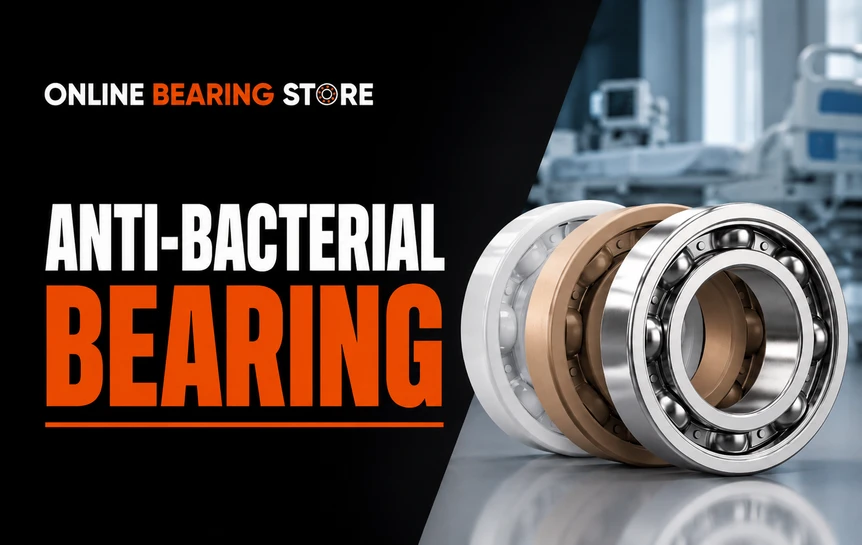
Anti-Bacterial Bearings in Healthcare: Why Hospitals Need More Than a Sealed Bearing
In healthcare environments, infection control extends far beyond visible surfaces. Even the bearings hidden inside hospital beds, imaging systems, and patient handling equipment must withstand constant cleaning, chemical exposure, and strict hygiene standards that standard industrial bearings were never designed to meet. As demand for safer and more durable equipment grows, healthcare providers are increasingly turning to anti-bacterial bearings healthcare applications require to support both reliability and contamination control.
Why Are Standard Sealed Bearings a Problem in Healthcare Environments?
Hospitals, clinics, laboratories, and operating theatres face challenges that most industrial environments never encounter. Equipment is cleaned multiple times per day, exposed to aggressive disinfectants, and expected to perform without failure in settings where contamination control is critical. While standard sealed bearings can keep out dust and moisture, they do not meet the hygiene expectations of anti-bacterial bearings for hospitals used in modern healthcare equipment.
Bacterial Harborage in Conventional Bearing Materials
Standard carbon steel bearings and zinc-plated housings may perform well in general industry, but healthcare cleaning cycles quickly expose their weaknesses. Repeated exposure to disinfectants can cause corrosion, pitting, and surface damage. These microscopic imperfections become areas where moisture and contaminants can collect.
This is why corrosion resistant bearings hospital maintenance teams rely on are increasingly specified for long-term performance. Once surface integrity is compromised, cleaning becomes less effective, increasing the risk of microbial retention even after disinfection.
Seal and Cage Degradation from Disinfectants
Bearings are only as strong as their weakest component. Many standard designs use NBR rubber seals and polyamide cages, which are not intended for repeated exposure to harsh cleaning agents.
In healthcare environments, exposure to bleach, alcohol-based solutions, and chlorine disinfectants can cause seals to harden, crack, or deform. Cages may lose structural integrity over time, allowing contamination ingress and lubricant breakdown.
This is a key concern when specifying hygienic bearings medical equipment depends on for consistent performance and safety.
The Limitations of 'Sealed for Life' in Sanitary Settings
The phrase “sealed for life” is often misunderstood in healthcare procurement. It refers to lubrication retention, not hygiene performance or chemical resistance.
Understanding the difference between sealed bearings vs anti-bacterial bearings is essential when selecting components for hospitals. A sealed bearing may resist dust ingress, but it is not designed for repeated chemical washdowns or sterile operating environments.
What Makes a Bearing Truly Anti-Bacterial?
A true hygienic bearing is defined not just by sealing, but by material selection, surface finish, and chemical resistance. In healthcare applications, every component must support long-term cleanliness and durability.
Material Selection: Stainless Steel Grades
Material choice is the foundation of any hygienic bearing design. High-performance stainless steel bearings healthcare systems use are typically made from 316L or 440C stainless steel.
316L offers excellent corrosion resistance in wet and chemically aggressive environments, making it suitable for hospital beds, sterilization systems, and mobile equipment. 440C provides higher hardness and wear resistance, making it suitable for precision medical devices where load and accuracy are critical.
Surface Finish and Passivation
Surface smoothness plays a major role in hygiene performance. Rough surfaces can trap contaminants and reduce cleaning efficiency.
Electropolishing removes microscopic peaks and valleys from the bearing surface, producing a smoother finish that is easier to clean. Passivation strengthens the protective oxide layer on stainless steel, improving corrosion resistance and long-term durability.
Together, these processes support the performance expected from anti-bacterial bearings for hospitals operating in high-cleaning environments.
Polymer Components: PEEK and PTFE
Modern bearing designs often combine stainless steel with advanced polymers to improve chemical resistance and reduce contamination risk. Demand for PEEK bearings medical applications continues to grow because PEEK offers excellent chemical resistance, dimensional stability, and low moisture absorption. It performs reliably in environments exposed to frequent cleaning and sterilization cycles. PTFE seals are also widely used due to their excellent resistance to disinfectants and low friction properties.
In some applications, designers also consider antimicrobial bearings as part of a broader contamination-control strategy, particularly in high-sensitivity environments.
Where Are Anti-Bacterial Bearings Used in Hospitals?
Healthcare facilities rely on motion systems in nearly every department. Bearings must support smooth operation while also meeting hygiene expectations.
Patient Handling and Mobility Equipment
Patient handling systems operate continuously and are cleaned frequently. Hospital beds, wheelchairs, stretchers, and IV pole casters all rely on smooth and reliable movement. These are key applications for bearings for hospital beds and equipment, where durability and hygiene must work together under constant use and repeated sanitation.
Surgical and Diagnostic Equipment
Precision movement is essential in surgical and diagnostic environments. Operating tables, imaging gantries, CT scanners, and diagnostic analyzers all depend on controlled motion systems.
High-performance bearings for medical devices ensure accuracy, smooth operation, and long service life in equipment where downtime is costly and unacceptable.
Clean Room and Sterile Processing Environments
Clean rooms and sterile processing facilities require strict control over contamination and airborne particles.
Bearings for clean room environments must minimize particulate generation, reduce outgassing, and maintain consistent performance under controlled conditions. In many cases, polymer or hybrid bearing solutions are preferred for these environments due to their low contamination risk.
How Do Anti-Bacterial Bearings Handle Aggressive Cleaning Protocols?
Healthcare cleaning processes are far more demanding than those in most industrial environments. Equipment must withstand repeated exposure to disinfectants without performance loss.
The best anti-bacterial bearings healthcare applications require must operate reliably even under frequent washdowns and chemical exposure.
Chemical Resistance to Hospital Disinfectants
Modern healthcare facilities use strong disinfectants to maintain hygiene standards. These include chlorine-based cleaners, alcohol solutions, peroxide-based agents, and quaternary ammonium compounds.
This is why anti-bacterial bearings for hospitals are increasingly replacing standard industrial bearings in critical applications. Materials such as 316L stainless steel and PTFE seals maintain stability under repeated exposure to harsh cleaning chemicals.
IP Ratings and Washdown Compatibility
In high-cleaning environments, ingress protection becomes essential.
IP69K-rated bearing assemblies are designed to withstand high-pressure, high-temperature washdowns without allowing water or contaminants to enter. This level of protection is particularly important in sterilization zones and heavily sanitized equipment areas.
Lubrication Considerations in Sanitary Environments
Lubrication is often overlooked but plays a critical role in bearing reliability. In healthcare environments, lubricants must remain stable under frequent cleaning cycles while avoiding contamination risks.
Proper selection of lubrication is essential when specifying hygienic bearings medical equipment relies on for long-term performance and reduced maintenance requirements.
How Do You Choose the Right Anti-Bacterial Bearing for Your Application?
Selecting the correct bearing requires balancing load requirements, environmental conditions, and cleaning frequency.
Load, Speed, and Environment Matrix
|
Bearing Type |
Load Capacity |
Cleaning Frequency |
Typical Application |
|
Deep Groove Stainless Bearing |
Medium to High |
Frequent |
Hospital beds and mobility systems |
|
Stainless Insert Bearing |
High |
Frequent washdown |
Medical transport equipment |
|
Full Polymer Bearing |
Light to Medium |
Very frequent |
Clean room systems |
|
Hybrid Bearing |
Medium to High |
High |
Diagnostic equipment |
Stainless Steel vs. Full Polymer Bearings
Material selection depends on application demands. Stainless steel bearings offer strength, durability, and high load capacity. Polymer bearings provide excellent chemical resistance and low particle generation.
Engineers often compare both options when evaluating antimicrobial bearings for healthcare applications where cleanliness and performance must be balanced.
Seal Type Selection
Seal design strongly influences performance in healthcare environments.
PTFE lip seals provide excellent chemical resistance and are ideal for frequent cleaning. Labyrinth seals offer low friction and reduced wear, while contact seals provide maximum contamination protection.
The correct configuration helps ensure that corrosion resistant bearings hospital environments install perform reliably throughout their service life.
What Are the Most Common Specification Mistakes in Healthcare Bearing Selection?
Even experienced engineers can overlook important details when specifying bearings for medical environments.
Specifying Standard Bearings with Stainless Housings
One common mistake is assuming that stainless housings alone create suitable bearings for medical devices. In reality, the internal components must also be designed for corrosion resistance and chemical exposure.
Overlooking Seal and Cage Material Compatibility
Another frequent issue is mixing high-quality bearing rings with incompatible seals or cages. This can lead to premature failure even when the main bearing material is suitable.
Under-Specifying for Cleaning Frequency
Hospital equipment is often cleaned multiple times per day. Standard industrial ratings do not always account for this level of exposure, which is why many failures occur in systems not designed as anti-bacterial bearings for hospitals.
Anti-Bacterial and Hygienic Bearings from Online Bearing Store
Online Bearing Store supplies solutions designed specifically for healthcare and sanitary environments where reliability and cleanliness are equally important.
Stainless Steel Deep Groove Ball Bearings
The range includes premium stainless steel bearings healthcare professionals specify for hospital beds, mobility systems, and washdown equipment. Options include 316L and 440C stainless steel bearings designed for demanding applications.
Full Polymer and Hybrid Bearings
For chemically aggressive or controlled environments, the company also supplies PEEK bearings medical applications frequently required. These are especially effective as bearings for clean room environments, where low particulate generation and chemical resistance are essential.
Expert Specification Support
Selecting the right bearing requires careful consideration of materials, sealing systems, lubrication, and cleaning protocols. The technical team at Online Bearing Store can help match the correct solution to your healthcare application.
Specify the Right Bearing for Your Healthcare Application
Choosing the correct bearing improves equipment reliability, reduces maintenance, and supports infection control goals across healthcare environments.
Explore Online Bearing Store’s range of hygienic solutions including stainless steel, polymer, and hybrid options, or contact the technical team for application-specific guidance tailored to your requirements.
Frequently Asked Questions
1. What are anti-bacterial bearings?
Anti-bacterial bearings are designed to support hygiene and corrosion resistance in demanding environments. Some facilities also consider antimicrobial bearings when enhanced contamination control is required.
2. How are they different from standard sealed bearings?
The key difference in sealed bearings vs anti-bacterial bearings is that sealed designs focus on contamination exclusion, while anti-bacterial designs focus on hygiene, chemical resistance, and cleanability.
3. What bearings are used in hospital beds?
Most bearings for hospital beds and equipment are stainless steel designs that can withstand frequent cleaning and continuous use.
4. Why are stainless steel bearings used in healthcare?
Stainless steel bearings healthcare environments rely on provide corrosion resistance, durability, and compatibility with disinfectants.
5. Are PEEK bearings suitable for medical use?
Yes, PEEK bearings medical applications use are common because of their chemical resistance and stability under repeated cleaning cycles.
6. What are the best bearings for clean rooms?
Bearings for clean room environments typically use polymer or hybrid designs to reduce particulate generation and contamination risk.
7. What makes a bearing corrosion resistant?
Material selection, surface finish, and sealing systems all contribute to corrosion resistance, especially in hospital environments.
8. Do anti-bacterial bearings reduce maintenance?
Yes, they reduce corrosion related wear and help extend service life in environments with frequent cleaning.
9. Can standard bearings be used in hospitals?
They can be used in low risk areas but are not recommended where hygiene and chemical exposure are high.
10. What industries use hygienic bearings?
Healthcare, pharmaceutical, laboratory, and clean room industries commonly use hygienic bearing solutions.