
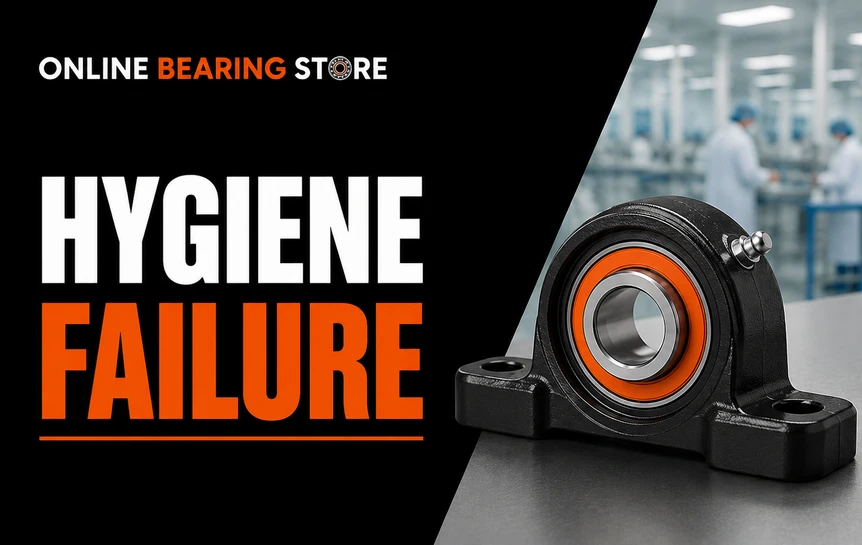
Why Standard Waterproof Bearings Fail Hygiene Audits in Food and Medical Facilities
A failed hygiene audit can stop your production line, delay shipments, or even trigger a recall — all because of a single contaminated bearing. Many teams assume that bold waterproof bearings for food and medical facilities are enough, but waterproof does not mean hygienic, compliant, or safe for regulated environments.
This article explains why that misconception leads to problems, what auditors look for, where standard bearings fall short, and which designs actually pass hygiene audits.
What Do Hygiene Auditors Actually Look for in Bearings?
Key Regulatory Frameworks: FDA, NSF, and EHEDG
In food and medical environments, bearings must meet strict rules from FDA, NSF, and EHEDG. These standards guide what materials you can use, how smooth surfaces must be, and which lubricants are allowed. Auditors check whether your bearings match these rules, especially when you’re using bold hygienic bearings food industry in sensitive zones.
FDA focuses on material safety. NSF certifies lubricants for incidental food contact. EHEDG sets design rules to prevent contamination. Together, they shape how your equipment must be built and cleaned.
Surface Finish, Crevices, and Harbourage Zones
Auditors look closely at surface finish and design. Any crevice, gap, or rough edge becomes a place where bacteria can hide. This is why facilities that rely on bold food grade bearings often pass audits more easily — the surfaces are smoother and easier to clean.
Standard bearings usually have:
- Flat surfaces
- Exposed bolts
- Seal lips that trap residue
- Gaps between housings
If an auditor sees buildup, staining, or moisture that doesn’t drain, the bearing is flagged.
Lubricant Certification Requirements
Lubricants are one of the fastest ways to fail a hygiene audit. If your bearing uses non‑food‑grade grease, it’s an immediate violation — even if the grease never touches product.
Auditors look for:
- NSF H1 certification
- FDA‑compliant formulations
- Documentation proving safety
This is why teams search for bold FDA compliant bearings and bold food safe bearing lubricants when preparing for audits. Using the wrong lubricant is a guaranteed bold bearing hygiene audit failure.
Why Do Standard Waterproof Bearings Fall Short?
“Waterproof” Is Not the Same as “Hygienic”
Waterproof bearings are built to resist moisture, not to survive caustic chemicals, steam, or daily sanitation cycles. IP ratings measure water resistance, not cleanability or food safety. Even if you use bold medical grade bearings, they must still meet hygiene rules.
A bearing can be waterproof and still fail every hygiene requirement.
Standard Seal and Shield Designs Create Contamination Traps
Rubber seals, pressed‑steel shields, and exposed fasteners are common on standard bearings. In regulated environments, these features become contamination traps.
They collect:
- Food particles
- Powder
- Moisture
- Cleaning residue
This is why facilities that rely on bold bearings for food processing equipment often upgrade to hygienic designs. Standard seals simply can’t keep up.
Standard Lubricants Are Not Food-Safe
Most waterproof bearings use H2 or H3 grease, both unacceptable in food zones. Only NSF H1 lubricants are allowed for incidental contact.
This is why teams preparing for audits often switch to bold washdown bearings food industry solutions that use certified lubricants.
Material Limitations of Standard Bearing Housings
Standard housings often use carbon steel or zinc plating. Under washdown conditions, these materials:
- Rust
- Pit
- Flake
- Discolor
Corrosion is one of the most visible signs of non‑compliance. This is why many facilities choose bold corrosion resistant bearings food grade to avoid rust‑related failures.
What Materials and Designs Actually Pass Hygiene Audits?
Stainless Steel Bearings and Housings
Grade 316 stainless steel is the gold standard for food and medical environments. It resists chlorine, steam, and harsh chemicals. This makes bold stainless steel bearings hygiene a top choice for washdown zones.
Smooth-Profile and Crevice-Free Bearing Designs
Hygienic bearings use rounded, polished surfaces with no exposed threads or gaps. This prevents:
- Bacterial growth
- Water pooling
- Residue buildup
These designs are essential when using bold hygienic bearings in the food industry in high‑risk zones.
NSF H1 and H2 Certified Lubricants
NSF H1 lubricants are approved for incidental food contact. NSF H2 lubricants are for non‑food zones only.
Auditors expect:
- Clear documentation
- Correct lubricant for the zone
- No mixing of grease types
This is why facilities rely on bold food safe bearing lubricants to stay compliant.
Polymer and Ceramic Bearing Options
In extreme hygiene environments, polymer and ceramic bearings offer:
- Zero corrosion
- No lubrication needs
- High chemical resistance
These materials are ideal when you need bold medical grade bearings or non‑metallic options for sensitive areas.
Which Industries Are Most Affected — and Why?
Food Processing and Packaging
Food processing exposes bearings to fats, proteins, sugars, and constant washdowns. This is why bold food grade bearings and bold bearings for food processing equipment are common in mixers, conveyors, and slicers.
Pharmaceutical and Medical Device Manufacturing
Cleanrooms require non‑shedding materials and zero contamination risk. A single corroded bearing can compromise an entire batch. This is why bold medical grade bearings are essential in these environments.
Beverage and Dairy Production
Beverage and dairy plants use aggressive cleaning agents and constant washdowns. Standard bearings fail quickly due to chemical exposure. Facilities often switch to bold washdown bearings in the food industry to avoid corrosion and leakage.
How Do You Audit-Proof Your Bearing Specification?
Conducting a Zone Risk Assessment (Food Contact vs. Splash vs. Non-Food)
Start by mapping your facility into zones:
- Food contact
- Splash
- Non‑food
Each zone requires different bearing materials, seals, and lubricants. This is where bold hygienic bearings in the food industry become essential.
Bearing Selection Checklist for Hygiene-Critical Applications
Standard vs. Hygienic Bearing Comparison
|
Criteria |
Standard Bearing |
Hygienic Bearing |
|
Material |
Carbon steel |
316 stainless, polymer, ceramic |
|
Seal Type |
Basic rubber |
FDA‑compliant, chemical‑resistant |
|
Lubricant |
H2/H3 grease |
NSF H1 food‑safe grease |
|
Surface Finish |
Rough, flat |
Smooth, polished, self‑draining |
|
Certification |
None |
FDA, NSF, EHEDG |
This table helps you avoid bold bearing hygiene audit failure by choosing the right design.
Working With Suppliers Who Understand Compliance
Before specifying a bearing, ask your supplier:
- Is the lubricant NSF H1 certified?
- Are the seals FDA compliant?
- Is the housing crevice‑free?
- Can you provide documentation?
This ensures you select bold FDA compliant bearings that pass audits.
What Are the Consequences of Getting It Wrong?
Failed Audits and Production Shutdowns
A single failed bearing can shut down your line for hours or days. This is why facilities rely on bold corrosion resistant bearings food grade to avoid downtime.
Product Recalls and Liability
Grease contamination, rust flakes, or bacterial growth can trigger recalls. These events are expensive and damaging to your brand. Using bold food safe bearing lubricants helps prevent these issues.
Reputational and Certification Risk
Losing BRC, SQF, or ISO certification affects customer trust and contract eligibility. A single bold bearing hygiene audit failure can jeopardize your entire certification status.
Hygienic Bearing Solutions from Online Bearing Store
Food-Grade and Stainless Steel Bearing Range
You can choose from stainless steel, polymer, and ceramic bearings designed for food contact, splash zones, and washdown environments. This includes bold food grade bearings and bold stainless steel bearings hygiene options.
NSF-Certified and FDA-Compliant Lubricants
Online Bearing Store offers lubricants approved for food, beverage, medical, and pharmaceutical use. These include bold food safe bearing lubricants and bold FDA compliant bearings.
Expert Specification Support
Their team helps engineers select bearings that meet compliance rules and pass hygiene audits. This includes guidance on bold hygienic bearings food industry and bold washdown bearings food industry solutions.
Don't Risk Your Next Audit — Specify the Right Bearings
If you want to avoid shutdowns, recalls, and compliance issues, choose bearings designed for hygienic environments. The right choice helps you prevent bold bearing hygiene audit failure and keeps your facility audit‑ready.
FAQ
1. Are waterproof bearings acceptable in food or medical facilities?
Not usually. Even bold waterproof bearings food and medical facilities must meet hygiene rules.
2. What causes most bearing hygiene audit failures?
Grease leakage, corrosion, and harborage zones are the top reasons.
3. Do stainless steel bearings always pass audits?
No. They must also use bold food safe bearing lubricants and hygienic seals.
4. What lubricant should I use in food zones?
NSF H1 lubricant is required for incidental food contact.
5. Can standard seals survive washdown chemicals?
Most cannot. This is why bold washdown bearings food industry are used in harsh environments.
6. How often should hygienic bearings be replaced?
They typically last longer than standard bearings in washdown environments.
7. Are polymer bearings suitable for high‑temperature applications?
Some are, but you must check the temperature rating.
8. Can I retrofit hygienic bearings into existing equipment?
Yes. Many bold hygienic bearings food industry match standard mounting sizes.
9. What documentation do auditors expect?
Material certificates, lubricant certifications, and compliance documentation.
10. What’s the fastest way to improve audit scores?
Upgrade to bold food grade bearings and bold FDA compliant bearings in high‑risk zones.