
Open vs. Sealed vs. Shielded Ball Bearings: Which Configuration Fits Your Environment?
A production line shuts down without warning, and when the motor housing is opened, the cause becomes obvious — the wrong bearing configuration was installed for the environment. Dust and moisture slipped past the bearing’s protection, destroying the grease and damaging the raceway. This kind of failure is common when you don’t match the configuration to the operating conditions, which is why understanding open vs sealed vs shielded bearings is essential for long-term reliability.
A failure caused by the wrong bearing configuration can bring an entire system to a halt, especially when dust, moisture, or debris enters a bearing that wasn’t designed to handle it. Open, sealed, and shielded bearings each offer different levels of protection, lubrication control, and speed capability. Choosing correctly depends on your environment, maintenance access, contamination risk, and how your equipment operates day to day.
What Are the Main Ball Bearing Configurations?
Open Bearings
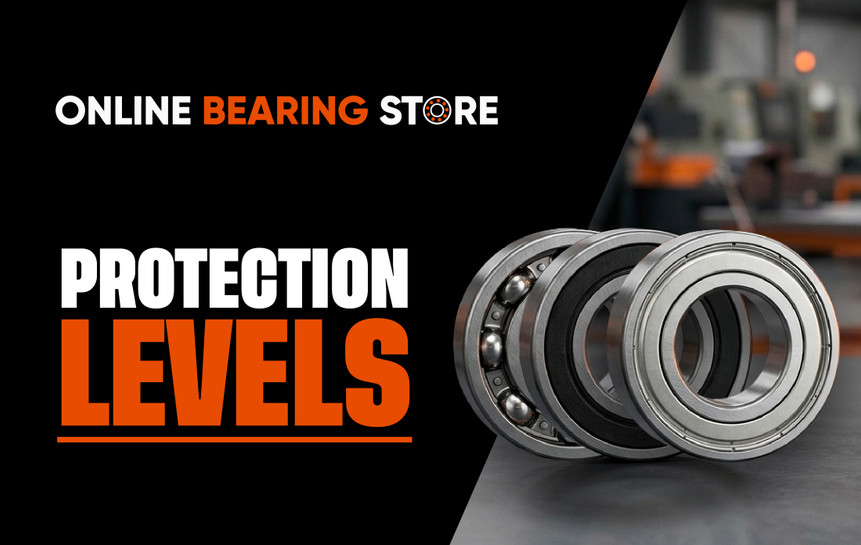
Open bearings have no seals or shields, leaving the rolling elements fully exposed. They are ideal for clean, controlled environments with external lubrication systems. These are some of the simplest types of ball bearings, and they’re often compared in open bearing vs sealed bearing discussions because they offer high speed and low friction but no contamination protection.
Shielded Bearings (ZZ / 2Z)
Shielded bearings use thin metal shields on one or both sides. These shields deflect larger contaminants without fully sealing the bearing. They come factory-packed with grease and may allow limited re-lubrication depending on the housing. Shielded bearings sit in the middle of common ball bearing configurations, offering a balance between speed and protection.
Sealed Bearings (2RS / 2RZ)
Sealed bearings use rubber or synthetic contact seals on one or both sides. These seals provide strong protection against moisture, dust, and debris. Sealed bearings are typically maintenance-free and are often the top choice when to use sealed bearings in harsh or wet environments.
How Do Open, Sealed, and Shielded Bearings Differ in Design?
Construction and Materials
The main difference lies in the barrier between the environment and the rolling elements.
- Shields are metal, non-contact, and create almost no drag.
- Seals are rubber or synthetic, make light contact, and provide a tighter barrier.
This difference affects friction, heat, and contamination resistance. It’s a key factor in comparing sealed vs shielded bearings and understanding how each performs.
Lubrication Access and Retention
Lubrication behavior varies across configurations:
- Open bearings rely on external lubrication and allow full access for re-lubrication.
- Shielded bearings retain grease better but still allow some airflow.
- Sealed bearings trap grease inside and are designed to be maintenance-free.
This is why many engineers compare shielded bearing vs sealed bearing options when deciding how much lubrication control they need.
Speed Ratings and Torque Considerations
Because seals make contact with the inner ring, they create more friction and reduce maximum RPM.
- Open bearings: highest speed
- Shielded bearings: high speed
- Sealed bearings: moderate speed
This trade-off is central to sealed vs shielded bearings decisions in high-speed applications.
What Environments Are Each Configuration Best Suited For?
Open Bearings: Clean, Lubricated Systems
Open bearings are ideal for clean, enclosed, or oil-lubricated systems. You’ll see these open bearings applications in:
- Enclosed gearboxes
- Oil-bath lubrication systems
- High-speed machinery
- Precision equipment
They offer low friction but no bearing contamination protection.
Shielded Bearings: Moderate Contamination or Dust
Shielded bearings are best when you expect light contamination but not moisture. They’re common in:
- Light industrial machinery
- Automotive components
- HVAC systems
- General-purpose equipment
They provide moderate protection and are often chosen when balancing speed and durability.
Sealed Bearings — Harsh, Wet, or Contaminated Environments
Sealed bearings are the top choice for environments with heavy contamination, moisture, or washdowns. They’re used in:
- Food processing
- Agriculture
- Outdoor equipment
- Pumps and conveyors
- Packaging lines
If you need the best bearing for harsh environments, sealed bearings are the safest option.
How Do You Choose the Right Configuration for Your Application?
Assessing Your Environment
Start with a simple checklist:
- Contamination level
- Moisture exposure
- Temperature range
- Access for maintenance
Your answers determine which bearing protection types are appropriate.
Considering Speed and Load Requirements
If your application requires high speed and low friction, open or shielded bearings are usually better. If protection matters more than speed, sealed bearings are the right choice. This balance is central to the open vs sealed vs shielded bearings decision.
Configuration Selection Reference Table
|
Feature |
Open Bearings |
Shielded Bearings |
Sealed Bearings |
|
Protection Level |
Low |
Medium |
High |
|
Max RPM |
Highest |
High |
Moderate |
|
Relubrication |
Full access |
Limited |
None |
|
Typical Applications |
Clean, lubricated systems |
Light contamination |
Harsh, wet, dirty environments |
|
Maintenance Needs |
High |
Medium |
Low |
This table helps you compare bearing protection types at a glance.
Are There Any Common Mistakes When Specifying Bearing Configurations?
Using Open Bearings in Contaminated Environments
Open bearings fail quickly when exposed to dust, dirt, or moisture. Particles enter the raceway, mix with grease, and accelerate wear. This is one of the most common bearing selection mistakes and a frequent cause of premature failure.
Over-Specifying Sealed Bearings for High-Speed Applications
Sealed bearings offer great protection, but the seal drag generates heat at high RPM. This reduces efficiency and can shorten bearing life. Engineers sometimes choose sealed bearings when a shielded option would perform better.
Assuming Shielded Means Fully Protected
Metal shields block large particles but do not stop moisture. Using shielded bearings in wet environments leads to corrosion and premature failure. This misunderstanding often appears in open bearings applications where moisture exposure is underestimated.
What Suffix Codes Identify Each Bearing Configuration?
Understanding Bearing Designation Suffixes
Common suffixes include:
- Z or ZZ / 2Z — single or double shielded
- RS or 2RS / 2RZ — single or double sealed
These codes help you quickly identify the configuration when reviewing catalogs or product listings. They are essential for anyone using a bearing designation guide or comparing bearing suffix codes.
How to Read a Bearing Part Number
Take the example 6205-2RS:
- 6205 = bearing series and size
- 2RS = double rubber seals
Another example: 6205-ZZ
- ZZ = double metal shields
Understanding these codes ensures you order the correct configuration.
Suffix Variations by Manufacturer
Different manufacturers may use slightly different suffixes:
- SKF may use “2Z” instead of “ZZ”
- NSK may use “DDU” for sealed bearings
- FAG may use “RSR” for certain seal types
These variations matter when comparing catalogs or cross-referencing bearing suffix codes.
What Open, Sealed, and Shielded Bearings Does Online Bearing Store Carry?
Open Series Bearings
Online Bearing Store carries a wide range of open ball bearings for high-speed and precision applications. These include metric and inch sizes across multiple series.
Shielded Bearings (ZZ)
You’ll find a full selection of shielded ball bearings for UK and US standard options. These are ideal for general industrial, automotive, and HVAC applications.
Sealed Bearings (2RS)
The store also offers a complete range of buy sealed bearings options for harsh, wet, or maintenance-free environments. These bearings are available in many sizes and load ratings.
Not Sure Which Configuration Is Right for You?
Browse Online Bearing Store’s full range of open, shielded, and sealed ball bearings — or reach out to the expert team for application-specific guidance tailored to your environment and performance needs.
FAQ
1. Are sealed bearings always better than shielded bearings?
Not always. Sealed bearings offer more protection, but shielded bearings run faster and cooler.
2. Can I relubricate a sealed bearing?
No. Sealed bearings are designed to be maintenance-free.
3. When should I use open bearings?
Use them in clean, enclosed, or oil-lubricated systems where contamination is minimal.
4. Do shields block moisture?
No. Shields block particles but not liquids.
5. Are sealed bearings good for high-speed applications?
They can be, but seal drag may limit maximum RPM.
6. What’s the most common mistake when choosing a bearing configuration?
Using open bearings in environments with dust or moisture.
7. How do I know if a bearing is sealed or shielded?
Check the suffix: ZZ/2Z for shields, 2RS/2RZ for seals.
8. Which configuration lasts longest in harsh environments?
Sealed bearings typically last longest because they keep contaminants out.