
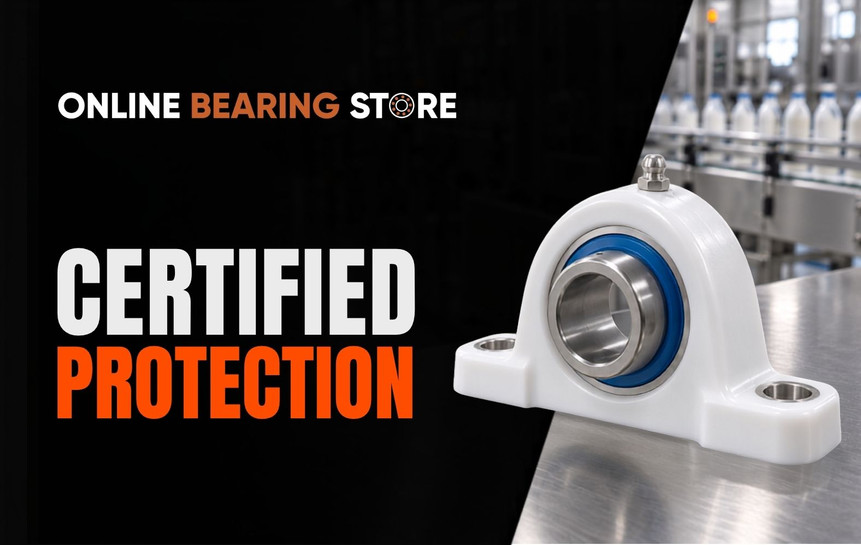
How to Select Bearings That Pass USDA and HACCP Inspections
Passing USDA and HACCP inspections is one of the most important responsibilities in food processing facilities. Bearings may seem like small components, but they play a critical role in meeting sanitary design standards. The wrong bearing choice can lead to contamination, failed audits, and costly downtime. By understanding inspection requirements and choosing the right bearings for USDA and HACCP inspections, you can protect your facility from penalties and keep production running smoothly.
Why Do USDA and HACCP Standards Matter for Bearing Selection?
Understanding USDA Sanitary Design Principles
USDA sanitary design principles shape how equipment is built for food processing. Bearings must be cleanable, corrosion resistant, and free of crevices. Smooth surfaces and sanitary housings prevent bacterial harborage and support compliance with USDA compliant bearings.
How HACCP Critical Control Points Apply to Equipment Components
Hazard Analysis and Critical Control Points (HACCP) identifies bearings near product zones as inspection critical points. These components can introduce contamination if not properly sealed or lubricated with food-grade bearings. HACCP bearing requirements emphasize preventive controls to reduce risks.
Consequences of Non-Compliant Bearings in Food Processing
Non-compliant bearings can cause contamination, failed audits, and production shutdowns. Facilities risk penalties and recalls when bearings do not meet USDA or HACCP standards. Choosing the right components is essential for long-term compliance, which is why so many plant managers now prioritize bearing selection food processing plants as a core part of their maintenance planning.
What Makes a Bearing Suitable for Food Processing Environments?
Corrosion-Resistant Materials
Standard steel bearings fail in wet, acidic, or caustic environments. Corrosion-resistant bearings prevent rust and contamination. Food-grade bearings made from stainless steel or polymers are common choices in sanitary bearings for food processing.
Smooth, Crevice-Free Surfaces
Sanitary bearings must have smooth, crevice-free surfaces. Crevices trap bacteria and resist cleaning. Hygienic bearing design eliminates dead zones and supports USDA sanitary standards.
Sealing Against Contaminants
Seals prevent product residue and cleaning chemicals from entering the bearing. IP69K-rated seals withstand high-pressure washdown cycles. Proper sealing is essential for hygienic bearing design and compliance.
Which Bearing Materials Meet Inspection Standards?
Stainless Steel Bearings
Stainless steel bearings food industry applications are widely used in food processing. Grades such as AISI 440 provide corrosion resistance and meet USDA and HACCP requirements while resisting harsh cleaning chemicals.
Plastic and Polymer Bearings
Polymer bearings are lightweight and non-corroding. They are suitable for moderate load applications and align with bearing materials for food safety. These options reduce contamination risks in specific environments.
Coated and Specialty Alloy Bearings
Specialty alloys and coated bearings provide alternatives for high-load or high-speed sanitary applications. These materials extend bearing life while meeting HACCP bearing requirements.
How Do Washdown and Wet Environments Affect Bearing Choice?
Sealing Systems for High-Pressure Washdown
Washdown bearings must withstand frequent cleaning cycles. Sealing systems designed for high-pressure washdown prevent water ingress and contamination.
Preventing Water Ingress and Corrosion
Design features such as stainless housings and sealed inserts stop moisture from reaching internal components. Corrosion-resistant bearings are essential in wet environments.
Choosing the Right Lubricant for Washdown Areas
Lubricants must resist water wash-out. NSF H1 food-grade lubricants are required for USDA compliant bearings. Proper lubrication supports HACCP bearing requirements and inspection readiness.
What Design Features Help Bearings Pass Inspection?
Open and Accessible Housing Designs
Housings should allow visual inspection and cleaning access. Open designs support sanitary bearings for food processing and reduce contamination risks.
Eliminating Grease Traps and Dead Zones
Dead zones trap residue and create contamination risks. Hygienic bearing design eliminates grease traps and supports smarter bearing selection for food processing plants.
Quick-Clean and Tool-Free Maintenance Features
Quick-clean housings reduce downtime during sanitation cycles. Tool-free designs make inspections faster and support HACCP compliance.
How Should You Evaluate Bearings Before Installation?
Reviewing Manufacturer Documentation
Always verify material certifications and construction specifications. Documentation ensures bearings meet USDA compliant bearings standards.
Matching Bearing Specs to Facility Inspection Criteria
Align bearing choice with your facility's audit requirements. HACCP bearing requirements vary by product zone and contamination risk.
Consulting with Bearing Suppliers on Compliance
Consult suppliers before purchasing. Technical support helps you select sanitary bearings that meet inspection standards.
Where Can You Find Inspection Ready Bearings for Your Facility?
Stainless Steel and Sealed Bearing Options
Online Bearing Store offers stainless steel bearings food industry options. These bearings meet USDA and HACCP requirements and resist corrosion.
Washdown-Ready Housings and Accessories
Washdown bearings and housings are available for wet and caustic environments. These components support compliance and reduce contamination risks.
Expert Guidance for Compliance-Driven Facilities
Technical support helps you choose the right bearing materials for food safety. Expert guidance ensures your facility passes inspections with confidence.
Equip Your Facility with Inspection-Ready Bearings
Equip your facility with bearings for USDA and HACCP inspections today. Shop Online Bearing Store's stainless steel and washdown bearing range or contact the technical team for compliance guidance.
FAQ
1. Why are bearings important for USDA and HACCP inspections? Bearings are critical components near product zones. Non-compliant bearings can cause contamination and failed audits.
2. What materials are best for food-grade bearings? Stainless steel and polymers are common choices. They resist corrosion and meet food safety standards.
3. How do washdown bearings differ from standard bearings? Washdown bearings use sealed housings and IP69K seals to withstand high-pressure cleaning cycles.
4. What lubricant should be used in food processing bearings? NSF H1 food-grade lubricants are required. They resist wash-out and meet USDA compliant bearings standards.
5. How does hygienic bearing design prevent contamination? Smooth, crevice-free surfaces eliminate bacterial harborage points and support HACCP bearing requirements.
6. Can polymer bearings be used in high-load applications? Polymer bearings are best for moderate loads. Specialty alloys or stainless steel are better for high-load sanitary applications.
7. What documentation do inspectors look for? Inspectors require proof of material certifications, lubrication records, and compliance with HACCP bearing requirements.
8. How do housing designs affect inspections? Accessible housings allow cleaning and inspection. Designs that eliminate dead zones reduce contamination risks.
9. What happens if non-compliant bearings are found? Facilities risk shutdowns, fines, and recalls. Non-compliant bearings can trigger USDA and HACCP violations.
10. Where can you buy inspection-ready bearings? You can find stainless steel bearings, washdown bearings, and sanitary housings at Online Bearing Store.