
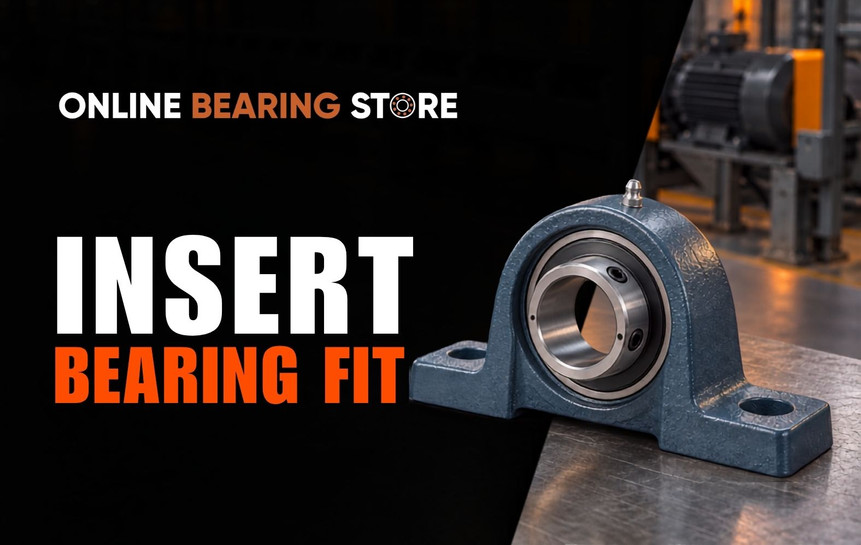
How to Match an Insert Bearing to the Right Housing Without Guessing
Mismatched insert bearings and housings cause costly maintenance headaches and unexpected line stoppages, but evaluating bore size, shaft tolerance, locking style, material, and mounting configuration upfront lets you specify a matched set with total confidence every time. Achieving total insert bearing housing compatibility on your first attempt keeps your equipment running smoothly and prevents premature failure.
Why Does Housing Compatibility Matter for Insert Bearings?
When you work with mounted units on the shop floor, it is easy to assume that any bearing will work as long as the shaft fits through the center hole. In reality, the bearing insert and its outer housing operate as a precise, co-dependent mechanical system. Ensuring proper insert bearing housing compatibility guarantees that rotational forces transfer smoothly into your machine frame without introducing destructive vibration or binding.
Premature Bearing Failure from Poor Fit
Insert bearings use a spherical outer ring designed to swivel inside a matching spherical housing seat, allowing the unit to accommodate minor shaft misalignment automatically. If your housing bore is slightly too tight, it squeezes the outer ring and removes internal clearances, creating intense friction and rapid heat buildup. Conversely, a loose or out of round housing bore lets the outer ring slip and vibrate, leading to fretting corrosion and sudden internal fatigue.
Shaft and Equipment Damage
A poor match between the bearing and its housing puts extra strain directly onto your shaft line. When an insert bearing cannot align properly inside its base, forced misalignment transfers heavy bending loads into the shafting. Over time, this extra stress causes deep shaft scoring, worn keyways, ruined oil seals, and even broken drive shafts that damage adjacent gearboxes or electric motors.
Downtime and Replacement Costs
Grabbing mismatched parts from the crib might get a machine limping along for an hour, but it inevitably leads to repeated failures. Emergency repairs drain maintenance budgets through lost production time, rushed freight costs for replacement parts, and wasted labor hours. Understanding bearing housing mounting types and proper fit variables prevents these recurring expenses entirely.
What Determines Whether an Insert Bearing Fits a Housing?
Finding a perfect match means looking past simple nominal measurements. You need to review three core mechanical factors before bolting a bearing into a standalone housing, ensuring you know how to select a bearing housing that meets your machine's exact mechanical demands.
Bore Size and Outer Diameter
Every insert bearing has two primary dimensions that dictate housing fit: the shaft bore size and the spherical outer diameter. Two separate bearings might both slide onto a 1-inch shaft, but one could feature a standard duty outer ring while the other has a larger, heavy duty outer ring. The housing bore must match the exact outer ring series and spherical diameter of your bearing insert.
Shaft Diameter and Tolerance
Your choice of shafting directly influences the required shaft tolerance for insert bearings. Off the shelf commercial shafting often varies slightly from its nominal size. Forcing a bearing onto an oversized shaft causes micro cracks in the inner ring, while mounting onto an undersized shaft leads to slipping, fretting, and severe vibration even when fully tightened.
Locking Style Compatibility
The specific insert bearing locking mechanism on your bearing determines how it grips the shaft and how much clearance the housing side walls must provide. Set screw units require open side access for tightening, eccentric collar designs need extra lateral clearance inside the housing face, and adapter sleeve setups require additional axial space along the shaft length.
What Are the Main Types of Bearing Housings?
Exploring different housing configurations helps design engineers and technicians select the right structural support for their specific mechanical load paths when choosing the right bearing housing.
Pillow Block Housings
Pillow block housings feature a flat base with mounting bolt holes running parallel to the shaft axis. They represent the most common style in industrial power transmission because they easily bolt down to flat structural steel frames to support downward radial loads.
Flange Housings (2-Bolt, 3-Bolt, 4-Bolt)
When weighing pillow block vs flange bearing housing options, consider where the shaft sits relative to your frame. Flange housings mount flat against surfaces perpendicular to the shaft, allowing a rotating rod to pass cleanly through a machine wall or bulkhead.
- 2-Bolt Flanges (Oval): Compact option with a small footprint, ideal for lighter applications or tight mounting spaces.
- 3-Bolt Flanges (Triangular): Great for lighter machinery where mounting space around the shaft is limited.
- 4-Bolt Flanges (Square/Round): Excellent for heavy machinery requiring maximum load distribution and structural rigidity.
Take-Up Housings
Take-up housings feature side guide slots that allow the complete assembly to slide within a frame. Paired with an adjustment screw, they allow maintenance personnel to dial in precise belt tension or chain slack on conveyors and drive systems using various bearing housing mounting types.
Cartridge Housings
Cartridge housings have a smooth, cylindrical outer surface designed to slide directly into a precision bored frame opening. They offer a compact, fully enclosed profile that excels in dirty or washdown heavy environments.
How Do You Match Bore Size and Shaft Diameter Correctly?
Identifying the right combination without guessing comes down to reading standard industry part codes. Understanding these numbers makes choosing a proper UC bearing housing fit simple.
Reading Bearing Designation Codes
Most metric and inch insert bearings follow standard alphanumeric designations, such as UC, UE, or UB series:
- UC205: "UC" signifies a set screw locking bearing with a spherical outer ring. "2" indicates standard duty rating, and "05" represents the metric bore code (multiply 05 by 5 to get a 25 mm bore).
- UC205-16: The "-16" suffix indicates an inch bore size measured in sixteenths of an inch (16/16" = 1 inch bore size).
Standard Bore Size Reference Table
Use this insert bearing housing size chart to quickly match standard insert bearing codes with their corresponding shaft sizes and housing series:
|
Bearing Designation |
Metric Bore |
Inch Bore |
Outer Ring Series |
Compatible Housing Base Code |
|
UC201 / UC201-8 |
12 mm |
1/2" |
201 Series |
P201, F201, FL201, T201 |
|
UC204 / UC204-12 |
20 mm |
3/4" |
204 Series |
P204, F204, FL204, T204 |
|
UC205 / UC205-16 |
25 mm |
1" |
205 Series |
P205, F205, FL205, T205 |
|
UC206 / UC206-19 |
30 mm |
1-3/16" |
206 Series |
P206, F206, FL206, T206 |
|
UC207 / UC207-20 |
35 mm |
1-1/4" (S) |
207 Series |
P207, F207, FL207, T207 |
|
UC208 / UC208-24 |
40 mm |
1-1/2" |
208 Series |
P208, F208, FL208, T208 |
|
UC209 / UC209-28 |
45 mm |
1-3/4" |
209 Series |
P209, F209, FL209, T209 |
|
UC210 / UC210-32 |
50 mm |
2" |
210 Series |
P210, F210, FL210, T210 |
When to Use Adapter Sleeves
If you are working with unmachined commercial shafting that lacks precise tolerances, choose an insert bearing that uses an adapter sleeve setup. The tapered sleeve clamps down evenly around the entire circumference of the shaft, compensating for minor dimensional variations and maintaining proper shaft tolerance for insert bearings.
Which Locking Mechanism Should Guide Your Housing Choice?
Your choice of insert bearing locking mechanism determines how firmly the bearing grips the shaft while helping you evaluate choosing the right bearing housing for long term reliability.
Set Screw Locking
Set screw units use two cup point set screws set 120 degrees apart on an extended inner ring.
- Pros: Simple to install, cost effective, and works well in bidirectional rotation.
- Cons: Can leave burrs on the shaft; less suitable for severe vibration.
- Housing Impact: Works with standard housings that offer open side access for an Allen wrench.
Eccentric Collar Locking
Eccentric collar bearings use a mating collar that slips over an offset cam on the inner ring. Turning the collar in the direction of shaft rotation creates a powerful wedging action that locks the bearing in place.
- Pros: Holds stronger than set screws without marring the shaft as deeply.
- Cons: Designed primarily for single direction shaft rotation.
- Housing Impact: Requires sufficient lateral clearance inside the housing cover area for the wider collar.
Adapter Sleeve Locking
Adapter sleeve bearings use a tapered inner bore that sits on a slotted sleeve. Tightening a locknut pulls the sleeve tight against the shaft.
- Pros: Delivers a true 360 degree concentric grip that handles high speeds, heavy loads, and intense vibration.
- Cons: Higher initial cost and requires a hook spanner wrench for installation.
- Housing Impact: Requires wider 200 or 300 series housings built to accommodate the extra sleeve length.
How Does the Operating Environment Affect Housing Material Choice?
When reviewing insert bearing housing material options, matching the material to your site conditions prevents premature structural failure from rust, moisture, or chemical exposure.
Cast Iron Housings
Standard grey cast iron is the most common choice for industrial machinery. It offers high rigidity, excellent vibration dampening, and cost effective strength for dry, general purpose applications like agricultural equipment and material conveyors.
Pressed Steel Housings
Pressed steel housings use two lightweight, stamped metal halves bolted together around the bearing. They provide an economical, space saving option for light duty machinery, fans, and low load equipment.
Thermoplastic and Stainless Steel Housings
In harsh operating zones, standard cast iron quickly corrodes and degrades, making specialized insert bearing housing material options essential:
- Thermoplastic Housings: Molded from smooth, non-porous PBT plastic; these housings withstand frequent water washdowns, citric acids, and sanitizing chemicals. They are ideal for food processing and pharmaceutical facilities.
- Stainless Steel Housings: Offer maximum mechanical strength alongside complete corrosion resistance. They excel in chemical processing plants, marine setups, and heavy duty washdown areas.
What Mounting Configuration Fits Your Application?
Aligning your structural load vectors with the correct bearing housing mounting types keeps equipment running smoothly and prevents frame flexing. Evaluating a pillow block vs flange bearing housing arrangement early in the design phase ensures proper structural alignment.
2-Bolt vs 4-Bolt Pillow Blocks
Standard pillow blocks rely on two mounting bolts. For high impact or heavy duty machinery, 4 bolt pillow blocks provide a wider base footprint that spreads intense downward and shock loads over a larger surface area.
Flange Orientation Options
Selecting the right flange style depends on your structural frame profile:
- Square 4-Bolt Flanges: Provide equal load distribution in all directions, making them the sturdiest option on flat machine walls.
- Oval 2-Bolt Flanges: Reduce overall width requirements by utilizing two mounting bolts along a narrow structural beam.
- Round 4-Bolt Flanges: Feature a raised pilot on the back face that drops into a bored hole to ensure perfect concentric alignment.
Take-Up Frame Mounting
Take-up frames must match the side guide slots on your take-up housing. The guide rail must slide smoothly along the slot without binding or excessive slop to maintain smooth belt adjustment.
What Common Mistakes Lead to a Poor Housing Match?
Avoiding three common oversight errors saves maintenance teams hours of troubleshooting time and ensures proper insert bearing housing compatibility.
Assuming Bore Size Alone Guarantees Fit
The biggest mistake is assuming that any bearing with a 1-inch hole fits into any 1-inch housing. A standard duty 1 inch bearing and a heavy duty 1 inch bearing share the same shaft size, but the heavy duty unit has a much larger outer ring. Forcing a heavy duty bearing into a standard housing will crack the casting.
Mixing Locking Styles Across the Same Shaft Line
Using a set screw bearing on one end of a shaft and an eccentric collar bearing on the other can introduce uneven preloads as the shaft expands from operational heat. Sticking to a single insert bearing locking mechanism across the shaft line ensures consistent performance.
Overlooking Environmental Exposure
Installing a standard painted cast iron housing in a washdown zone where chemical cleansers are used results in rapid rust. Corrosive scale flaking off the housing damages internal seals and leads to early bearing failure.
How Can You Verify Fit Before Installation?
Following a simple pre-installation routine ensures your bearing and housing function seamlessly once bolted into place, establishing an ideal UC bearing housing fit.
Pre-Installation Checklist
Run through this quick check before final assembly:
- Match Series Numbers: Confirm that the bearing outer ring series matches the housing series code using your insert bearing housing size chart.
- Measure Shafting: Use a micrometer to verify that your shaft falls within proper shaft tolerance for insert bearings limits.
- Test Spherical Fit: Ensure the bearing swivels smoothly inside the housing seat by hand without excessive play.
- Check Tool Access: Verify that set screws or locking collars do not rub against the inner housing wall.
- Align Grease Ports: Confirm that the lubrication groove on the bearing outer ring aligns with the zerk fitting on the housing casting.
When to Buy a Matched Unit
The simplest way to remove all risk is to purchase a preassembled, factory matched unit. Knowing how to select a bearing housing as part of a pre fitted assembly guarantees that internal clearances, spherical fits, and lubrication alignments are factory verified before delivery.
Insert Bearings and Housings from Online Bearing Store
When your team needs reliable replacement parts, Online Bearing Store provides the inventory, quality, and support required to keep your lines moving.
Pillow Block, Flange, and Take-Up Housings
We carry a complete line of standalone housings across all major mounting styles and materials, giving you the best insert bearing housing material options, including cast iron, pressed steel, thermoplastic, and stainless steel choices.
Pre-Matched Insert Bearing and Housing Units
Save assembly time and guarantee total insert bearing housing compatibility by choosing from our wide selection of pre matched mounted bearing units. Select your shaft size, locking style, and housing material to receive a complete, ready to bolt assembly.
Expert Sizing Support
Not sure how to select a bearing housing or cross reference a legacy part number? Our technical specialists are ready to review your equipment requirements and help you specify the ideal bearing and housing combination when choosing the right bearing housing.
Get the Right Fit the First Time
Stop relying on trial and error for your replacement parts. Browse our complete inventory of insert bearings, standalone housings, and pre-matched mounted units today at Online Bearing Store. Need assistance finding the right UC bearing housing fit? Contact our technical support team now for fast, expert sizing help!
Frequently Asked Questions (FAQ)
1. What is the difference between a UC and a UK insert bearing?
A UC insert bearing has a parallel bore with a two set screw insert bearing locking mechanism that tightens directly onto the shaft. A UK insert bearing uses a tapered inner bore paired with an adapter sleeve to clamp onto the shaft with a 360 degree grip.
2. Can I install a metric insert bearing into an inch housing?
Yes, as long as the outer ring series matches the housing series on your insert bearing housing size chart. For example, a UC205 (25 mm bore) and a UC205-16 (1 inch bore) both feature the same 52 mm spherical outer diameter and achieve a perfect UC bearing housing fit in the same P205 pillow block housing.
3. What happens if I overtighten set screws on an insert bearing?
Overtightening can strip screw threads, distort the shafting, or crack the bearing inner ring, making future bearing removal extremely difficult during maintenance.
4. What is the advantage of a 4-bolt flange over a 2-bolt flange housing when evaluating a pillow block vs flange bearing housing?
A 4 bolt square flange spreads radial and axial loads across four mounting points, providing higher load capacity, superior rigidity, and better resistance to heavy vibration than a compact 2 bolt oval flange.
5. Why does a new insert bearing feel stiff to swivel inside the housing bore?
New insert bearings are built with a precision spherical fit inside the housing seat. While it may feel stiff to move by hand, this snug fit ensures ideal insert bearing housing compatibility by keeping the outer ring from slipping under heavy load while allowing self-alignment during operation.
6. How do I know if I need a thermoplastic or stainless steel bearing housing?
When evaluating insert bearing housing material options, if your machinery undergoes daily washdowns with water, sanitizing chemicals, or detergents, choose thermoplastic or stainless steel housings to prevent rust and corrosion.
7. Can I reuse a bearing housing when replacing an insert bearing?
Yes, provided the internal spherical bore is smooth, clean, and free of cracks, excessive wear, or fretting rust that could compromise insert bearing housing compatibility. If the housing seat is worn or out of round, replace the entire assembly.
8. What shaft tolerance for insert bearings should I use for a set screw insert bearing?
For general industrial applications running at normal speeds, use a standard shaft tolerance for insert bearings of h7 to h9. Avoid heavily undersized shafting, which causes slipping and vibration.
9. What is the purpose of the grease groove on an insert bearing outer ring?
The outer ring grease groove aligns with the housing zerk fitting, allowing fresh grease to flow directly into the internal bearing raceways during routine maintenance.
10. Why should I buy a factory-matched mounted bearing unit instead of separate parts?
Purchasing a factory matched unit ensures total insert bearing housing compatibility so that the bearing outer ring, housing bore, internal clearances, and lubrication ports are perfectly aligned right out of the box, saving installation time and eliminating part mismatches.