
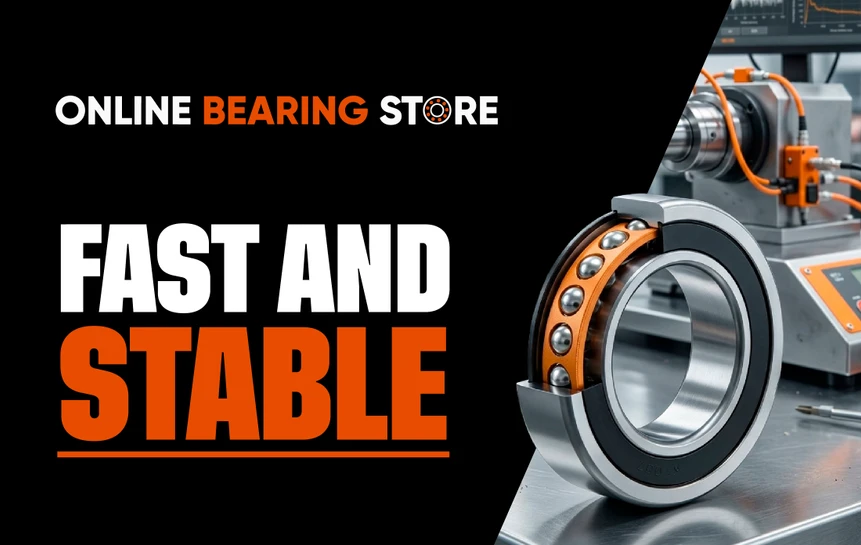
High-Speed Bearings Designed for RPM Stability and Longevity
When your equipment runs faster, the margin for error gets smaller. High-speed bearings are built to control heat, vibration, and wear so your rotating systems stay stable even at extreme speeds.
High-speed applications demand tight tolerances and reliable performance. If you rely on high-speed bearings in motors, spindles, pumps, or compressors, you need components that can handle heat buildup, vibration, and lubrication stress without losing control.
In demanding systems that use high RPM bearings and other bearings for high speed applications, even minor instability can reduce efficiency and shorten equipment life. That’s why proper design, material selection, and lubrication strategy matter so much.
Why Do High-Speed Applications Require Specialized Bearings?
Equipment operating at elevated rotational speeds places unique stress on internal components. Standard bearings are not built to manage these forces. Precision high-speed bearings and RPM stability bearings are specifically engineered to handle rapid rotation without excessive friction or heat.
When you install high RPM bearings in critical systems, you need confidence that they can maintain dimensional accuracy and rotational balance. Specialized bearings for high speed applications use advanced internal geometry and tighter tolerances to support smooth motion and long-term reliability.
What Happens to Bearings at High RPM?
At high rotational speeds, centrifugal force pushes rolling elements outward against the raceways. In high RPM bearings, this force increases contact pressure and surface stress. Over time, this can cause fatigue if the bearing is not properly designed.
Heat generation also rises sharply. Friction between rolling elements and raceways produces thermal energy. Without proper control, lubrication films thin out. Cage stress becomes another factor, especially in precision high-speed bearings designed for demanding tasks.
Lubricant shear is also common in bearings for high speed applications. Grease and oil can lose viscosity under constant high-speed motion, reducing their protective effect.
How Does Speed Impact Friction and Wear?
Friction increases with speed. In poorly designed systems, that friction causes rapid temperature rise. Low friction high-speed bearings are built to reduce this internal resistance and limit heat generation.
As temperatures increase, material fatigue accelerates. Surface micro-cracks can develop, leading to spalling or vibration. That’s why long-life high-speed bearings use optimized raceway finishes and high-grade materials to resist wear.
In continuous-duty environments using high RPM bearings, even small improvements in friction reduction can dramatically extend service life.
Why Is RPM Stability Critical for Equipment Performance?
Stable rotation protects your entire machine. RPM stability bearings help prevent vibration, misalignment, and uneven load distribution.
In applications using spindle bearings high speed, precise rotational accuracy ensures high-quality machining results. In motors running with bearings for electric motors high RPM, stable speed improves energy efficiency and reduces noise.
Without reliable precision high-speed bearings, equipment performance becomes unpredictable. Stability is not just about speed — it’s about control.
What Challenges Do Bearings Face in High RPM Environments?
Operating at extreme speed magnifies every weakness in the system. Bearings for electric motors high RPM and spindle bearings high speed must handle constant motion and thermal stress.
Systems relying on high-speed ball bearings or high-speed roller bearings face challenges related to temperature, vibration, and lubrication breakdown.
How Does Heat Affect Bearing Lifespan?
Heat is one of the primary threats to high RPM bearings. As internal friction rises, temperature increases. Thermal expansion reduces internal clearance, which can unintentionally preload the bearing.
In long-life high-speed bearings, engineers carefully design internal geometry to compensate for thermal growth. Without this precision, excessive heat can cause lubricant thinning and premature degradation.
Equipment using bearings for high speed applications must monitor operating temperature closely. Consistent overheating drastically reduces bearing lifespan.
What Causes Vibration and Imbalance at High Speeds?
Vibration often results from shaft misalignment or imperfect tolerances. In high-speed systems using precision high-speed bearings, even tiny dimensional variations can affect stability.
Dynamic imbalance becomes more severe at higher RPM. This can damage raceways and cages, particularly in high-speed roller bearings handling heavy radial loads.
Installing RPM stability bearings with proper mounting tools and alignment techniques greatly reduces vibration risk.
How Does Lubrication Break Down at High RPM?
At elevated speeds, grease can churn excessively. This increases heat and pressure inside the bearing. In oil systems, improper flow may cause starvation.
Low friction high-speed bearings rely on carefully selected lubricants with high shear stability. In spindle bearings high speed, oil-air lubrication systems often deliver controlled lubrication to prevent overheating.
For bearings for electric motors high RPM, using the wrong grease can lead to rapid failure. Proper lubrication is essential for maintaining reliability.
How Are High-Speed Bearings Engineered for Stability and Longevity?
Modern long-life high-speed bearings are engineered with precision in every detail. Their design focuses on reducing friction, controlling temperature, and maintaining load balance.
What Materials Improve High-Speed Performance?
Material selection plays a key role in high RPM bearings performance.
Chrome steel offers durability and cost efficiency. Stainless steel supports corrosive environments. Hybrid ceramic designs, often used in precision high-speed bearings, reduce weight and centrifugal force.
Ceramic rolling elements improve performance in low friction high-speed bearings by lowering heat generation. These designs are popular in bearings for high speed applications that require extreme RPM capability.
How Do Precision Tolerances and Internal Geometry Matter?
Tighter tolerances reduce runout and vibration. In spindle bearings high speed, precise contact angles allow the bearing to manage combined radial and axial loads.
Proper preload improves rigidity and reduces movement. This is critical for RPM stability bearings operating in CNC equipment and robotics.
High ABEC ratings are common in high-speed ball bearings, ensuring accurate rotation and minimal dimensional variation.
How Do Seals and Lubrication Systems Protect at High Speeds?
Seals and shields protect against contamination. Shielded high-speed roller bearings allow higher speeds with minimal friction. Sealed versions offer greater protection in dirty environments.
Oil mist and oil-air systems are often used in bearings for electric motors high RPM and high-precision spindles. Grease selection is equally important for maintaining performance in long-life high-speed bearings.
Effective sealing and lubrication strategies directly influence service life.
Where Are High-Speed Bearings Commonly Used?
High-speed ball bearings and high-speed roller bearings support a wide range of industries where consistent RPM stability is essential.
Electric Motors and Generators
Motors running continuously at high RPM rely on bearings for electric motors high RPM to manage heat and load. Hybrid ceramic options are common in demanding systems.
In these setups, high RPM bearings must provide consistent performance under constant motion. Reduced friction improves energy efficiency and extends motor life.
CNC Spindles and Machine Tools
Machining centers depend on spindle bearings high speed for ultra-precise rotation. These systems require precision high-speed bearings capable of maintaining alignment at extreme RPM.
Using properly matched RPM stability bearings ensures smooth cuts and consistent surface finishes.
Pumps, Compressors, and Turbines
Industrial compressors often use high-speed roller bearings to handle heavy radial loads. Pumps may rely on high-speed ball bearings for smoother rotation.
In all these cases, bearings for high speed applications must handle both thermal and mechanical stress without losing stability.
How Do You Select the Right High-Speed Bearing for Your Application?
Selecting the correct bearing requires balancing performance and environment. Choosing the wrong component can lead to overheating or premature wear.
What RPM Range and Load Capacity Are Required?
Determine maximum operating speed first. Compare it against manufacturer ratings for high RPM bearings under your lubrication method.
Next, evaluate radial and axial loads. Precision high-speed bearings are often chosen when both load types are present, especially in spindle bearings high speed applications.
Which Bearing Type Is Best for High RPM Stability?
Different designs offer different strengths:
- High-speed ball bearings provide low friction and excellent speed capability.
- Angular contact bearings support axial loads and improve rigidity.
- High-speed roller bearings handle heavier radial loads but operate at slightly lower speeds.
- Hybrid ceramic options deliver performance benefits in low friction high-speed bearings setups.
Selecting the right type ensures consistent RPM stability.
What Lubrication and Environment Factors Must Be Considered?
Operating temperature affects lubricant performance. Dust, moisture, or chemicals may require sealed designs.
For bearings for electric motors high RPM, grease quality is critical. In ultra-fast systems using spindle bearings high speed, oil-air lubrication may be necessary.
Always match lubrication strategy to application demands to protect long-life high-speed bearings.
Bearing Comparison Table
|
Bearing Type |
RPM Capability |
Best For |
Key Advantage |
|
Deep Groove Ball Bearings |
High |
Electric motors |
Low friction |
|
Angular Contact Bearings |
Very High |
CNC spindles |
Axial load control |
|
Hybrid Ceramic Bearings |
Extremely High |
Precision equipment |
Reduced heat |
|
Cylindrical Roller Bearings |
Moderate to High |
Compressors |
High radial load |
How Can Online Bearing Store Support High-Speed Applications?
When you need reliable bearings for high speed applications, sourcing matters. Online Bearing Store provides a broad inventory of performance-driven solutions.
If you plan to buy high RPM bearings, working with a dependable supplier ensures consistent quality and availability.
Wide Selection of Precision High-Speed Bearings
You can access:
- High-speed ball bearings
- Angular contact options
- Hybrid ceramic designs
- Sealed and shielded models
- High-speed roller bearings
This range supports motors, spindles, pumps, and heavy-duty industrial systems.
Bearings Built for Performance and Longevity
Products are engineered to function as long-life high-speed bearings, offering durability and smooth performance. Tight manufacturing standards support reliable RPM stability bearings for demanding conditions.
Reduced friction, better heat control, and strong materials help maximize uptime.
Expert Support and Fast Shipping
Maintenance teams and engineers often need parts quickly. Fast shipping and knowledgeable support simplify the process of replacing or upgrading precision high-speed bearings.
Reliable supply reduces downtime and keeps your operation moving.
Shop High-Speed Bearings Engineered for RPM Stability
If your operation depends on stable, high-speed rotation, selecting the right components is critical. Visit Online Bearing Store to shop high-speed ball bearings, high-speed roller bearings, and other bearings for high speed applications designed to deliver dependable RPM stability and long service life.
Frequently Asked Questions
1. What makes high-speed bearings different from standard bearings?
High RPM bearings are designed with tighter tolerances, advanced materials, and improved lubrication pathways to handle elevated speeds safely.
2. Are precision high-speed bearings necessary for electric motors?
For systems using bearings for electric motors high RPM, precision designs reduce vibration, heat, and electrical damage.
3. How do low friction high-speed bearings improve performance?
They reduce internal resistance, which lowers heat generation and extends the life of long-life high-speed bearings.
4. What is the best bearing type for CNC spindles?
Spindle bearings high speed, often angular contact designs, provide the rigidity and axial load control required for machining accuracy.
5. Can high-speed roller bearingsoperateat extreme RPM?
High-speed roller bearings handle heavier loads but typically operate at slightly lower maximum speeds than ball bearings.
6. How often should lubrication be checked in high RPM systems?
In systems using bearings for high speed applications, lubrication intervals should be monitored closely due to higher heat and shear stress.
7. What industries rely most on high-speed ball bearings?
Industries such as manufacturing, robotics, aerospace, and energy production rely heavily on high-speed ball bearings for consistent performance.
8. How do I prevent overheating in bearings for electricmotorshigh RPM?
Use correct grease, monitor temperature, and ensure proper alignment when installing bearings for electric motors high RPM.
9. Are hybrid ceramic bearings worth the investment?
In demanding environments, hybrid designs used in precision high-speed bearings can reduce heat and extend service life.
10. Where can I buy reliable bearings forhigh speedapplications?
You can purchase dependable bearings for high speed applications, including long-life high-speed bearings, from Online Bearing Store, which offers solutions built for stability and durability.