
Why Your Ball Bearings Keep Failing at the Same Point in the Cycle
You know the moment your machine starts acting up again—the bearing fails at the exact same point in the cycle, just like it did last time. It’s predictable enough to be frustrating, but consistent enough to make you wonder what’s really happening beneath the surface. When a failure repeats at the same location, it’s rarely random or unlucky. It’s almost always a sign that your system is dealing with bearings failing at the same point in cycle due to a deeper mechanical issue.
Recurring bearing failures feel like déjà vu. You replace the bearing, restart the machine, and everything seems fine—until the same failure shows up in the same spot again. When a failure repeats, it’s not just wear and tear; it’s a mechanical clue pointing toward a root cause. Once you understand why the failure keeps happening at the same point, you can finally break the cycle and restore reliability.
What Does It Mean When a Bearing Fails at the Same Point Repeatedly?
Distinguishing Random Wear from Patterned Failure
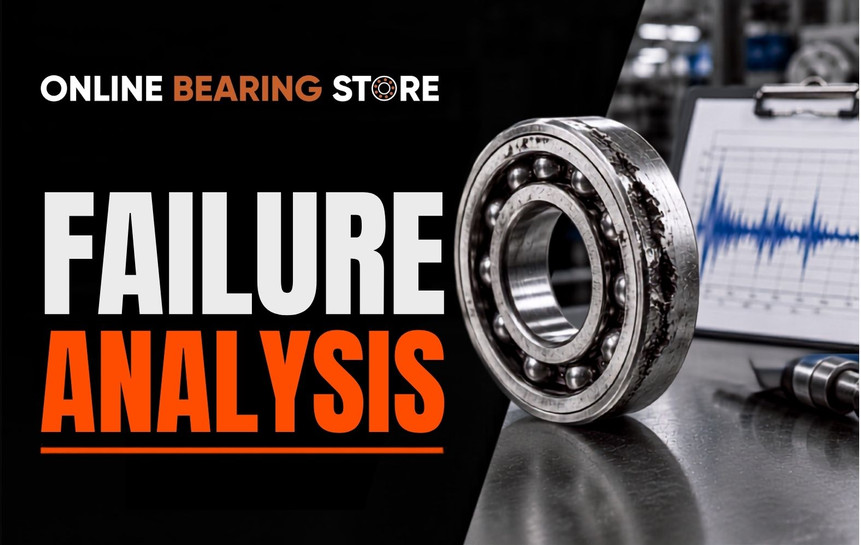
Random wear spreads across the raceway and rolling elements as the bearing reaches the end of its natural life. You’ll see scattered pitting, lubricant breakdown, or general fatigue without a clear pattern. Patterned failure looks different. Damage appears in the same spot every time—same raceway arc, same rolling element, same vibration spike. This repeatability is a major sign of recurring bearing failure and a deeper issue.
Why This Pattern Points to a Root Cause
When the failure location repeats, you’re dealing with a bearing failure root cause that stays constant every cycle.
It might be a concentrated load zone, a misaligned shaft, a contamination entry point, or a fatigue mechanism that keeps hitting the same microscopic region. The bearing isn’t failing randomly—it’s mapping the problem for you. That’s why bearing failure pattern analysis is one of the most reliable ways to diagnose mechanical issues.
How Does Cyclic Loading Create a Fixed Failure Point?
Understanding the Load Zone
Every bearing carries load through a specific arc of the raceway called the load zone. In many machines, this zone doesn’t move much. That means the same balls or rollers carry the highest stress every rotation. If the load zone is narrow or heavily concentrated, the same rolling elements get hammered repeatedly, creating a predictable failure point tied to cyclic loading bearing damage.
Stress Concentration and Subsurface Fatigue
Cyclic loading pushes stress into the same microscopic region beneath the raceway surface. Over time, repeated stress cycles create subsurface cracks that gradually lengthen with each rotation. These cracks grow upward until they break through the surface, forming spalls that disrupt smooth bearing operation.
Because the stress always hits the same spot, the fatigue crack grows in the same location, leading to ball bearing fatigue failure that repeats at a fixed point. As the spall enlarges, rolling elements strike the damaged area more aggressively, accelerating wear and vibration. Eventually, this localized damage can spread into adjacent regions, signaling a progressing failure pattern that requires immediate inspection.
Why the Same Rolling Elements Take the Brunt
If your load distribution is uneven, certain balls or rollers absorb more force than others. These elements experience higher contact stress, more heat, more micro‑slip, and more lubricant film collapse. Eventually, the same rolling element degrades first, reinforcing the pattern of repetitive load bearing failure.
What Causes Spalling at a Specific Location?
Subsurface Crack Propagation
Spalling begins when subsurface cracks reach the raceway surface. These cracks form because the same stress cycle hits the same microscopic region repeatedly. Once the crack breaks through, material flakes away, creating a spall. If the load zone doesn’t change, the spall grows in the same location every cycle. This is one of the most common bearing spalling causes.
Why Spalling Appears at Regular Intervals
Sometimes spalling appears at evenly spaced intervals around the raceway. This happens when the load zone shifts slightly during operation or when the shaft deflects under dynamic conditions. Even when the spacing changes, the pattern still points to fatigue mechanics and repeatable stress.
These evenly spaced marks often indicate that the bearing is experiencing a rhythmic load fluctuation tied to machine motion or vibration. As the damage progresses, each spall can grow at a similar rate, creating a clear visual signature that helps with bearing failure pattern analysis. This type of pattern is a strong diagnostic clue that the underlying issue is cyclic loading rather than contamination or installation error.
Identifying Spalling vs Other Failure Modes
Spalling has a distinct look: flaked material, shallow pits, rough edges, and subsurface crack patterns. Brinelling shows dent marks from shock loads. Pitting shows scattered small pits from contamination or lubrication failure. Knowing the difference helps you make an accurate bearing failure diagnosis.
Could Misalignment Be Causing the Repeating Failure?
How Shaft or Housing Misalignment Concentrates Load
Misalignment shifts the load zone to one side of the raceway. Instead of a balanced load distribution, you get a concentrated stress arc. The same rolling elements carry the load every cycle, and the same raceway region breaks down. Misalignment creates uneven contact stress, skewed load zones, higher axial forces, and increased heat—all of which accelerate fixed-point bearing wear.
Signs Misalignment Is the Root Cause
You may see wear concentrated on one side of the raceway, cage marks from skewed rolling elements, heat discoloration, or vibration spikes at the same rotational angle. If the failure point lines up with the misaligned load zone, you’ve found the root cause of your repetitive load bearing failure.
Correcting Alignment to Eliminate the Failure Point
To correct misalignment, verify shaft straightness, check housing bore alignment, inspect mounting surfaces, use alignment tools or shims, and confirm proper installation torque. Correcting alignment redistributes the load and eliminates the repeating failure point.
Is Contamination Entering at a Specific Point in the Cycle?
Seal Gaps and Entry Points
Contamination often enters through a specific gap in the seal or housing. If the machine rotates or cycles in a way that exposes the same gap repeatedly, debris enters at the same point every cycle. This creates localized abrasive wear that keeps showing up in the same spot.
How Contaminants Accelerate Localized Damage
Contaminants scratch the raceway, collapse the lubricant film, create micro pitting, and accelerate fatigue. Because debris enters at the same point, the damage appears in the same location. This is a common finding in bearing failure pattern analysis.
Improving Sealing to Stop Repeat Contamination
You can reduce contamination by upgrading seals, improving housing design, adding protective covers, using better lubrication, or installing contamination resistant bearings.
Stopping contamination at the entry point is one of the most effective ways of preventing repeat bearing failures.
How Do You Diagnose the Exact Cause of a Repeating Failure?
Inspecting the Failed Bearing
Look closely at raceway damage, spall location, ball or roller wear, cage condition, lubricant condition, and heat marks. The location of the damage is your biggest clue. It tells you where the stress, misalignment, or contamination is entering the system.
Reviewing Operating Conditions and History
Check load, speed, temperature, duty cycle, lubrication intervals, installation records, and alignment logs. Patterns in operating conditions often match patterns in failure. This is the foundation of accurate bearing failure diagnosis.
Common Failure Patterns and Likely Causes Table
|
Failure Pattern |
Likely Root Cause |
|
Damage at same rotational angle |
Cyclic loading |
|
Spalling in one raceway arc |
Misalignment |
|
Abrasive wear at one point |
Contamination entry |
|
Same ball element failing |
Load zone concentration |
|
Heat marks on one side |
Improper installation |
|
Repeated cage damage |
Skewed rolling elements |
How Can You Break the Cycle of Repeat Bearing Failures?
Upgrading to Precision Rated Bearings
Precision bearings offer tighter tolerances, better load distribution, improved fatigue resistance, and higher reliability under cyclic loading. Upgrading reduces the chance of fixed point fatigue and helps you eliminate the root cause of recurring bearing failure.
Improving Lubrication and Sealing
Better lubrication reduces film collapse, heat, microslip, and abrasive wear. Better sealing reduces contamination that causes localized damage. Together, these improvements help you stop the cycle of preventing repeat bearing failures.
Correcting Installation and Alignment Practices
Proper installation ensures correct fit, proper preload, balanced load zones, and reduced stress concentration. Correcting installation practices is one of the fastest ways to eliminate repeat failures and restore long-term reliability.
Bearing Diagnostics and Replacement Solutions from Online Bearing Store
Precision Bearings for Demanding Applications
You can choose from deep groove ball bearings, precision‑grade bearings, high‑load bearings, and high-speed bearings. These options help reduce fatigue‑driven failure and improve performance in demanding applications.
Sealing and Alignment Accessories
Online Bearing Store offers advanced seals, alignment tools, housing upgrades, and lubrication products. These help eliminate contamination and misalignment—the two most common causes of fixed-point bearing wear.
Expert Failure Analysis Support
You can consult technical specialists who help you diagnose repeating failure patterns, identify root causes, select replacement bearings, and improve installation practices. Their guidance helps you break the failure cycle for good.
Stop Guessing and Start Diagnosing
Recurring failure at the same point in the cycle is a clear diagnostic clue. You can consult Online Bearing Store’s technical team or shop precision replacement bearings to eliminate the root cause and restore reliability.
FAQ
1. Why do my bearings always fail at the same spot?
Because the same stress, misalignment, or contamination hits the same point every cycle.
2. How do I know if misalignment is causing the failure?
Look for wear concentrated on one side of the raceway and repeated vibration spikes.
3. Can contamination cause repeat failures?
Yes. Debris entering through a specific seal gap creates damage in the same location every cycle.
4. What’s the fastest way to stop recurring bearing failures?
Correct alignment, improve sealing, and upgrade to precision‑rated bearings.
5. Why does spalling keep showing up in the same place?
Spalling forms where subsurface cracks repeatedly experience stress, creating a fixed failure point.
6. Can lubrication issues cause patterned failure?
Absolutely. Poor lubrication collapses the film at the same load zone, accelerating localized fatigue.
7. Why does the same ball element fail first?
Uneven load distribution forces certain rolling elements to absorb more stress every rotation.
8. How do I confirm cyclic loading is the cause?
Match the failure location to the load zone and check for repeated stress patterns in vibration data.
9. Should I replace bearings with the same model?
If the failure pattern repeats, upgrading to a higher‑precision or better‑sealed bearing is often necessary.
10. When should I call a bearing specialist?
Any time the failure repeats at the same point—you’re dealing with a root cause that needs expert diagnosis.